

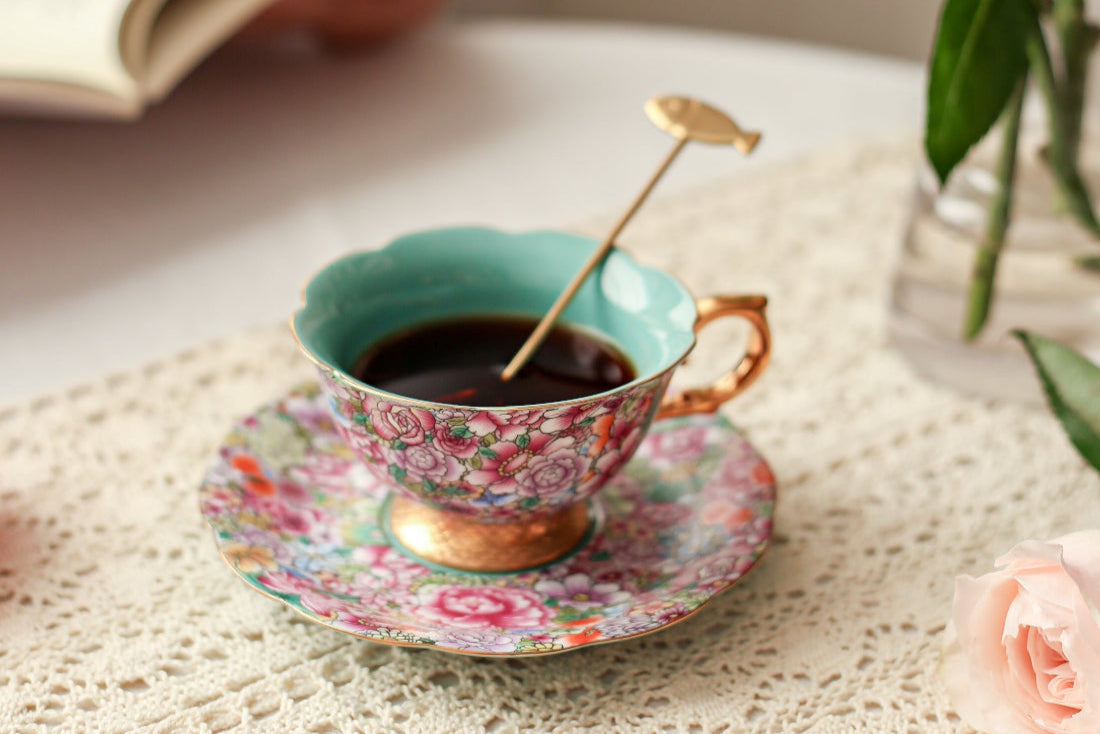
Two of Chinese porcelain's most beloved enamel styles look almost identical—soft pastels, intricate florals, imperial pedigree. Yet Falangcai and Famille Rose were born from very different hands. Here's how to tell them apart, why they matter, and how to bring their living heritage home.
Picture luminous colors gliding across a delicate porcelain canvas, every brushstroke carrying the weight of centuries. In the world of Chinese porcelain, these radiant hues are far more than decoration—they're a dialogue woven from history, culture, and master craftsmanship.
Among the most celebrated enamel traditions in Chinese porcelain are Falangcai (珐琅彩) and Famille Rose (粉彩). Viewed from a distance, the two can look almost identical—soft pastel palettes, fine motifs, an unmistakable air of imperial refinement. But are they truly the same? Or are they close cousins in the grand family of Qing dynasty porcelain, each with its own origin story?

Bottle-Shaped Vase with "Garlic" Mouth (Falangcai)
Image Source: Freer Gallery of Art, Smithsonian Institution
View Object

Porcelain with lead-silicate enamels over clear colorless glaze (Famille Rose)
Image Source: Freer Gallery of Art, Smithsonian Institution
View Object
In this guide to Falangcai and Famille Rose porcelain, we'll trace their origins, uncover how each is made, and explore how they're valued today—revealing how a once-exclusive royal art lives on as inspiration for contemporary collectors and enthusiasts alike.
The Origins of Falangcai (珐琅彩)
Falangcai—literally "enamel colors"—emerged during the Kangxi period (1661–1722) of the Qing dynasty as the very emblem of imperial delicacy and sophistication. Unlike ordinary porcelain, Falangcai pieces were thrown and fired in Jingdezhen—China's porcelain capital—but decorated in the Imperial Workshop in Beijing. This deliberate separation of production and decoration let the finest artisans pair a flawless porcelain body with exquisite enamel painting.
One of Falangcai's most remarkable features is its sophisticated cross-cultural craftsmanship. European Jesuit painters at the Qing court introduced enamel-color techniques and Western painting styles, forging the characteristic palette and fine detail that define these imperial wares (Zhao, 2022). The result was a porcelain art form that fused Chinese precision with Western mastery of color.
Because the process was extraordinarily demanding and deeply individual, very few Falangcai pieces were ever made—making them astonishingly rare and prized, treasured like precious gemstones for both their scarcity and their value.
Museum Example:

Image Source: Victoria and Albert Museum
View Object
Dating to the Yongzheng period, this Falangcai bowl showcases the exquisite craftsmanship of the enamel tradition: delicate pastel hues, intricate floral designs, and a beautifully refined porcelain body. Such pieces show how Falangcai evolved into a true royal art—created for the imperial court, yet revered by collectors and museums worldwide centuries later.
The Origin of Famille Rose (粉彩)
While Falangcai remained an exclusive imperial art, the Yongzheng period (1723–1735) also witnessed the rise of Famille Rose, or 粉彩 ("soft colors"). It marked a turning point: the introduction of "glass white" (玻璃白) enamel produced softer, subtler pastel shades in place of Falangcai's richer, brighter tones.
Famille Rose porcelain quickly won favor in both court circles and among private connoisseurs. Unlike Falangcai, which was restricted to imperial commissions, Famille Rose wares were produced more abundantly in Jingdezhen and exported far beyond China's borders—thereby shaping global porcelain sensibilities for centuries. Its hallmarks include:
- Subtle color gradients: delicate pinks, greens, blues, and yellows.
- Floral, figurative, and narrative motifs: from chrysanthemums and peonies to courtly scenes.
- Versatility: applied to tea sets, plates, vases, and bowls alike.
Museum Example:

Porcelain bowl decorated with overglaze enamels of the famille rose type and gilding
View Object Online
This Famille Rose bowl is composed of six panels featuring black landscapes bordered by brocade diaper patterns. Six fishes glide among water-weeds within, while the borders carry lotus scrolls and diaper motifs with four reserved emblem panels. Decorated in overglaze enamels and gilding, it displays the fine pastel coloring and highly ornamental motifs characteristic of Yongzheng-era wares.
Brand connection: At Blissful Reserve, our Falangcai Tall Cup – For Iced Tea & Cold Beverages draws inspiration from Famille Rose's soft colors and delicate patterns, bringing a touch of imperial artistry into modern daily life.

Falangcai vs. Famille Rose: Same or Different?
At first glance, Falangcai and Famille Rose look similar—soft pastels, fine motifs—but the differences are decisive. This quick-reference table breaks them down side by side.
| Feature | Falangcai (珐琅彩) | Famille Rose (粉彩) |
|---|---|---|
| Era | Kangxi period onward (1661–1722+) | Yongzheng period onward (1723–1735+) |
| Where decorated | Imperial Workshop, Beijing | Jingdezhen (and exported widely) |
| Enamel technique | Overglaze enamels, richer & brighter | "Glass white" base for softer pastels |
| Color character | Vivid, jewel-like, highly refined | Subtle gradients, gentle translucence |
| Production volume | Extremely rare — imperial only | Produced abundantly, widely circulated |
| Rarity & value | Museum-grade, exceptionally valuable | Collectible across a broader range |
Market note: Many magnificent Famille Rose wares in today's marketplace are also labeled "Falangcai." Though imprecise from an academic standpoint, it shows how the cachet of the imperial designation still echoes as both a cultural and commercial standard.
Blissful Reserve's view: We respect the traditional distinctions, yet we value this fluidity—it shows how once court-restricted art has grown into a living heritage that inspires modern collections like our Falangcai Tea Cup Set.
Takeaway: Falangcai is royal and rare; Famille Rose is its adapted, widely appreciated cousin. Together, they shaped the beauty of Chinese porcelain.

From Imperial Palaces to Modern Homes
Falangcai and Famille Rose began as imperial wares, treasured within palaces and now enshrined in world-class museums. The Freer Gallery of Art's Falangcai cup, for instance, displays royal skill through superb floral enamel and gilding:

Polychrome falangcai overglaze enamel Cup with landscape
Image Source: Freer Gallery of Art, Smithsonian Institution
View Object Online
Today, these techniques continue to shape contemporary design. At Blissful Reserve, pieces like the Falangcai Tall Cup bring the elegance of imperial porcelain into everyday life—so collectors and connoisseurs can enjoy centuries of craftsmanship right at their dining table.

Why You Should Collect Falangcai & Famille Rose–Style Pieces Now
Collecting Falangcai and Famille Rose porcelain is about far more than owning porcelain—it's about appreciating history, craftsmanship, and culture.
- Historical value: Each piece carries centuries of Chinese imperial artistry.
- Handcrafted excellence: Delicate enamel work and refined techniques reflect the mastery of artisans.
- Aesthetic & lifestyle appeal: Beyond simple tea cups or bowls, these pieces add elegance and meaning to contemporary living spaces.
At Blissful Reserve, our collections bring everyday royal-inspired beauty to life by fusing old-world techniques with new-world design.

Falangcai & Famille Rose Porcelain: Frequently Asked Questions
What is the difference between Falangcai and Famille Rose porcelain?
Falangcai is a rare, court-made enamel style decorated in Beijing's Imperial Workshop using richer, brighter overglaze enamels. Famille Rose was developed later, uses a "glass white" base for softer pastel tones, and was produced more widely in Jingdezhen for export. In short: Falangcai is rarer and imperial; Famille Rose is its softer, more widely produced cousin.
Which is more valuable, Falangcai or Famille Rose?
Authentic Falangcai pieces are generally far more valuable because so few were made exclusively for the Qing court and they survive mainly in museums. Famille Rose wares are also collectible and can reach high prices, but they were produced in greater numbers and across a wider quality range.
How can you tell Falangcai from Famille Rose?
Look at the color and paint quality: Falangcai tends to have more vivid, jewel-like enamels with exceptionally fine detail and a slightly raised feel, while Famille Rose uses softer, shaded pastels created with a "glass white" underlayer. Provenance and workshop markings also help experts distinguish them.
What dynasty is Famille Rose porcelain from?
Famille Rose originated in the Qing dynasty during the Yongzheng period (1723–1735) and flourished through the Qianlong era and beyond. It remains one of the most recognizable styles of Qing dynasty porcelain.
Where can I buy Falangcai and Famille Rose–style porcelain?
Antique and museum-grade pieces are best sourced through reputable auction houses and dealers. For everyday porcelain inspired by these traditions, Blissful Reserve's floral collection reinterprets Famille Rose and Falangcai motifs for the modern home.
Conclusion
Falangcai and Famille Rose, though separate in origin and method, together propelled the international appreciation of Chinese porcelain. Their pale colors, ornate motifs, and princely origins continue to captivate collectors and designers across the globe.
At Blissful Reserve, we honor this cultural heritage by weaving the elegance of royal craftsmanship into today's homes—where imperial art meets everyday life.