

The Ming Dynasty (1368–1644) marked a defining period in the history of Chinese tea culture. During these centuries, loose-leaf tea gradually became the dominant form of tea preparation, teapots gained new importance, and the appreciation of tea developed alongside an increasingly sophisticated culture of craftsmanship, literature, and cultivated leisure.
Yet the transformation was neither immediate nor uniform. Older methods of preparing powdered tea continued alongside newer approaches, while changes in imperial policy, tea production, and everyday habits gradually reshaped the way tea was prepared and enjoyed.
The history of the Ming Dynasty tea ceremony is therefore more than a story about brewing techniques. It reveals how a practical change in preparing tea became intertwined with the appreciation of ceramics, the quality of water, the character of tea leaves, and the atmosphere in which tea was shared.
Understanding this period offers a deeper perspective on traditional Chinese tea culture—and on why a thoughtfully chosen teapot, a well-made cup, and a few unhurried moments remain central to the experience of tea today.
1. What Was the Ming Dynasty Tea Ceremony?
The term Ming Dynasty tea ceremony describes the diverse practices, literary traditions, utensils, and aesthetic ideals associated with preparing and appreciating tea during China's Ming period, from 1368 to 1644.
It is important to understand that the Ming Dynasty did not have one standardized tea ceremony followed by everyone. Tea preparation differed according to social setting, region, available ingredients, and personal preference.
One of the period's most significant developments was the growing prominence of loose-leaf tea brewed by steeping the leaves in hot water. This approach differed from earlier traditions in which compressed tea cakes were ground into powder and prepared using methods that included whisking.
Historical research confirms that the transition from compressed tea and powdered preparation toward loose-leaf infusion was gradual. In her 2025 study, The Tea Drinking Methods and Changes in Tea Culture during the Yuan and Ming Dynasties, Eunmi Suh examines how these methods evolved and how older practices continued even as loose-leaf brewing gained ground (Suh, 2025, Journal of Asian Historical Studies).
The Ming period also witnessed a rich literary culture surrounding tea. Scholars and enthusiasts discussed the quality of tea leaves, the suitability of water, the form and material of utensils, and the pleasure of drinking tea in carefully considered surroundings.
These interests did not necessarily constitute a formal ceremony. Rather, they reveal a growing appreciation of tea as an experience shaped by knowledge, craftsmanship, sensory attention, and personal taste.
The Ming Dynasty helped establish the historical foundations of many familiar Chinese loose-leaf brewing practices, while developing an enduring appreciation for the relationship between tea, teaware, and the art of everyday living.
2. How the Ming Dynasty Changed Chinese Tea Culture
From Compressed Tea to Loose-Leaf Tea
Before and during the early Ming period, compressed tea cakes remained important in Chinese tea culture. In earlier dynasties, tea was often processed into cakes, ground into powder, and prepared using methods suited to powdered tea.
The founding Ming emperor, Hongwu (Zhu Yuanzhang, 1328–1398), introduced an important change in imperial tribute tea policy. In 1391, he ordered an end to the production of certain elaborate compressed tea cakes for imperial tribute from Jianning, in present-day Fujian, in favor of presenting tea in a less labor-intensive form.
The decision reflected concerns about the work required to manufacture tribute tea cakes. It also changed the forms of tea supplied to the court, with implications for tea processing and preparation.
The reform is discussed in detail in Xuyang Gao and Anke Hein's scholarly article, “Building Fame Through Tea: The Wu Family and the Manufacture of Zisha Teapots During the Ming and Qing Dynasties”, published in Ming Studies in 2024.
However, the policy should not be understood as having immediately ended every older tea-making method. As Suh's research demonstrates, powdered tea and whisked preparation continued during the Ming Dynasty, even as loose-leaf brewing gradually became dominant.
This distinction matters because the history of tea is not a simple sequence in which one method suddenly disappears when another emerges. Tea habits evolve through a combination of official policy, production techniques, consumer preferences, and cultural exchange.
From Whisked Tea to Steeped Tea
The growing popularity of loose-leaf tea encouraged a different approach to preparation.
Earlier methods included grinding tea into powder and whisking it with hot water. With loose-leaf infusion, tea leaves were instead placed in a vessel and allowed to release their flavor into the water.
This changed the practical requirements of tea preparation. Vessels suited to steeping leaves became increasingly useful, while drinkers could pay greater attention to the aroma, clarity, and changing flavor of the infusion.
The shift did not happen overnight. The 2025 study by Eunmi Suh explains that powdered tea and the diancha method continued to be used during the Ming period. By the late sixteenth century, however, loose-leaf brewing had become the dominant approach.
For a detailed historical perspective, see Suh's study of Yuan and Ming tea-drinking methods.
The Rise of a More Personal Tea Aesthetic
As tea preparation evolved, the appreciation of tea became increasingly connected to cultivated leisure and material culture.
Literary discussions explored the qualities of tea, the choice of water, the design of utensils, and the experience of drinking tea in peaceful surroundings. Tea could be enjoyed as a daily necessity, a social activity, or an expression of refined taste.
This interest extended beyond the act of brewing. The objects used to prepare and serve tea could demonstrate practical knowledge and aesthetic judgment.
Gao and Hein's research on the Wu family illustrates this relationship. Their study examines how tea preparation, collecting, craftsmanship, and the appreciation of Yixing purple-clay teapots contributed to the social identity of Ming and early Qing literati. It also cautions that historical narratives about the origins of particular teapot traditions require critical examination (Gao & Hein, 2024).
The result was not one universal tea ritual, but a culture in which the preparation of tea could become an expression of individual attention, learning, and taste.
3. Zhu Quan and the Literary Culture of Ming Tea
Zhu Quan (1378–1448), a son of the Hongwu Emperor, was a Ming prince and scholar associated with the tea treatise Cha Pu (茶谱), often translated as Tea Manual.
The text provides a valuable perspective on the intellectual and aesthetic dimensions of early Ming tea culture. Its preface describes tea through images of natural scenery, clear spring water, fire, and the pleasure of preparing tea away from the distractions of ordinary life.
Readers can consult the digitized Chinese text of Zhu Quan's Cha Pu. For academic context, the Korean scholarly article “A Study of Zhu Quan's Cha Pu and the Hermit-like Culture of Tea” examines the relationship between Zhu Quan's tea writing, cultivated retreat, and aesthetic ideals.
Tea as an Intellectual Pursuit
Zhu Quan's writing reflects an approach to tea that extends beyond simple refreshment.
Tea could be a subject of observation and reflection, connecting the drinker with nature, literary culture, and a cultivated way of life. The selection of water and the preparation of tea became opportunities to exercise attention and judgment.
It would be misleading, however, to assume that every Ming tea drinker shared precisely the same philosophy. Zhu Quan's work represents a particular literary perspective, not a universal account of everyday tea habits.
The Importance of Water and Natural Surroundings
The preface to Cha Pu evokes the combination of tea, spring water, fire, and a quiet natural setting. These details illustrate the importance of the environment in the author's conception of tea.
Water was not merely an ingredient. Its quality and suitability were considered part of preparing a satisfying cup of tea. The setting also mattered because it shaped the drinker's experience.
Such ideas offer an enduring point of connection between historical tea writing and contemporary tea appreciation: the pleasure of tea can arise from the interaction of its sensory qualities with the setting in which it is prepared and enjoyed.
Teaware as Part of the Experience
The utensils used to prepare tea were functional objects, but they could also become expressions of craftsmanship and personal taste.
The relationship between tea and teaware became particularly visible in the later Ming period, when Yixing purple-clay teapots attracted the attention of tea enthusiasts and literati.
Rather than suggesting that refined tea drinking depended on elaborate equipment, Ming tea writing encourages a more useful question: how do the materials, form, and function of an object contribute to the experience of tea?
4. Ming Dynasty Teaware: Teapots, Porcelain, and Craftsmanship
The evolution of tea preparation was closely connected to the development of teaware. As loose-leaf infusion became increasingly important, vessels suited to steeping and serving tea acquired new significance.
Surviving historical objects provide direct evidence of this relationship, although individual objects cannot represent every household or tea-drinking practice of the period.
Yixing Purple-Clay Teapots

Yixing, in Jiangsu Province, became renowned for teapots made from distinctive purple clay, commonly known as zisha (紫砂).
These vessels are valued for their ceramic material, construction, functional qualities, and often understated forms. Their history is closely connected with the growth of tea appreciation and the interests of literati and collectors.
A surviving example is documented by the Smithsonian National Museum of Asian Art in its collection record for a Yixing ware teapot associated with Shi Dabin. The museum identifies the vessel as Ming Dynasty, dating it to the sixteenth or seventeenth century. It is an unglazed stoneware teapot with a modeled plum-blossom form.
This object provides tangible evidence of the craftsmanship associated with Ming-period Yixing ware.
The broader history is more complex than a simple story of a single inventor. In their 2024 article, Gao and Hein examine the historical accounts surrounding Gong Chun, traditionally associated with the origins of Yixing teapot-making. Their research questions the reliability of some of these origin stories and explores how later writings helped establish the reputation of particular families and craftsmen (Gao & Hein, Ming Studies).
This is an important reminder that the history of craftsmanship includes not only objects and techniques, but also the stories through which artisans, collectors, and cultural traditions acquire recognition.
Porcelain Teapots and Cups
Porcelain also played an important role in Chinese tea culture. Its smooth surface, refined appearance, and capacity for varied forms and decoration made it suitable for tea preparation and serving.
Historical teaware included vessels with different functions and characteristics. The appropriate choice depended on the preparation method, the setting, and the preferences of the drinker.
The Hong Kong Museum of Art's K. S. Lo Collection of Tea Ware and Seals offers a useful overview of the history of Chinese tea utensils, including the development of steeping methods and the importance of Yixing teapots in later tea culture.
It is important to distinguish between a historical object and a modern product inspired by historical design. A contemporary porcelain tea set may reflect long-standing aesthetic traditions without being a direct reproduction of a Ming-period vessel.
Practical Function and Aesthetic Form
A teapot had to do more than look beautiful. It needed to accommodate the tea leaves, hold water, and allow the infusion to be poured conveniently.
Likewise, cups had to be suitable for serving and drinking tea. Their size, shape, material, and finish contributed to both their practical use and their visual character.
The appreciation of teaware therefore emerged from a relationship between form and function. A thoughtfully designed vessel could make tea preparation more convenient while adding to the pleasure of the experience.
For contemporary tea drinkers, this remains a useful principle: choose utensils for the tea you prepare and the way you intend to enjoy it, rather than treating decorative complexity as the sole measure of quality.
5. Water, Brewing, and the Sensory Experience of Tea
The history of Chinese tea includes a long-standing interest in the relationship between tea leaves, water, and preparation.
Zhu Quan's Cha Pu illustrates the literary significance of water and fire in early Ming tea appreciation. Meanwhile, later Ming writings provide evidence of the growing prominence of loose-leaf preparation. Together, these sources demonstrate how practical techniques and aesthetic considerations developed alongside one another.
Water Quality
Water influences the taste of tea. Its mineral composition, freshness, and overall suitability can affect how the flavors of tea leaves are perceived.
Historical discussions of water should be understood within their own cultural context, but the underlying interest in water quality remains relevant to modern brewing.
Temperature and Steeping Time
Different teas respond differently to water temperature and steeping duration. Delicate green teas may become bitter when exposed to excessively hot water or steeped for too long, while other teas may benefit from hotter water or longer infusions.
There is no single brewing formula that works equally well for every tea. The appropriate approach depends on the tea's processing, leaf characteristics, and desired flavor.
The Vessel and the Tea
The choice of teaware can also influence preparation. Vessel size, heat retention, pouring control, and ease of handling all affect the brewing process.
A suitable teapot should support the tea rather than complicate it. The goal is to prepare an infusion that expresses the tea's character while making the process enjoyable and manageable.
These practical considerations provide a contemporary way to engage with the historical appreciation of tea: observe the leaves, adjust the brewing method, and select utensils that suit the task.
6. Ming Tea Culture and Modern Chinese Tea Ceremony
Modern Chinese tea culture encompasses multiple traditions, and the relationship between them requires historical nuance.
The Ming Dynasty was an important period in the development of loose-leaf tea preparation and teaware. However, it should not be treated as the sole origin of every practice used in contemporary Chinese tea ceremonies.
Ming Tea Culture and Loose-Leaf Brewing
The Ming period saw loose-leaf brewing gradually become dominant, while powdered tea and whisked preparation continued to be used.
This transformation influenced the utensils and techniques associated with preparing tea. It also contributed to the broader history of teapot culture.
The transition is discussed in detail in Eunmi Suh's 2025 historical study, which emphasizes the prolonged nature of the change.
Gong Fu Tea

Gong Fu tea, also written as Gongfu tea, emphasizes skillful preparation and attention to the brewing process. Depending on the tea and regional tradition, it may involve relatively small vessels, repeated infusions, careful control of steeping time, and serving tea in small cups.
These practices reflect a longer history of regional tea culture and continued refinement. It would be inaccurate to claim that modern Gong Fu tea was invented entirely during the Ming Dynasty.
The Ming period is better understood as an important part of the broader history of loose-leaf brewing and teapot appreciation.
For readers interested in the modern practice, see Blissful Reserve's Gong Fu tea collection.
Tea as an Everyday Ritual
The enduring appeal of tea lies partly in its ability to create a pause in the day.
A pot of tea shared with friends can become an occasion for conversation. A cup prepared alone can provide a quiet moment between other activities. In either case, the experience can be shaped by the quality of the tea, the suitability of the utensils, and the attention given to preparation.
Historical traditions need not be reproduced exactly to remain meaningful. They can instead offer inspiration for a modern approach to tea that values craftsmanship, sensory awareness, and considered living.
7. How to Create a Ming-Inspired Tea Setting at Home

You do not need to recreate a historical tea room to appreciate the aesthetic principles associated with Ming tea culture. A contemporary setting can draw inspiration from the period through simplicity, appropriate utensils, and thoughtful preparation.
Choose a Teapot for Your Brewing Style
Start with a teapot that suits the tea you enjoy and the quantity you intend to prepare.
A porcelain teapot can be a versatile option for many types of tea. A suitable clay teapot may appeal to drinkers who prefer particular brewing traditions or vessel characteristics.
Consider capacity, ease of pouring, cleaning, and the way the vessel works with your chosen tea. Historical inspiration is most useful when combined with practical needs.
Select Cups with Care
Tea cups contribute to both the presentation and enjoyment of tea.
Consider their capacity, shape, material, and how comfortably they can be held. A coordinated tea set creates visual continuity, while individually chosen pieces can make the setting more personal.
The objective is not to accumulate more objects, but to select pieces that work well together.
Pay Attention to the Brewing Process
Use water and brewing parameters appropriate to the tea. Adjust temperature, leaf quantity, and steeping time to achieve the flavor you prefer.
Rather than following a rigid sequence of gestures, observe how the infusion changes. With experience, you can develop a better understanding of how different teas respond to preparation.
Create a Considered Setting
A calm tea setting does not require elaborate decoration.
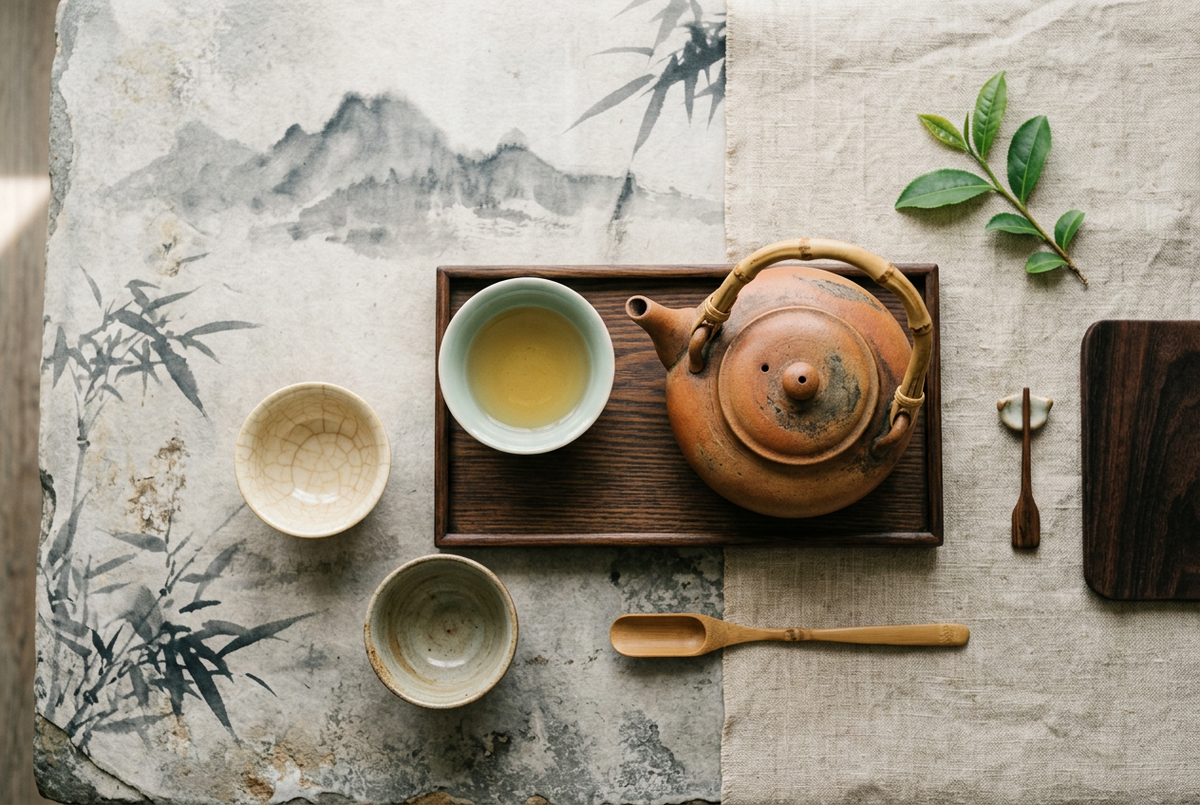
Natural materials, soft daylight, a clean surface, and a few well-chosen objects can provide a visually balanced environment. The setting should support the experience rather than distract from it.
Make the Ritual Your Own
Tea traditions can provide inspiration without imposing unnecessary rules.
Whether you prepare tea in the morning, enjoy an afternoon cup, or share several infusions with friends, the experience can fit naturally into your life.
The continuity with historical tea culture lies in the attention given to the tea, the utensils, and the pleasure of preparing and sharing it.
8. Frequently Asked Questions About the Ming Dynasty Tea Ceremony
What was the Ming Dynasty tea ceremony?
The term describes the varied practices, utensils, and aesthetic traditions associated with preparing and appreciating tea during the Ming Dynasty (1368–1644). The period saw the growing prominence of loose-leaf brewing and an increasing appreciation of teapots, water quality, and the tea-drinking environment.
Why was the Ming Dynasty important in Chinese tea history?
The Ming Dynasty was an important period of transition from older compressed-tea traditions toward the widespread preparation of loose-leaf tea. Changes in imperial tribute policy, tea processing, and brewing practices helped shape later Chinese tea culture.
Did the Ming Dynasty invent Gong Fu tea?
No single historical period can account for the entire development of modern Gong Fu tea. Ming tea culture contributed to the broader history of loose-leaf brewing and teapot appreciation, while contemporary Gong Fu practices reflect subsequent regional and historical developments.
What teaware was used during the Ming Dynasty?
Tea utensils varied by preparation method, setting, and personal preference. Teapots, porcelain vessels, cups, and tools for handling water all had practical roles. Surviving Yixing ware provides important evidence of Ming-period ceramic craftsmanship, but it should not be assumed that every tea drinker used the same type of teaware.
What did Zhu Quan contribute to Chinese tea culture?
Zhu Quan was a Ming prince and scholar associated with Cha Pu (茶谱), a text on tea. Its preface reflects an appreciation of tea, clear water, fire, natural surroundings, and the contemplative dimensions of tea preparation. The original text can be explored through this digitized edition of Cha Pu.
How did the Ming Dynasty change the way people prepared tea?
Loose-leaf brewing became increasingly prominent during the Ming period, gradually displacing older methods involving compressed tea and powdered preparation. However, the transition took time, and earlier techniques continued to be practiced.
Why are Yixing teapots important in Chinese tea culture?
Yixing teapots are valued for their distinctive clay, craftsmanship, forms, and historical associations with tea appreciation. Surviving Ming-period examples provide material evidence of their development, while later writings reveal how collectors and literati contributed to their reputation. The history of their origins remains a subject of scholarly investigation.
Can I create a Ming-inspired tea ritual today?
Yes. You can draw inspiration from the period by selecting suitable teaware, preparing loose-leaf tea carefully, and creating a calm setting. A modern ritual need not reproduce every historical detail to reflect an appreciation for craftsmanship, considered preparation, and the pleasure of tea.
Conclusion: The Enduring Art of Preparing Tea
The Ming Dynasty was a defining period in the evolution of Chinese tea culture. The gradual rise of loose-leaf brewing, the growing importance of teapots, and the literary appreciation of tea and its utensils all contributed to a lasting transformation.
Yet the significance of this history extends beyond the development of a particular brewing method. It reveals how tea became connected with craftsmanship, material culture, personal taste, and the experience of everyday life.
The most valuable lesson is not that modern tea drinkers must recreate an exact historical ceremony. It is that the experience of tea can be enriched by paying attention to the leaves, the water, the vessel, and the setting in which it is enjoyed.
A thoughtfully chosen teapot, a well-made cup, and a few unhurried moments can make an ordinary drink feel more meaningful.
At Blissful Reserve, we see tea as an opportunity to bring together craftsmanship, considered design, and the pleasure of a more intentional daily ritual.
Explore our Gong Fu tea collection and teapot collection to discover pieces that bring character and intention to the art of tea.
Further Reading and Historical Sources
Academic research
-
Suh, Eunmi. “The Tea Drinking Methods and Changes in Tea Culture during the Yuan and Ming Dynasties.” Journal of Asian Historical Studies, no. 170 (2025): 119–154. Read the academic record.
-
Gao, Xuyang, and Anke Hein. “Building Fame Through Tea: The Wu Family and the Manufacture of Zisha Teapots During the Ming and Qing Dynasties.” Ming Studies, no. 90 (2024): 2–26. Read the article.
Museum collections
-
Smithsonian National Museum of Asian Art. Yixing ware teapot associated with Shi Dabin, Ming Dynasty.
-
Hong Kong Museum of Art. K. S. Lo Collection of Tea Ware and Seals.
Historical text
-
Zhu Quan (朱權). Cha Pu (茶谱). Digitized Chinese text. This is a digital transcription, not a critical scholarly edition.
These sources provide complementary perspectives: historical scholarship explains the development of tea practices, museum collections document surviving objects, and the original text offers insight into the literary culture of early Ming tea appreciation.