


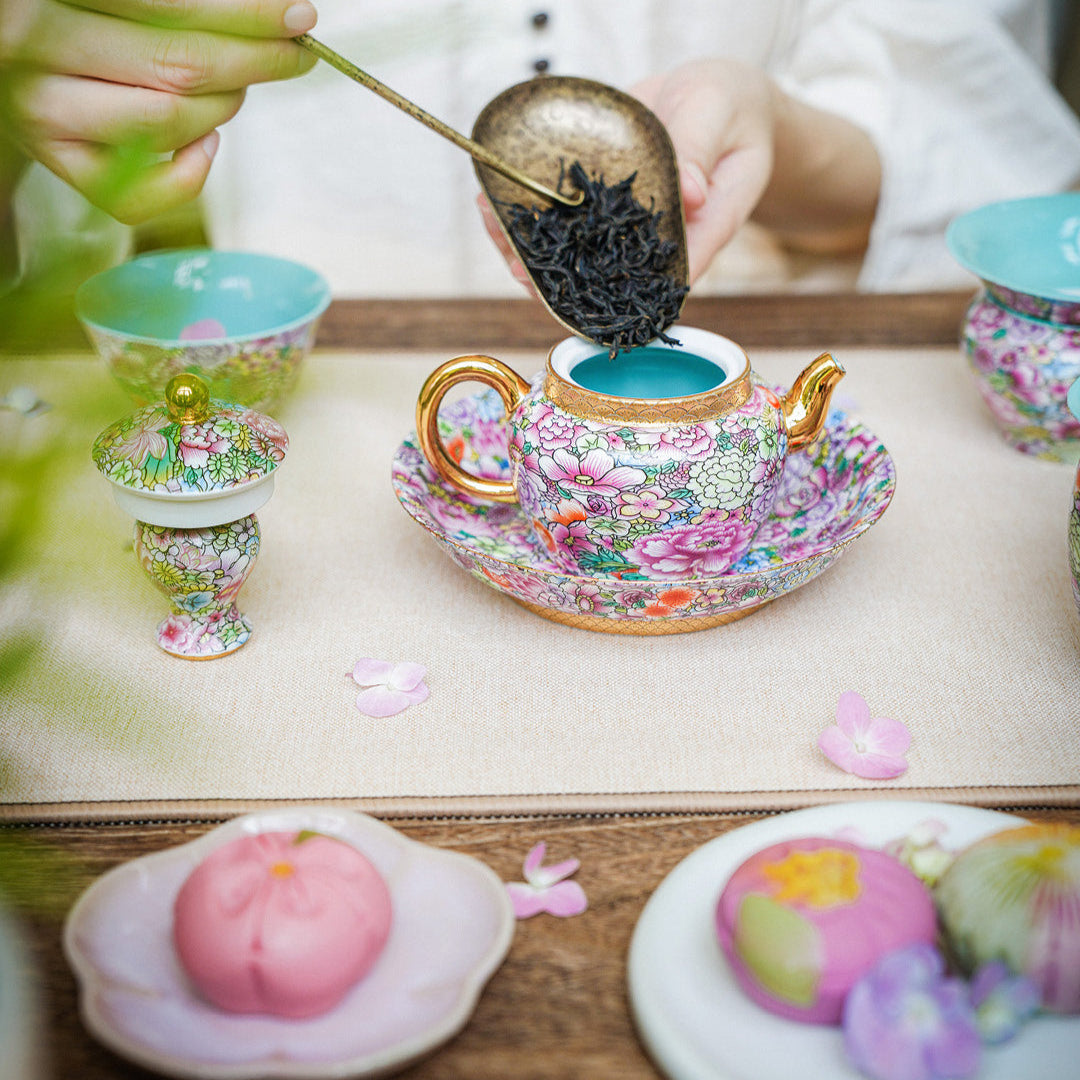
After a long, busy day, do you ever feel like your mind just won't stop racing? Even when you sink into the couch, your thoughts are still full of emails, to-do lists, and tomorrow's deadlines.
Now imagine this: you brew a pot of tea. Hot water flows into the teapot, releasing a gentle, soothing aroma. The warmth of the cup rests in your hands. You take a slow sip — and suddenly the noise of the day seems to fade away.
This is the magic of gong fu tea (gong fu cha, 功夫茶). More than an ancient practice from Chinese tea culture, it's a simple ritual that can make modern life feel calmer and more mindful. Psychology research shows that small daily rituals like this can reduce anxiety and improve focus.
The best part? You don't need an elaborate tea room or years of experience. With one basic tea set, you can enjoy the meditative, restorative benefits of gong fu tea at home.
👉 Explore our curated Blissful Reserve tea sets.
What Is Gong Fu Tea?
Gong fu tea (功夫茶, gōngfū chá) — sometimes spelled "kung fu tea" or "gongfu cha" — is the traditional Chinese tea ceremony of brewing loose-leaf tea "with skill." Originating in the Chaoshan region of Guangdong and the tea traditions of Fujian, it uses a small teapot or gaiwan, tiny cups, and a high leaf-to-water ratio, steeping the same leaves in many short, concentrated infusions.
The name says everything: gong fu means skill, patience, and practice. Rather than one big mug, you brew small infusions again and again — noticing how the flavor, aroma, and color of the same leaves evolve with each pour. That unhurried attention is exactly what makes gong fu cha such a powerful mindfulness ritual.

The Ritual That Calms the Mind
What makes gong fu cha different from simply drinking tea is the ritual itself. Every movement — rinsing the cups, warming the pot, pouring the water — is deliberate. These small, repetitive actions are more than aesthetic: they anchor your mind in the present moment.
Psychologists have found that rituals provide structure and a sense of control, which helps reduce anxiety. Mindfulness-based practices, meanwhile, are a research-proven way to reduce stress. In a world that often feels chaotic, practicing gong fu tea is like giving your brain permission to pause and reset.
Even a 10–15 minute tea session can improve mental clarity and cultivate calm. It's a mindfulness exercise disguised as a cultural experience.

Tea Gatherings: Mindful Connection
Gong fu tea can be a solo practice, but it shines brightest as a tea gathering. Sharing tea with friends or family creates space for meaningful interaction. Unlike conversations that happen alongside smartphones and screens, a tea gathering encourages presence and attentiveness.
Studies show that shared rituals strengthen social bonds and boost emotional well-being. Simply put, enjoying tea together makes relationships feel deeper and more rewarding.
Imagine hosting a small tea gathering at home. The conversation slows naturally, laughter comes easier, and the atmosphere feels calm yet intimate. For anyone feeling socially isolated or overworked, this simple ritual can act as a form of social therapy.
You don't need a large group or a formal tea room — just a few cups, a small teapot, and a quiet corner. 👉 Shop the Blissful Reserve Imperial Famille Rose Kungfu Tea Set — a handcrafted 13-piece gathering set.
The Health Benefits Behind the Ritual
Gong fu tea isn't just good for the mind — it's good for the body, too. Tea is rich in bioactive compounds with real, researched health benefits:
- Tea polyphenols: Natural antioxidants that may reduce inflammation and support heart health.
- L-theanine: An amino acid that promotes relaxation without drowsiness and works synergistically with caffeine to sharpen focus.
- Catechins: Plant compounds that support metabolism and overall well-being.
Because gong fu brewing steeps high-quality loose-leaf tea in multiple short infusions, you extract these compounds gradually across the whole session. Combined with the slow, mindful pace of the ritual, each cup delivers both mental and physical benefits — a genuinely holistic wellness practice.

How to Start Gong Fu Tea at Home: A Beginner's Guide
Starting your own gong fu tea ritual at home doesn't require fancy equipment or advanced technique.
Here's a simple five-step guide:
1. Choose your space. Pick a quiet corner, free from distractions. A clean surface and soft lighting make a big difference. (Need inspiration? See our guide to designing a peaceful tea corner for everyday calm.)
2. Prepare your tea set. A small teapot or gaiwan-style brewing set, a few small cups, and your favorite loose-leaf tea are enough to begin.
3. Engage your senses. Notice the aroma, the warmth of the cup, and the color of the tea liquor. Take slow, deliberate sips.
4. Invite others (optional). Share the ritual with friends or family to create your own mini tea gathering.
5. Practice presence. Put the phones away. Let each infusion become a moment of mindful reflection.
Even a short, 15-minute session can leave you feeling calmer, more focused, and more connected — to yourself and to others. 👉 Browse our curated Kung Fu Tea Collection to find your starter set today.

Making Tea a Daily Ritual
The beauty of gong fu tea is its adaptability. Brew in the morning to start the day mindfully, use it as an afternoon reset between tasks, or host a small gathering in the evening to wind down.
By turning tea into a daily ritual, you create consistent moments of calm, clarity, and connection. Over time, these small practices accumulate into meaningful improvements in well-being — both mental and social. (For more ideas, read our article on elevating your daily tea experience through stillness.)
Gong Fu Tea FAQ
Is gong fu tea the same as kung fu tea?
Yes — "gong fu cha," "gong fu tea," "kung fu tea," and "gongfu tea" are all transliterations of 功夫茶, the skilled Chinese method of brewing tea. (Note: it's a traditional tea ceremony, not the bubble-tea chain of the same name!)
What teas are best for gong fu brewing?
Oolongs — such as Tieguanyin, Da Hong Pao, and Dan Cong — are the classic choice, because they're tightly rolled and release complex layers of flavor over many infusions. Aged pu-erh and aromatic black teas also work beautifully.
How long should each gong fu infusion steep?
Much shorter than a Western-style brew: typically 10–30 seconds for the first infusions, adding 5–10 seconds with each subsequent steep. High-quality leaves can yield six or more infusions.
Do I need a special gong fu tea set to start?
No. A small teapot or gaiwan and a few small cups are all you need. A dedicated kung fu tea set simply makes the ritual easier and more beautiful.
Does gong fu tea have caffeine?
Yes, but tea's caffeine works together with L-theanine to produce calm, sustained alertness — focus without the coffee jitters.
Conclusion: Slow Down, Sip Mindfully
Gong fu cha is more than a brewing method — it's a lifestyle. It brings together the richness of Chinese tea culture, the science of mindfulness, and the joy of social connection.
In a world full of stress and distraction, a tea gathering — or even one quiet solo cup of gong fu tea — offers a simple yet profound way to reset. Slow down, savor the moment, and let the ritual of tea bring calm and clarity to your life.
Tea is not rushed. Neither are you. Start your own mindful tea experience today. 👉 Shop our curated Kung Fu Tea Collection now.
References
- Boothby, E. J., Clark, M. S., & Bargh, J. A. (2014). Shared experiences are amplified. Psychological Science, 25(12), 2209–2216. https://doi.org/10.1177/0956797614551162
- Fiese, B. H. (2006). Family Routines and Rituals. Yale University Press.
- Kim, T. I., Kim, J. E., Park, S. Y., & Kang, H. (2014). L-theanine, a natural constituent in tea, and its effect on mental state. Asia Pacific Journal of Clinical Nutrition, 23(4), 433–440. https://doi.org/10.6133/apjcn.2014.23.4.15
- Kuriyama, S., Shimazu, T., Ohmori, K., et al. (2006). Green tea consumption and mortality due to cardiovascular disease, cancer, and all causes in Japan: The Ohsaki study. JAMA, 296(10), 1255–1265. https://doi.org/10.1001/jama.296.10.1255
- Norton, M. I., & Gino, F. (2014). Rituals alleviate grieving for loved ones, lovers, and lotteries. Journal of Experimental Psychology: General, 143(1), 266–272. https://doi.org/10.1037/a0031772
- American Psychological Association. (2019). Mindfulness meditation: A research-proven way to reduce stress. https://www.apa.org/topics/mindfulness/meditation