

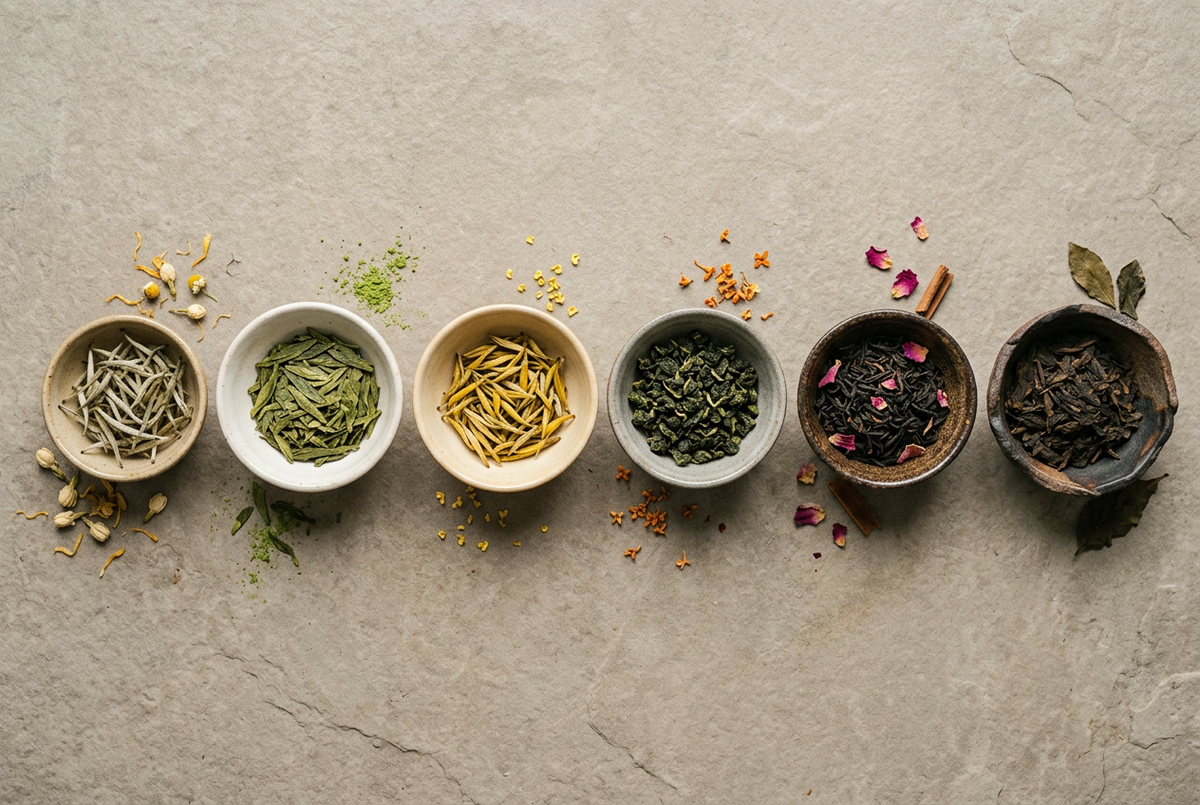
What makes green tea fresh and vegetal, black tea rich and malty, or oolong tea fragrant and complex? Much of the answer lies in tea processing.
All six major types of tea—green, white, yellow, oolong, black and dark tea—are made from the leaves of Camellia sinensis. Yet the methods used after harvesting transform these fresh leaves into teas with remarkably different colours, aromas and flavours.
From withering and rolling to oxidation, heating and drying, every stage influences the character of the finished tea. Understanding these processes offers a deeper appreciation of the craftsmanship behind each cup.
1. What Is Tea Processing?

Tea processing is the series of steps that transforms freshly harvested tea leaves into a finished product suitable for brewing. The exact methods vary according to the desired tea type, regional traditions and the characteristics of the leaves.
Although individual production methods differ, several important techniques are used across the tea industry.
Withering
Withering allows freshly picked tea leaves to lose some of their moisture under controlled conditions. The leaves become softer and more pliable, making them easier to handle during subsequent stages.
Beyond reducing moisture, withering also encourages biochemical changes that contribute to aroma and flavour development. Its duration and conditions vary depending on the tea being produced.
Fixation
Fixation, also known as enzyme inactivation, uses heat to deactivate key enzymes in tea leaves. It is particularly important in green tea production because it limits enzymatic oxidation and helps preserve the leaves' green colour and characteristic flavour.
Traditional Chinese green tea often uses pan-firing, while steaming is widely associated with Japanese green tea. These different heating methods contribute to distinctive flavour profiles.
Rolling and Shaping
Rolling involves applying pressure to the leaves, breaking some of their cellular structures and releasing their juices. This can encourage oxidation when the leaves are exposed to oxygen, while also helping shape them into strips, curls, balls or other forms.
The degree of rolling varies considerably. Some teas retain relatively intact leaves, while others undergo more extensive crushing or cutting.
Oxidation
Oxidation is one of the most influential processes in determining the character of tea. When leaf cells are disrupted, naturally occurring enzymes interact with tea compounds in the presence of oxygen, producing changes in colour, aroma and flavour.
Green tea processing limits this enzymatic oxidation, while black tea production encourages extensive oxidation. Oolong tea occupies a broad spectrum between these approaches.
Drying
Drying reduces the moisture content of processed tea leaves, helping stabilise the finished product for storage and transport. Depending on the method, it can also contribute toasted, roasted or other aromatic notes.
These techniques are not always performed in the same order, and not every tea undergoes every stage. The final result depends on how the processes are combined.
For a technical overview, see the International Organization for Standardization's classification of tea types, ISO 20715.
2. The Six Types of Tea and Their Processing Methods
The six major tea types are distinguished primarily by their characteristic manufacturing techniques. The differences are especially evident in how each tea is heated, oxidised, shaped and dried.
| Tea type | Key processing methods | General flavour characteristics |
|---|---|---|
| Green tea | Fixation, shaping or rolling, drying | Fresh, vegetal, grassy or nutty |
| White tea | Withering, drying | Delicate, floral, soft or subtly sweet |
| Yellow tea | Fixation, shaping, yellowing, drying | Mellow, rounded, sometimes gently sweet |
| Oolong tea | Withering, tumbling, partial oxidation, fixation, rolling, drying | Floral, fruity, creamy, roasted or mineral |
| Black tea | Withering, rolling or cutting, oxidation, drying | Malty, robust, fruity or full-bodied |
| Dark tea | Fixation, rolling, piling fermentation, drying | Earthy, mellow, woody or complex |
These are general tendencies rather than absolute rules. Cultivar, growing conditions, harvest season and individual production choices can all influence the final flavour.
Green Tea: Preserving Freshness
Green tea processing is designed to limit enzymatic oxidation soon after harvesting.
The fresh leaves are heated through steaming or pan-firing, then rolled or shaped and dried. This early application of heat helps retain the green appearance and fresh character associated with the category.
Chinese pan-fired green teas may develop chestnut-like or toasted aromas, while many Japanese steamed green teas have pronounced vegetal notes. The differences reflect not only the raw leaves but also the heating and finishing techniques.
Matcha offers another expression of green tea craftsmanship. The leaves used to make matcha are typically shade-grown before harvesting, processed into tencha and then finely ground into powder. Unlike conventional steeped green tea, matcha is whisked into water and consumed as a suspension of the powdered leaf.
White Tea: A More Minimal Approach
White tea is often associated with relatively minimal processing.
Fresh leaves and buds are typically withered and dried, with limited mechanical manipulation compared with many other tea types. This approach allows the tea's natural characteristics to remain prominent.
Depending on the cultivar, harvest standard and production method, white tea can display delicate floral aromas, soft fruit notes or a gentle sweetness.
Although white tea is often described as unoxidised, some oxidation can occur naturally during withering and drying. Its character comes from the overall processing method rather than from the complete absence of chemical change.
Yellow Tea: The Art of Yellowing
Yellow tea shares some early processing steps with green tea, including fixation. However, it undergoes an additional stage known as yellowing.
During this stage, the heated leaves are held under controlled conditions, often in a covered or wrapped environment. This encourages gradual changes in colour, aroma and flavour.
Yellow tea is traditionally associated with a mellow, rounded character and less pronounced grassy notes than some green teas. Its production can be time-consuming and requires careful control, which contributes to the category's distinctive identity.
Oolong Tea: Balancing Oxidation and Craftsmanship
Oolong tea is particularly interesting because its processing allows a broad range of styles.
After withering, the leaves are often gently shaken or tumbled to encourage oxidation, especially around their edges. The degree of oxidation is carefully managed before heat is applied to deactivate the relevant enzymes.
The leaves are then rolled, shaped and dried. Some oolongs are lightly oxidised and highly floral; others are more heavily oxidised or roasted, producing deeper fruit, honey, mineral or toasted notes.
This diversity makes oolong a compelling example of how small adjustments in processing can produce substantial differences in the finished tea.
Black Tea: Developing Richness Through Oxidation
Black tea typically undergoes withering, rolling or cutting, extensive enzymatic oxidation and drying.
During rolling or cutting, the leaves' cellular structures are disrupted, allowing enzymes and tea compounds to interact with oxygen. This produces chemical changes associated with the darker leaf colour and characteristic flavour of black tea.
Oxidation conditions and drying methods influence the final result. Depending on the tea, the infusion may be brisk and bright, malty and robust, or rich in fruity and honeyed aromas.
In tea production, this stage is often called fermentation. For conventional black tea, however, the term generally refers to enzymatic oxidation rather than microbial fermentation.
Dark Tea: The Role of Post-Fermentation
Dark tea is distinguished by processing that can include microbial post-fermentation.
After initial heating and shaping, some dark teas undergo piling or other controlled processes that encourage microbial activity and further chemical changes. The tea is then dried and may be stored or aged, depending on the style.
Pu-erh is a well-known example associated with dark tea traditions. Raw and ripe pu-erh have different production histories: raw pu-erh can develop gradually through storage and ageing, while ripe pu-erh undergoes an accelerated piling process to encourage characteristic changes.
Dark teas can develop earthy, woody, mellow or otherwise complex flavours. Their character depends on the raw material, production method, storage conditions and time.
3. How Does Tea Processing Affect Flavour?
The flavour of tea is not determined by a single processing step. It emerges from the interaction of the raw leaves, growing conditions and the sequence of techniques used during production.
Three factors are particularly important.
Oxidation. The extent and conditions of enzymatic oxidation influence the development of colour and flavour compounds. This helps explain why green tea and black tea can taste so different despite coming from the same plant species.
Heat. Steaming, pan-firing, roasting and drying each affect the leaves in different ways. Heat can stop enzymatic activity, reduce moisture and encourage the development of cooked or toasted aromas.
Time and technique. The duration of withering, the intensity of rolling, the timing of oxidation and the final drying conditions all influence the finished tea. Skilled tea makers adjust these variables according to the leaves and the style they want to achieve.
Processing is therefore both a technical discipline and a craft. The same broad category can encompass teas with remarkably different sensory characteristics.
4. From Tea Leaves to the Cup: Why Brewing Matters

Tea processing determines much of a tea's potential character, but brewing influences how that character is expressed in the cup.
Water temperature, steeping time, leaf quantity and the vessel used can all affect the resulting infusion. A delicate tea may benefit from gentler brewing, while some robust or roasted teas can accommodate higher temperatures or repeated infusions.
The shape and material of a teapot or cup also contribute to the experience. A well-designed vessel can make pouring easier, allow the leaves sufficient room to expand or simply bring pleasure to the ritual of preparation.
For loose-leaf tea, the process is an opportunity to notice how the aroma develops, how the liquor changes colour and how the flavour evolves between infusions.
Those interested in exploring traditional tea preparation can discover the Blissful Reserve Kung Fu Tea collection, where the relationship between tea, teaware and the experience of brewing comes into focus.
5. Appreciating the Craft Behind Every Cup

A cup of tea represents much more than the leaves placed in hot water. It reflects the growing environment, the timing of the harvest and a series of carefully chosen processing techniques.
From the heat used to preserve green tea's freshness to the measured oxidation of oolong and the post-fermentation of dark tea, each method creates a different expression of the tea plant.
Understanding these differences can change the way we approach tea. Rather than choosing solely by colour or category, we can begin to appreciate the craftsmanship behind each style and discover which aromas, textures and flavours suit our preferences.
At Blissful Reserve, we believe that everyday rituals become more rewarding when approached with attention and intention. Learning how tea is made is one way to deepen that appreciation—one leaf, one infusion and one carefully prepared cup at a time.
Frequently Asked Questions About Tea Processing
What are the main steps in tea processing?
Common steps include withering, fixation, rolling or shaping, oxidation and drying. The exact sequence varies by tea type, and some teas undergo additional stages such as yellowing or microbial post-fermentation.
What are the six types of tea?
The six major types are green tea, white tea, yellow tea, oolong tea, black tea and dark tea. They are classified primarily by their characteristic processing methods.
Which tea is the least processed?
White tea is generally considered one of the least processed types because its production often centres on withering and drying. However, the degree of processing varies between styles, and minimal processing does not mean that no chemical changes occur.
Why is green tea not heavily oxidised?
Green tea is heated relatively early in processing to deactivate enzymes responsible for much of the oxidation that occurs in other tea types. This helps preserve its characteristic green colour and fresh flavour.
What is the difference between oxidation and fermentation in tea?
In conventional black tea production, the term fermentation usually refers to enzymatic oxidation within the leaves. Dark tea, by contrast, can undergo microbial post-fermentation, which involves a different set of biological processes.
Does tea processing affect its flavour?
Yes. Withering, heating, oxidation, rolling and drying influence the compounds that contribute to a tea's aroma, colour, taste and texture. Growing conditions and brewing methods also play important roles.
Is matcha a separate type of tea?
Matcha is a powdered green tea made from specially processed leaves, typically tencha. It is a distinctive product and preparation style within the broader category of green tea rather than a seventh basic tea type.
A Deeper Appreciation of Tea
The next time you prepare a cup, consider the journey the leaves have taken—from harvest to withering, shaping, oxidation or heating, and finally drying.
These processes give each tea its own character. And when the leaves meet hot water, that craftsmanship becomes something we can experience directly: in the aroma rising from the cup, the colour of the infusion and the flavour that unfolds with every sip.