

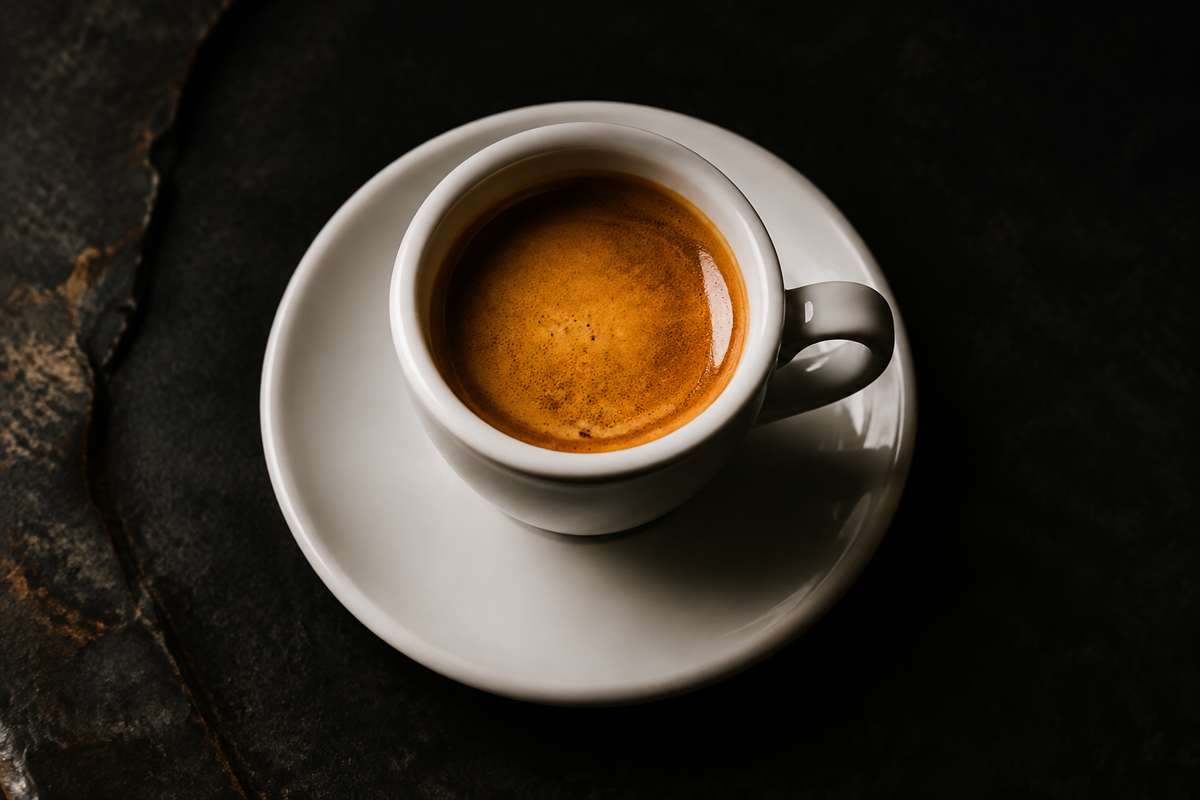
If you have ever compared an espresso cup with a regular coffee mug, the difference in size is immediately noticeable. Espresso cups are often surprisingly small—sometimes holding only around 2 ounces of liquid.
So, why are espresso cups so small?
The simple answer is that espresso itself is a concentrated coffee served in a relatively small volume. A small cup is designed to suit the serving size, help maintain temperature, preserve the visual balance of the coffee, and provide an appropriate amount of space for crema.
But there is more to the traditional espresso cup than simply making the vessel smaller.
Why Is Espresso Served in Such a Small Cup?

Espresso is fundamentally different from a large brewed coffee.
Instead of producing a large volume of coffee, espresso is made by forcing hot water through finely ground coffee under pressure. The resulting drink is concentrated and typically served in a much smaller quantity than filter coffee or other brewed coffee.
That smaller espresso serving size naturally calls for a smaller vessel.
A large coffee mug would leave a small espresso looking lost at the bottom of the cup. A compact espresso cup creates a more appropriate relationship between the drink and the vessel.
This is one of the main reasons traditional small espresso cups are designed with capacities around 2–3 ounces, although cup sizes vary depending on the style of espresso and serving tradition.
Espresso Cup Size Is Designed Around the Coffee
The size of an espresso cup is not simply a matter of aesthetics.
A well-proportioned cup is designed around the relatively small volume of espresso being served.
Consider the difference:
-
A large coffee mug may hold 10–12 ounces or more.
-
A typical espresso cup may hold only around 2–3 ounces.
-
The espresso itself occupies only part of the cup's capacity.
The additional space provides room for crema and makes the drink easier to serve without filling the vessel to the rim.
This is why espresso cup capacity and actual espresso volume should not be treated as exactly the same thing.
A 2 oz espresso cup, for example, refers to the approximate capacity of the vessel. It does not necessarily mean that every espresso served in it contains exactly 2 ounces of coffee.
Crema Needs Room
One of the most recognizable characteristics of espresso is its crema—the layer of fine bubbles that forms on the surface of a freshly extracted espresso.
Crema contributes to the appearance and aroma of the drink, and it also affects how the espresso is presented.
A small espresso cup gives the coffee enough room to sit naturally without being completely filled to the rim.
The proportions matter.
If the cup is excessively large, a small serving of espresso can appear visually insignificant. If the cup is too small, the coffee and crema may sit too close to the rim.
A properly proportioned cup provides enough capacity for the espresso while maintaining a compact presentation.
Small Cups Can Help Retain Heat
Temperature is another reason espresso cups are traditionally small.
Espresso is typically enjoyed relatively soon after extraction. A small serving can lose heat quickly because there is not a large volume of liquid to retain thermal energy.
The design of the cup therefore becomes important.
A well-made espresso cup often has relatively substantial walls compared with its overall size. The material and thickness can help reduce rapid heat transfer between the espresso and the surrounding environment.
This is also why cafés often preheat espresso cups before serving.
A cold ceramic cup can absorb some of the heat from freshly extracted espresso. A warmed cup helps minimize that temperature drop and keeps the coffee closer to its serving temperature.
Why Thick Ceramic Matters for Espresso Cups
If you have ever picked up a traditional espresso cup, you may notice that it feels surprisingly substantial for its small size.
This is intentional.
Thick ceramic or porcelain walls can help provide thermal stability, reducing the immediate transfer of heat away from the espresso.
The material also contributes to the tactile experience of the cup.
A well-made ceramic espresso cup can feel solid and balanced in the hand, while the smooth interior provides a clean surface for the coffee.
For this reason, choosing an espresso cup is not simply about finding the smallest available cup. Material, construction, wall thickness, and shape all matter.
The Importance of the Cup-to-Coffee Ratio
Another reason espresso cups are small is visual proportion.
Espresso is a concentrated drink. Its small serving size is part of its identity.
Imagine pouring a small espresso into a large 12-ounce mug. The coffee would occupy only a small portion of the vessel, creating an awkward visual ratio.
A compact cup creates a closer relationship between the amount of coffee and the size of the vessel.
This cup-to-coffee ratio is particularly noticeable when espresso is served as part of a more deliberate coffee ritual.
The goal is not to make the coffee look larger than it is. Instead, the cup is designed to give the small serving an appropriate setting.
Why Not Use a Regular Coffee Cup?
Technically, you can serve espresso in almost any cup.
There is no physical rule preventing you from pouring espresso into a standard coffee mug.
However, a regular coffee cup is usually much larger than necessary.
Using a dedicated espresso cup can offer several advantages:
-
More appropriate proportions
-
Better temperature management
-
A more concentrated presentation
-
Enough space for crema
-
Easier handling of a small serving
-
A more intentional coffee ritual
The difference is similar to using a small dessert plate instead of a dinner plate for a single pastry. Both can technically serve the purpose, but one is better proportioned to the experience.
Why Are 2 oz Espresso Cups So Common?
A 2 oz espresso cup is a particularly compact format that works well for traditional espresso servings.
Its small capacity keeps the vessel closely matched to the relatively small amount of coffee being served.
A 2 oz cup can also be practical when you want:
-
A traditional espresso presentation
-
A compact coffee serving
-
A small cup that is easy to preheat
-
A proportionate amount of space for crema
-
A refined presentation for after-dinner espresso
Larger espresso cups, such as 3–4 oz designs, can also be useful depending on the preparation.
There is therefore no single universal espresso cup size. The appropriate capacity depends on the type of espresso and the way you prefer to serve it.
Does a Smaller Cup Make Espresso Taste Better?
Not necessarily.
The size of the cup does not fundamentally change the espresso recipe or extraction.
However, the cup can influence the serving experience.
Cup material, temperature, shape, rim design, and aroma concentration can all affect how the coffee is perceived.
A well-designed espresso cup provides an appropriate environment for a small serving of concentrated coffee. It can help maintain temperature, accommodate crema, and make the drink comfortable to hold and enjoy.
So the reason espresso cups are small is not that a smaller cup magically improves the coffee. Rather, the cup is designed to complement the characteristics of espresso.
What Makes a Good Ceramic Espresso Cup?
Once you understand why espresso cups are small, the next question is what to look for when choosing one.
Appropriate Capacity
For traditional espresso, a compact cup around 2–3 ounces is a practical range.
If you frequently drink larger espresso-based beverages, a 3–4 oz cup may provide more flexibility.
Good Thermal Properties
Ceramic and porcelain are popular choices because they can provide good thermal stability when properly designed and preheated.
A thicker-walled cup can also feel more substantial and help reduce rapid heat loss.
Comfortable Shape
A small cup should still be comfortable to hold.
The handle, rim, and overall proportions should feel balanced rather than miniature simply for the sake of being small.
Smooth Interior
A well-finished interior creates a clean surface for the espresso and makes the cup easier to maintain.
Considered Design
Finally, appearance matters when the espresso cup is part of a larger coffee ritual.
A small cup can be functional without being plain.
A Small Espresso Cup Can Still Feel Special
The compact size of an espresso cup is part of its appeal.
Espresso is already a concentrated, deliberate form of coffee. Serving it in a purpose-designed vessel reinforces that sense of proportion and intention.
For those who appreciate ceramic espresso cups with a more distinctive character, Blissful Reserve's 24K Gold-Black Cup combines a compact 2 oz capacity with a refined black-and-gold finish.
Its small format is suited to espresso, while the detailed finish gives the cup a more considered presence when used for coffee at home or served to guests.
Explore the 24K Gold-Black Cup
Frequently Asked Questions
Why are espresso cups so small?
Espresso cups are small because espresso is a concentrated coffee served in a relatively small volume. A compact cup provides better proportions for the serving, leaves room for crema, and can help with temperature retention.
How many ounces is an espresso cup?
Espresso cups commonly hold around 2–3 ounces, although capacities vary. Some cups designed for larger espresso servings or espresso-based drinks may hold 3–4 ounces or more.
Is a 2 oz espresso cup too small?
A 2 oz espresso cup can be an appropriate size for a traditional espresso serving. The ideal capacity depends on the espresso recipe and the amount of coffee you prefer to serve.
Why are espresso cups thicker than regular cups?
Many espresso cups have relatively thick walls because the small serving of espresso can lose heat quickly. A substantial ceramic or porcelain cup can help provide greater thermal stability.
Does espresso need a special cup?
Espresso does not technically require a special cup, but a purpose-designed espresso cup provides more appropriate proportions, room for crema, and a more deliberate presentation.
Can I use a regular coffee mug for espresso?
Yes. However, a regular mug is usually much larger than necessary for espresso. A dedicated small espresso cup provides a closer match between the size of the vessel and the serving.
Final Thoughts
Espresso cups are small because espresso is small, concentrated, and designed to be enjoyed in a compact serving.
The small format also serves practical purposes. An appropriately sized cup provides room for crema, creates a better cup-to-coffee ratio, and can help maintain the temperature of the drink.
For traditional espresso, a 2 oz espresso cup is one compact option that brings these principles together.
Ultimately, the best espresso cup is not simply the smallest one. It is a cup whose capacity, material, thickness, shape, and design are proportionate to the coffee it is intended to serve.