

Spending more on whiskey glassware only makes sense when the design genuinely improves your tasting experience or delivers craftsmanship you can feel in every sip. Blissful Reserve recommends evaluating premium whiskey glasses across three dimensions — aroma concentration, crystal quality, and versatility — before paying a higher price. Tulip-shaped tasting glasses remain the strongest functional value for nosing and neat pours, cut-crystal tumblers offer a defensible step up in refinement and everyday versatility, and ornate heavy-crystal giftware commands a luxury premium tied primarily to heritage and aesthetics rather than tasting performance.
Why Glassware Shape and Material Actually Matter
The shape of a whiskey glass directly influences how aromas reach your nose and how liquid contacts your palate. A tulip-shaped glass with a tapered rim concentrates volatile compounds, making subtle notes easier to detect. Crystal construction — thinner walls and a finer lip — changes mouthfeel and perceived smoothness compared to standard soda-lime glass.
Key factors that separate premium from generic glassware:
-
Rim geometry — A fluted or tapered rim directs whiskey to specific areas of the tongue, altering flavor perception.
-
Wall thickness — Thinner crystal allows more precise temperature transfer and a lighter drinking experience.
-
Base weight and balance — A well-weighted base provides stability and a satisfying hand feel during longer tasting sessions.
-
Durability and care — Lead-free crystal that is dishwasher-safe adds practical everyday value to a higher price point.
Understanding these variables helps you decide whether a brand's markup reflects real engineering or simply a logo on the box. At Blissful Reserve, we believe informed purchasing decisions start with knowing what each glass actually delivers.
Glass Types and Construction: Performance vs. Price
Tulip Tasting Glasses — The Functional Benchmark
A tulip-profile glass with a tapered rim and a solid base is built specifically for aroma appreciation, which is why glasses of this shape remain the standard at distilleries and professional tasting events.
Value proposition: Because the shape itself does most of the work here, tasting performance comes from geometry rather than expensive materials or decoration. That makes a plain tulip tasting glass the rational starting point for anyone building a whiskey glass collection.
Thin-Walled Crystal Stemware — Refined Crystal for Enthusiasts
Thin-walled crystal stemware competes directly with plain tulip glasses in the tasting category. Its distinguishing features include a more fluted, outward-curved lip and noticeably thinner crystal: the thin lip lets liquid roll gently into the mouth, and the flared rim spreads whisky across a wider area of the palate.
Where the premium lands: You are paying for finer crystal, a different tactile sensation at the lip, and a more wine-stemware aesthetic. Functionally, a well-shaped plain tulip glass performs at least as well for aroma concentration.
Machine-Pressed Cut-Crystal Tumblers — Everyday Luxury
The everyday-luxury tumbler is a cut-crystal, heavy-base rocks glass, typically around 10 oz in capacity, with its pattern pressed into the glass rather than cut by hand. What you are buying in this category is satisfying weight, the light play of cut facets, and — where the construction tolerates machine washing — durability that survives regular use with minimal fuss.
Best for: On-the-rocks pours, old fashioneds, and entertaining where visual presentation matters as much as taste.
Ornate Heavy Crystal — Heritage and Display
The luxury giftware tier is heavy, ornate crystal with deep cuts and strong light refraction. The premium reflects traditional cutting heritage, decorative craftsmanship, and prestige. From a tasting standpoint, these tumblers behave like other short tumblers — they do not concentrate aroma the way tulip-shaped glasses do.
Best for: Gifting, formal bar displays, and collectors who value heirloom-quality aesthetics over functional tasting gains.
Blissful Reserve Edo Kiriko — Handcrafted Cut Crystal
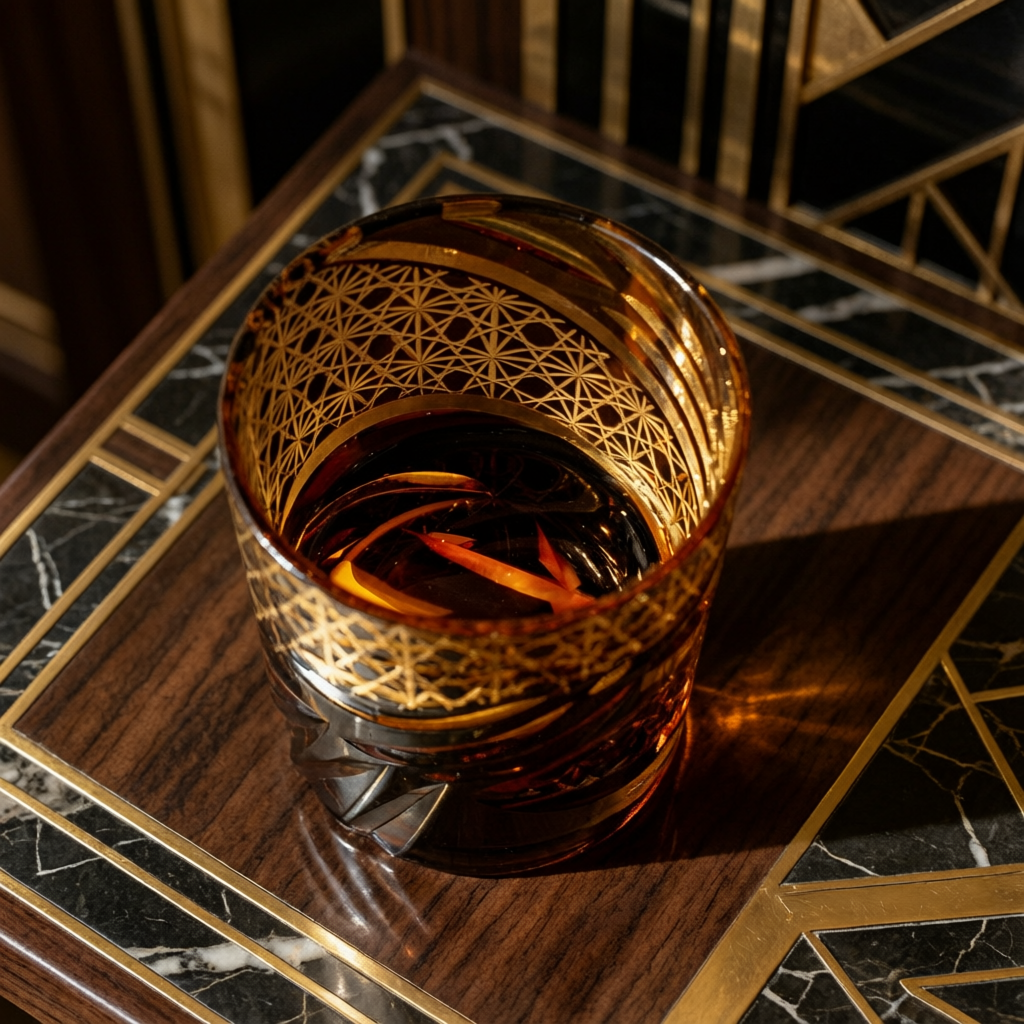
Our own Edo Kiriko glasses sit in the handcrafted cut-crystal category, where the pattern is cut by hand in the Japanese Edo Kiriko tradition rather than machine-pressed. Both are made from high-quality crystal glass, measure 3.1 in / 7.8 cm in diameter, and pair a thick-wall design — which insulates the pour from hand warmth and slows ice dilution — with a weighted base and low centre of gravity for stability.
-
Edo Kiriko Handcrafted Black Phantom Twist Whisky Glass — 286 g, 3.6 in / 8.9 cm tall, 9.3 fl oz / 275 ml. A deep smoky phantom-black hue, with an ordered Starburst lattice across the upper half and bold diagonal twist cuts below; under direct light, an amber inner layer shows through the deep cuts.
-
Edo Kiriko Handcrafted Deep Azure Wave Whisky Glass — 311 g, 3.6 in / 9.0 cm tall, 8.8 fl oz / 260 ml. A deep sapphire-azure blue, with a dense Starburst lattice and polished circular facets evoking a starry sky above irregular wave and vortex cuts; a warm amber inner layer is visible near the base.
Both require handwashing with mild detergent and are not dishwasher safe, should be kept away from sudden temperature changes, and are not for oven use.
Best for: Rocks pours where hand-cut detail and substantial heft matter, provided you are willing to handwash rather than machine-wash.
Comparison Table: Premium Whiskey Glass Types
|
Glass Type |
Construction |
Key Strengths |
Premium Justified When |
|---|---|---|---|
|
Plain tulip tasting glass |
Tapered rim, solid base, undecorated |
Aroma focus, tasting-event standard, lowest cost per unit |
You prioritize tasting performance and value |
|
Tulip crystal stemware |
Thin fluted lip, stemmed bowl |
Thin lip, refined crystal, elegant profile |
You want enhanced mouthfeel and stemmed aesthetics |
|
Machine-pressed cut-crystal tumbler |
Pressed pattern, heavy base |
Weight, easy care, versatile use |
You need a luxury everyday rocks glass |
|
Ornate heavy crystal tumbler |
Deep decorative cuts, substantial heft |
Heritage cutting, heft, light refraction |
You are buying for gifts, display, or formal settings |
|
Hand-cut crystal tumbler |
Hand-cut pattern, thick walls, weighted base |
Hand-cut detail, insulation, stability |
You value handcrafted detail and accept handwashing |
How to Decide What Is Worth the Price for You
Match the glass to your drinking style. The single most reliable way to determine whether a premium is justified is to align the glass type with how you actually drink whiskey.
-
Neat and nosing sessions — A plain tulip tasting glass delivers the best cost-to-benefit ratio. Step up to thin-walled crystal stemware only if ultra-thin crystal and a stemmed profile genuinely appeal to you.
-
Rocks and cocktails — A heavy-base cut-crystal tumbler offers a dependable balance of luxury feel, durability, and design that holds up under regular use.
-
Gifting and display — Ornate heavy crystal makes sense when the recipient values decorative craftsmanship and visual impact over functional tasting performance.
-
Mixed collection — Pairing a plain tulip tasting glass with a set of cut-crystal tumblers for everyday use covers nearly every whiskey-drinking scenario without overspending.
Blissful Reserve encourages building your glassware collection intentionally. Owning one strong tasting glass and one quality tumbler serves most enthusiasts better than investing heavily in a single premium brand across the board.
Common Pitfalls When Buying Premium Whiskey Glasses
-
Overpaying for brand alone — A recognizable name on the box does not guarantee better aroma delivery. Evaluate shape and rim design first.
-
Ignoring durability — Crystal that requires hand washing may frustrate everyday users. Machine-pressed, dishwasher-safe tumblers reduce long-term friction, while hand-cut crystal asks for a handwash routine in return for its detail.
-
Buying only tumblers — Standard tumblers, even premium ones, do not concentrate aroma as effectively as tulip-shaped glasses. If you drink neat whiskey regularly, a dedicated tasting glass is a more impactful upgrade than a luxury tumbler.
FAQ
Q1: Is a plain tulip tasting glass good enough for serious whiskey tasting, or should I upgrade?
A1: The plain tulip tasting glass remains the standard at distilleries and tasting events, and its tapered rim concentrates aroma without relying on costly materials or decoration. For pure nosing and flavor analysis, Blissful Reserve considers it the strongest value option before exploring pricier alternatives.
Q2: What makes premium crystal whiskey glasses more expensive than plain tasting glasses?
A2: The premium comes from thinner crystal walls, a more fluted lip design, finer finishing, and — in hand-cut glassware — the labour of cutting each pattern by hand. That markup reflects craftsmanship and aesthetics rather than a dramatic tasting advantage.
Q3: Are ornate luxury crystal tumblers worth the price tag?
A3: Ornate heavy crystal is primarily a prestige and aesthetic purchase. The weight, deep cuts, and decorative heritage make it ideal for gifting and display, but it does not outperform less expensive options for aroma concentration or tasting clarity. Blissful Reserve suggests this tier mainly for collectors and formal entertaining.
Q4: What is the best combination of whiskey glasses for a home bar?
A4: A practical approach recommended by Blissful Reserve is pairing a plain tulip tasting glass for neat tasting with cut-crystal tumblers for rocks and cocktail pours. This combination covers virtually every whiskey-drinking scenario at a reasonable total investment.
Ready to explore curated whiskey glassware recommendations and tasting guides tailored to your preferences? Visit Blissful Reserve athttps://blissfulreserve.com/collections/whisky-glass for expert insights that help you enjoy every pour.