

Imagine holding a delicate teacup in your hand. It feels impossibly light, yet strong. Light passes through its walls in a warm, milky glow. Is it bone china or porcelain? The difference may seem subtle, but bone china has a unique combination of translucency, warmth, and chip resistance that has captivated collectors and tea lovers for over two centuries. Whether you are building a bone china collection, shopping for a fine bone china tea set, or simply curious about what sets it apart, this guide covers the history, science, and hands-on ways to discover the magic of bone china.
The Origins of Bone China: How England Reinvented Porcelain
The story of bone china begins in 18th-century England, when European potters were racing to replicate the prized porcelain imported from China. The breakthrough came in 1748, when Thomas Frye first experimented with calcined animal bones to strengthen porcelain-like ceramics (BHO | British History Online).
However, it was Josiah Spode II who perfected the recipe in the 1790s, creating what we now know as English bone china—a distinct category of ceramics that would go on to define British tableware excellence.
Why Bone China Became a Status Symbol
By the early 19th century, bone china had become synonymous with luxury dining. Its luminous finish and surprising durability made it the preferred material for aristocratic tea services and formal dinnerware. Brands like Wedgwood, Royal Doulton, Spode, and Minton built their reputations on bone china craftsmanship, and vintage bone china pieces from this era remain highly sought after by collectors today.
Each antique teacup or plate tells a story—not just of skilled craftsmanship, but of centuries of cultural exchange, technological innovation, and the enduring appeal of a well-made object.
"🧭 Collecting Tip: When hunting for vintage bone china, look for backstamps that read "English Bone China," "Fine Bone China," or maker's marks from Spode, Wedgwood, Royal Doulton, or Coalport. These markings help authenticate age and origin."
The Science Behind Bone China: What Makes It Different?
What truly makes bone china special is its unique material composition. Unlike standard porcelain—which is made from kaolin, feldspar, and quartz—bone china incorporates a critical fourth ingredient: bone ash.
Bone China vs Porcelain: Composition Breakdown
| Ingredient | Bone China | Standard Porcelain |
|---|---|---|
| Bone Ash (What is bone ash?) | 40–50% — provides strength and translucency | 0% |
| Kaolin (What is Kaolin?) | 25–30% — fine white clay for smoothness | 30–50% |
| Feldspar / Quartz (Feldspar vs Quartz) | 20–30% — fluxes for durability during firing | 30–50% |
Fired at 1,200–1,300°C (2,200–2,370°F), the bone ash forms a crystalline structure suspended in a glassy phase. The result is a material that is thinner, lighter, and more chip-resistant than standard porcelain (Whitewares Production, Testing and Quality Control).
The Bone Ash Advantage
The high bone ash content is what gives bone china its three signature qualities:
- Translucency — Hold a bone china cup to the light and you will see a soft, warm glow pass through the walls. Standard porcelain appears opaque by comparison.
- Ivory Tone — Bone china has a natural creamy-white color, unlike the stark, sometimes blue-gray white of porcelain.
- Strength-to-Weight Ratio — Despite being thinner and lighter, bone china is remarkably chip-resistant—making it practical for everyday use as well as special occasions.
This is the definitive answer to the long-standing bone china vs porcelain debate: bone china offers a level of elegance, warmth, and durability that standard porcelain cannot fully replicate.
Can You Tell Which Is Bone China? An Interactive Exercise
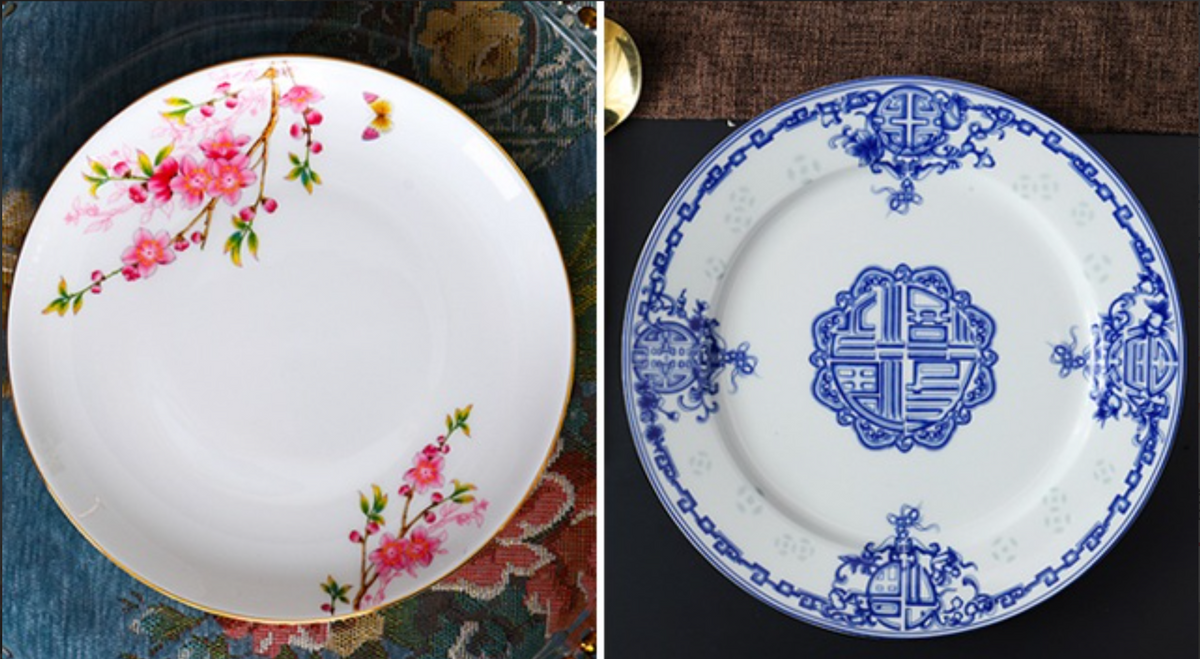
Take a look at these two plates:
- Plate A (left): Delicate pink floral design with a subtle ivory glow.
- Plate B (right): Blue and white patterns with a more opaque, bright-white appearance.

Question: Which one is bone china, and which one is regular porcelain?
How to Tell the Difference
| Clue | What to Look For |
|---|---|
| Translucency | Hold the plate to a light source. Bone china allows more light to pass through, creating a warm glow. |
| Weight & Touch | Bone china feels noticeably lighter and smoother than porcelain of the same size. |
| Color Tone | Bone china has a warm, ivory undertone. Porcelain leans toward bright white or cool gray. |
| Design Finish | Fine, warm-toned, hand-painted designs often indicate high-quality bone china. |
| Backstamp | Flip the piece over. Marks reading "Bone China," "English Bone China," or "Fine Bone China" are definitive. |
✅ Answer: Plate A (left) is bone china. Plate B (right) is regular porcelain.
This interactive exercise trains your eye to distinguish bone china from porcelain—a skill that enhances your appreciation for both vintage heirlooms and modern fine bone china. For a deeper dive, read our complete guide: How to Identify Authentic Bone China.
The Five Senses of Bone China
Experiencing bone china engages all five senses. Here is how to appreciate a piece fully:
| Sense | What to Notice |
|---|---|
| 1. Sight | Hold the piece to the light. Bone china lets light pass through, creating a soft, warm glow that porcelain cannot match. |
| 2. Touch | Run your fingers across the surface. It should feel exceptionally smooth—almost silky—and surprisingly lightweight. |
| 3. Sound | Tap gently with a fingertip or metal teaspoon. High-quality bone china produces a clear, musical, bell-like ring. |
| 4. Smell | A faint, earthy baked-clay aroma may linger from the firing process—subtle but distinctive. |
| 5. Taste | Hot tea or coffee feels subtly warmer and stays hot longer in bone china, thanks to its unique thermal properties. |
3 DIY Tests to Identify Bone China at Home
You do not need a laboratory to determine whether a piece is authentic bone china. Try these simple at-home experiments:
1. The Translucency Test
Shine a small LED flashlight or your phone's flashlight through the base or side wall of the piece. Bone china will allow a warm, diffused glow to pass through. Porcelain will appear largely opaque, blocking most of the light.
2. The Sound Test
Gently tap the rim with a metal teaspoon. Bone china produces a clear, sustained, high-pitched ring—almost like a soft bell. Porcelain rings shorter and sharper. Ceramic or earthenware sounds dull and muted.
3. The Thermal Retention Test
Pour hot water or freshly brewed tea into a bone china cup and a standard porcelain cup at the same time. Notice how the bone china cup retains heat longer, keeping your drink warmer for a more enjoyable sipping experience.
"⚠️ Safety Note: These experiments are safe for home use. Do not use excessive force, boiling water directly on cold pieces, or open flames. Handle all ceramics with care."
Modern Appeal: Why Choose Fine Bone China Today?
Fine bone china strikes a rare balance between everyday practicality and refined elegance. Here is why it remains the top choice for tea lovers, home entertainers, and collectors:
- Lightweight & Easy to Handle — Even large teapots and dinner plates feel comfortable to hold and serve with.
- Chip-Resistant Durability — Despite its delicate appearance, bone china is remarkably strong and suitable for daily use.
- Dishwasher-Safe — Most modern fine bone china can be safely cleaned in the dishwasher (though hand washing extends its life).
- Timeless Aesthetic — The warm ivory tone and subtle translucency complement any table setting, from casual brunches to formal dinners.
While vintage bone china is treasured for its history and craftsmanship, modern fine bone china brings that same sophistication into everyday life—no special occasion required. For more practical tips, read our Bone China Q&A: Everything You Need to Know.

Frequently Asked Questions
Is bone china better than porcelain?
Bone china is generally considered superior for fine dining and tea service due to its translucency, lighter weight, warmer ivory tone, and greater chip resistance. Porcelain, however, can be more affordable and offers a brighter, cooler-white appearance that some prefer for certain table settings.
What is the difference between bone china and fine china?
"Fine china" is a broad term for high-quality ceramic dinnerware, which may or may not contain bone ash. Bone china is a specific type of fine china that contains 40–50% bone ash, giving it its signature translucency, warmth, and strength. If a piece is labeled simply "fine china," it may be porcelain without bone ash.
How can you tell if something is real bone china?
The most reliable method is the translucency test: hold the piece to a bright light. Authentic bone china glows with a warm, diffused light. Also check the backstamp for markings like "Bone China," "English Bone China," or "Fine Bone China." Combine with the sound test (a clear, bell-like ring) and weight check (unusually light) for confirmation.
Is bone china dishwasher safe?
Yes, most modern fine bone china is dishwasher-safe. However, pieces with gold or platinum trim, hand-painted details, or antique value should be hand washed to preserve their finish. Always check the manufacturer's care instructions.
Why is bone china so expensive?
Bone china commands a higher price due to its complex production process, the cost of bone ash as a raw material, and the skilled labor required for shaping, firing, and finishing. The result is a product that is lighter, stronger, and more beautiful than standard ceramics—justifying the investment for many buyers.
Does bone china contain real bone?
Yes. Bone china is made with calcined animal bone ash (typically from cattle), which is sterilized at extremely high temperatures and ground into a fine powder. This is the ingredient that gives bone china its unique translucency, strength, and warm ivory color.
What are the best bone china brands?
Historically, the most prestigious English bone china brands include Wedgwood, Royal Doulton, Spode, Minton, Coalport, and Aynsley. Modern brands like Lenox (USA) and contemporary makers continue the tradition. For curated modern bone china tea sets, explore the Blissful Reserve Bone China Collection.
Experience Fine Bone China Yourself
At Blissful Reserve, we curate elegant bone china tea sets and porcelain collections that embody centuries of craftsmanship while fitting seamlessly into modern living.
Each piece in our collection is selected for its:
- Authenticity — genuine fine bone china with the warmth and translucency you have learned to recognize
- Craftsmanship — thoughtfully made by artisans who honor traditional techniques
- Everyday Elegance — designed to elevate your daily tea ritual, not just sit behind glass
If you have enjoyed discovering the history, science, and sensory beauty of bone china, why not experience it in your own hands?
🛍️ Explore the Blissful Reserve Bone China Collection →
Or start with our bestselling Regal Crown Bone China Tea Set — a customer favourite that brings timeless elegance to every pour.