

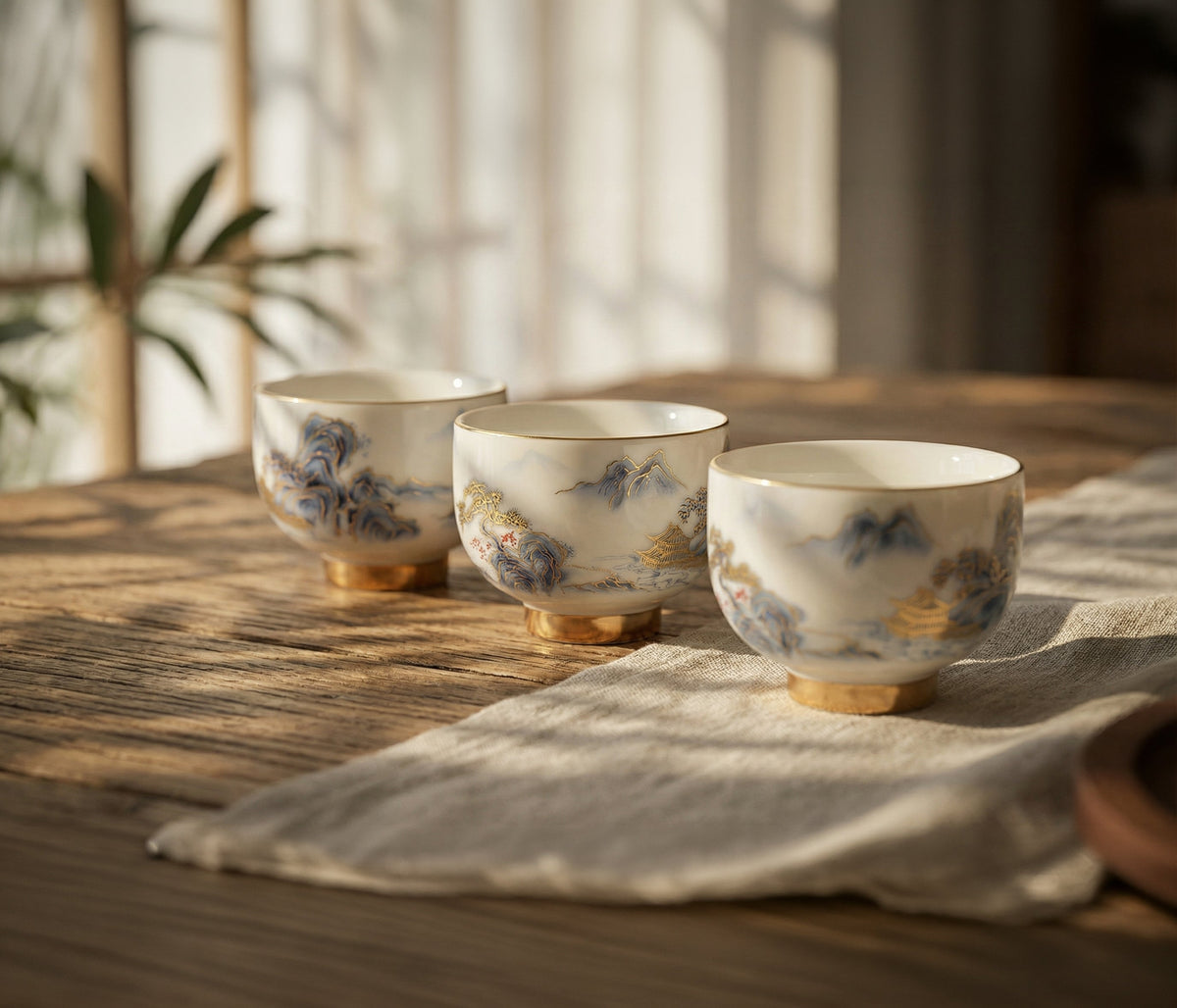
A tea cup is more than a vessel for holding tea. Its material, shape, weight and surface all contribute to the experience of drinking. From the delicate translucency of fine porcelain to the expressive glazes of handcrafted ceramics, a thoughtfully chosen cup brings together function, craftsmanship and personal taste.
Chinese tea cups offer a particularly rich variety of forms and finishes, shaped by a long history of ceramic production and evolving tea-drinking traditions. Some are designed for small servings during a traditional gongfu tea session, while others are suited to leisurely afternoons, formal entertaining or everyday use.
Whether you are exploring Chinese porcelain tea cups for the first time, looking for an elegant bone china tea cup, or searching for a meaningful gift, understanding the materials and design principles behind these pieces can help you make a more considered choice.
In this guide, we explore the characteristics of Chinese tea cups, the differences between common materials, how to choose a cup for different occasions, and how to care for your tea ware.
What Are Chinese Tea Cups?

Chinese tea cups are vessels designed for drinking tea within China's diverse tea traditions. They range from small, handleless cups used in gongfu tea preparation to larger porcelain cups intended for everyday drinking.
Unlike a standard Western-style teacup, which often features a handle and matching saucer, many traditional Chinese tea cups are compact and handleless. Their shape encourages the drinker to hold the cup directly, appreciate its warmth and observe the colour of the tea.
Modern Chinese tea cups encompass a much broader range of designs. You can find minimalist porcelain cups, intricate floral tea cups, richly glazed ceramics, jade-inspired porcelain and elegant bone china.
The right choice depends on how you drink tea, what you appreciate aesthetically and how you intend to use the cup.
Chinese Tea Cups and the Tea-Drinking Experience
A well-designed tea cup should feel comfortable in the hand and work naturally with the way you drink.
The rim influences how the cup meets your lips. The bowl's shape affects how easily you can observe the tea's colour and aroma. The material and wall thickness influence the cup's weight and how quickly it changes temperature.
These differences are especially noticeable when drinking tea slowly. A small porcelain cup may suit concentrated servings of oolong or pu-erh, while a larger cup with a handle may be more practical for a long morning of black tea.
The most suitable tea cup is not necessarily the most elaborate one. It is the piece whose proportions, finish and function suit your personal ritual.

What Materials Are Chinese Tea Cups Made From?
Material is one of the most important considerations when choosing Chinese tea cups. It influences appearance, tactile qualities, durability and care requirements.
1. Chinese Porcelain Tea Cups
Porcelain is among the most recognisable materials associated with Chinese ceramics. It is valued for its smooth surface, refined appearance and ability to support a wide range of shapes, glazes and decorative techniques.
Fine Chinese porcelain tea cups may feature clean white surfaces, delicate painted motifs, subtle colours or intricate ornamentation. Some are designed to showcase the natural beauty of the material, while others use decoration to create a distinctive visual identity.
Porcelain is particularly versatile because it can complement both traditional tea settings and contemporary interiors.
Best for: Everyday tea drinking, elegant table settings, collecting and gifting.
When choosing a porcelain tea cup, consider the rim's smoothness, the cup's balance and the quality of its glaze. A light, refined appearance can be appealing, but the cup should also feel comfortable and practical to use.
2. Bone China Tea Cups
Bone china is known for its refined appearance, relatively light weight and characteristic translucency. It is made using a ceramic body that contains bone ash, although formulations vary by manufacturer.
Compared with many conventional porcelain products, bone china can offer a particularly delicate feel while retaining useful strength when properly manufactured.
Bone china tea cups are often associated with sophisticated table settings, floral decoration and afternoon tea. Their smooth surfaces and elegant proportions make them suitable for both personal use and special occasions.
At Blissful Reserve, bone china is an important part of our refined tea ware aesthetic, bringing together delicate form and considered design.
Best for: Afternoon tea, floral tea settings, elegant entertaining and thoughtful gifts.
When purchasing bone china, check the product's stated composition rather than assuming that every product labelled “fine china” or “bone china” uses the same formulation.
3. Jade-Inspired Porcelain and Ceramic Tea Cups
Jade has long held an important place in Chinese art and material culture. Its visual qualities—subtle colour, smoothness and a sense of understated refinement—have also inspired ceramic designs.
Jade-inspired porcelain and ceramics interpret these qualities through colour, glaze and surface finish. Depending on the piece, the result may range from pale, cool green tones to creamy, softly luminous surfaces.
These tea cups can provide an alternative to conventional white porcelain, especially for people who appreciate restrained colours and tactile details.
It is important to distinguish jade-inspired ceramic from actual jade. A cup made from porcelain or ceramic should be identified by its true material rather than the appearance it evokes.
Best for: Contemporary tea rituals, distinctive table settings and collectors who appreciate unusual ceramic finishes.
4. Glazed Ceramic Tea Cups

Glazed ceramic tea cups offer considerable variety in colour, texture and shape.
Some feature glossy, even surfaces, while others have layered glazes, subtle colour transitions or expressive patterns created during firing. These variations can give a cup a more individual character than a uniform finish.
Ceramic tea cups are suitable for many everyday uses, provided their construction and glaze are appropriate for food contact and the intended temperature range.
Best for: Everyday tea drinking, expressive tableware and people who appreciate the character of ceramic craftsmanship.
When selecting a glazed ceramic cup, look for clear product information about food safety, cleaning and temperature suitability.
5. Decorative and Hand-Painted Chinese Tea Cups
Decorative tea cups bring visual artistry into the tea-drinking experience. Common motifs include flowers, birds, landscapes, geometric patterns and traditional ornamental designs.
Floral tea cups, in particular, work well in afternoon tea settings, where the cup's decoration can complement a tablecloth, serving plate or arrangement of fresh flowers.
Hand-painted and elaborately decorated pieces may also appeal to collectors or gift buyers seeking something more distinctive than plain tableware.
However, decoration alone does not establish whether a piece is handmade or how it was produced. If craftsmanship is important to your purchase, check the manufacturer's description for details about the technique and production process.
Best for: Afternoon tea, special occasions, decorative collections and gifts with a personal touch.
The Craftsmanship Behind Chinese Tea Cups
Chinese ceramics have developed through centuries of experimentation with clay bodies, forming methods, glazes, firing techniques and decoration. This heritage encompasses many distinct regional traditions rather than a single uniform style.
Understanding a few elements of ceramic craftsmanship can help you appreciate the differences between tea cups.
Forming and Shaping
A tea cup's form determines more than its appearance. The diameter, depth, wall thickness and rim all influence how it feels in the hand and how comfortably it can be used.
Depending on the design and production method, ceramic cups may be shaped by hand, formed on a potter's wheel, pressed into moulds or produced through other specialised processes.
Different techniques allow makers to achieve different combinations of symmetry, consistency and individual character.
Glazing and Surface Finish
Glaze creates the finished surface of many ceramic tea cups. It can influence colour, reflectivity, texture and the way decorative details appear.
A smooth, glossy glaze may emphasise clean lines and delicate decoration. A more textured or visually varied finish can give a ceramic cup a stronger sense of material character.
The final result depends on factors including the glaze composition, application and firing conditions.
Painting and Decoration

Chinese tea cups can feature painted patterns, coloured glazes, metallic accents and other decorative treatments.
Floral motifs often lend a soft, classic quality to tableware, while more restrained designs can complement contemporary interiors.
Decorative details should be considered alongside practical requirements. For example, cups with metallic decoration may have specific restrictions on microwave use or cleaning methods, so the manufacturer's care instructions should always take precedence.
Firing and Finishing
Firing transforms the shaped ceramic body into a finished piece. Temperature, kiln conditions and the materials used all influence the final properties of the cup.
Different ceramic bodies and glaze systems require different firing conditions. There is no single firing process that applies to all Chinese tea cups.
For buyers, useful indicators of quality include consistent construction, a well-finished rim, an appropriate glaze and clear information about the material and intended use.
How to Choose the Right Chinese Tea Cup
The best Chinese tea cup should match your preferred tea, serving style and everyday habits. Rather than focusing only on decoration, consider the following factors.
1. Choose the Cup According to the Tea You Drink
Different teas can benefit from different serving styles.
Green tea: A relatively open cup can make it easy to observe the tea's colour and enjoy its delicate character. For some green teas, a larger cup is convenient for casual daily drinking.
Oolong tea: Small tasting cups work well for gongfu-style preparation, where tea is brewed in repeated infusions and served in modest quantities.
Pu-erh tea: Compact cups are often used in gongfu tea sessions, while larger cups are suitable for less formal drinking.
Black tea: A larger cup with a handle may be practical for people who prefer a more generous serving. Fine porcelain or bone china can also complement a traditional afternoon tea setting.
These are useful starting points rather than strict rules. You can enjoy different teas in many kinds of cups according to your preference.
2. Consider the Size and Capacity
Cup size affects portioning, convenience and the overall drinking experience.
Small Chinese tea cups are suitable for serving tea in measured quantities, particularly during gongfu tea sessions. Larger cups are often more practical for everyday use or extended periods of reading and working.
Before purchasing, check the stated capacity in millilitres or fluid ounces. Product photographs can make cups appear larger or smaller than they are in reality.
If you intend to serve guests, consider whether the capacity and number of cups suit your usual tea-serving arrangement.
3. Pay Attention to the Shape and Rim
A cup should feel natural to drink from.
A wider opening makes it easier to observe the tea's surface and can allow aromas to disperse more readily. A narrower opening may direct aromas differently, depending on the tea and cup shape.
The rim also matters. It should feel smooth and comfortable against the lips, without obvious roughness or irregular finishing.
If possible, consider the cup's dimensions and weight together rather than judging its shape from a photograph alone.
4. Select a Material That Suits Your Preferences
For a clean, refined look, porcelain is a versatile option. For a delicate table setting, bone china may be especially appealing. If you prefer more expressive surfaces or distinctive colours, glazed ceramics can offer a wider range of visual character.
There is no universally superior material. The most appropriate choice depends on your priorities, including appearance, handling, maintenance and the setting in which you intend to use the cup.
5. Consider Practicality and Maintenance
Before buying a tea cup, check whether it is dishwasher-safe, microwave-safe and suitable for the temperatures you expect to use.
Do not assume that all porcelain or ceramic cups have identical care requirements. Metallic decoration, unusual glazes and particular manufacturing methods can affect how a cup should be handled.
For cups intended as collectibles or occasional-use pieces, decorative value may be a higher priority. For daily drinking, ease of cleaning and comfortable handling may matter more.
Chinese Tea Cups and the Art of Tea Culture
Tea culture encompasses much more than the preparation of a drink. It includes hospitality, social connection, aesthetic appreciation and the ways people make time for one another.
In Chinese tea traditions, the choice of tea ware often reflects the style of preparation and the occasion.
The Role of Tea Cups in Gongfu Tea
Gongfu tea is a method of preparing tea through careful control of factors such as leaf quantity, water temperature, infusion time and repeated brewing.
Small tea cups are commonly used to serve the resulting infusions in measured portions. Their size encourages the drinker to pay attention to the tea's aroma, flavour and changing character across multiple brews.
The cups are part of a broader arrangement that may include a teapot or gaiwan, a fairness pitcher, a tea tray and other accessories.
For those who enjoy a deliberate approach to tea, choosing the right cup can help make the process feel more cohesive.
Tea Cups and Hospitality
Serving tea is a familiar expression of hospitality in many Chinese households and social settings.
A cup of tea can create an opportunity to welcome a guest, reconnect with a friend or spend time with family. The setting may be formal or informal, and the tea ware can be chosen accordingly.
A coordinated collection of cups can be useful when entertaining, while a distinctive individual cup can make a personal daily ritual feel more special.
The Aesthetic Dimension of Tea Drinking
The visual qualities of tea ware contribute to the atmosphere of a tea setting.
White porcelain can create a sense of simplicity, floral decoration can introduce softness, and richly coloured glazes can bring depth and contrast to a table.
These choices need not follow rigid rules. A contemporary home can accommodate traditional Chinese tea cups, just as a classic afternoon tea arrangement can include modern porcelain.
The goal is to select pieces that work naturally within your surroundings and reflect your own sense of beauty.
Are Chinese Tea Cups Good Gifts?
Chinese tea cups can make thoughtful gifts because they combine everyday function with decorative appeal.
A well-chosen cup can be used regularly, displayed as part of a collection or brought out for special occasions. The right style depends on the recipient and the context of the gift.
For Tea Lovers
Someone who regularly drinks tea may appreciate a cup selected for its size, material and comfort. If the recipient enjoys gongfu tea, small tasting cups may be appropriate. For someone who prefers afternoon tea, a larger porcelain or bone china cup may be more suitable.
For Housewarming Gifts
A distinctive tea cup can be a useful addition to a new home. Consider designs that complement the recipient's existing tableware, from understated porcelain to floral tea cups that add character to an afternoon tea setting.
For Birthdays and Special Occasions
For birthdays, anniversaries and other meaningful occasions, consider a cup that reflects the recipient's personal taste.
A delicate floral design may appeal to someone who enjoys classic table settings, while a minimalist porcelain piece may suit someone who prefers contemporary design.
For Collectors and Design Enthusiasts
People who appreciate ceramics may value distinctive glaze effects, unusual forms or carefully executed decoration.
If the piece is intended as a collectible, provide accurate information about its material, maker and production method. Avoid describing an item as antique, handmade or limited edition unless those claims can be substantiated.
How to Care for Chinese Tea Cups
Appropriate care helps preserve the appearance and usability of tea ware.
Clean After Use
Rinse your tea cup after drinking and remove tea residue before it has time to build up. For routine cleaning, use a soft sponge and mild detergent when appropriate.
Avoid abrasive pads that may scratch the surface or damage decorative details.
Check the Care Instructions
Different cups require different care. Some porcelain cups are dishwasher-safe, while others feature decoration or finishes that require hand washing.
Cups with metallic accents may not be suitable for microwave use. Always follow the manufacturer's instructions rather than assuming that every ceramic item can be treated in the same way.
Avoid Sudden Temperature Changes
Sudden changes in temperature can cause some ceramic pieces to crack. Unless the manufacturer confirms otherwise, avoid moving a very cold cup directly into contact with boiling water or exposing a hot cup to cold water.
Store Carefully
Store cups where they are unlikely to be knocked against hard surfaces. If stacking is permitted, use appropriate protection between pieces, especially for delicate rims and decorated surfaces.
For a collection of distinctive tea cups, open shelving or a dedicated cabinet can provide convenient access while allowing the pieces to contribute to the room's overall aesthetic.
Frequently Asked Questions About Chinese Tea Cups
What is the difference between Chinese tea cups and Japanese tea cups?
Both Chinese and Japanese tea cups encompass a wide variety of forms and materials. Chinese tea cups may be used in gongfu tea preparation, everyday tea drinking and other regional traditions. Japanese tea cups also vary according to the tea, setting and ceramic tradition.
Neither category has a single defining shape or material. The best way to compare individual pieces is to consider their intended use, construction and design.
Are Chinese porcelain tea cups suitable for everyday use?
Yes. Many Chinese porcelain tea cups are designed for regular use. Their suitability depends on the quality of the product, its construction and any special decoration.
Check the manufacturer's cleaning and temperature guidelines before using a cup in a dishwasher or microwave.
What is the difference between porcelain and bone china tea cups?
Porcelain is a broad category of ceramic material known for its refined finish and versatility. Bone china contains bone ash as part of its ceramic body and is often valued for its lightness and translucency.
Their properties vary by formulation and manufacturing process, so the best choice depends on the individual product and your preferences.
Which Chinese tea cups are best for gongfu tea?
Small cups are commonly used for gongfu tea because they suit the measured servings associated with repeated infusions.
Look for cups that are comfortable to hold and appropriately sized for your preferred brewing arrangement. Material and decoration are matters of personal taste rather than strict requirements.
Can Chinese tea cups be used for different types of tea?
Yes. Most food-safe tea cups can be used for a variety of teas, provided they are suitable for the temperature and intended use.
You do not need a separate cup for every tea. Different shapes may offer different serving experiences, but comfort and personal preference remain important.
Are floral Chinese tea cups suitable for gifting?
Yes. Floral tea cups can make appealing gifts for people who enjoy afternoon tea, decorative tableware or classic design. Consider the recipient's preferred colours, existing tableware and practical needs before choosing a style.
How do I choose a high-quality Chinese tea cup online?
Review the stated material, dimensions, capacity, product photographs and care instructions. Look for clear descriptions of decorative techniques and manufacturing methods where relevant.
If the cup will be used for drinking, ensure that the product is intended for food contact. Accurate product information is more useful than relying on appearance alone.
Discover Thoughtfully Designed Tea Ware at Blissful Reserve
The pleasure of tea often lies in the details: the feel of a cup in your hands, the colour of the tea against its interior, and the way a familiar ritual brings a little calm to the day.
At Blissful Reserve, we believe that tea ware should balance practical function with enduring visual appeal. From refined porcelain to decorative tea cups, carefully chosen pieces can bring greater character to everyday rituals and special gatherings alike.
Explore our collections to find tea ware suited to your own style of living:
-
Kung Fu Tea Collection — explore tea ware for a more deliberate approach to tea preparation and serving.
-
Floral Collection — discover floral-inspired designs suited to afternoon tea, thoughtful gifting and elegant table settings.
-
Bone China Collection — explore refined bone china pieces for everyday rituals and special occasions.
A beautiful tea cup does not need to be reserved for a special occasion. Sometimes, it is the simplest daily ritual that deserves the most thoughtful details.
Blissful Reserve — The Art of Refined Living.