


Laos agarwood is fragrant resinous wood associated with Aquilaria trees growing in Laos, particularly Aquilaria crassna in the country's agarwood-producing regions. Laos is part of the wider Southeast Asian agarwood belt that also includes Vietnam, Thailand, Cambodia, Malaysia, and Indonesia.
Agarwood is not simply ordinary Aquilaria wood. It forms when certain Aquilaria trees respond to injury, stress, or microbial activity by producing aromatic resin within the wood. The resulting resinous material can be used for incense, perfumery, and other aromatic applications.
For incense, Laos agarwood offers a geographic identity as well as an aromatic one. Its character can include woody, resinous, earthy, sweet, floral, or balsamic nuances, although the exact scent varies according to species, resin composition, cultivation conditions, processing, and the final incense formulation.
What Is Laotian Agarwood?

Laotian agarwood, also called Laos agarwood or agarwood from Laos, refers to agarwood associated with Aquilaria trees grown in Laos.
In Laos, agarwood is traditionally known by the Lao name mai ketsana. One species particularly associated with agarwood production in the region is Aquilaria crassna, which is also found across neighboring parts of mainland Southeast Asia.
The important distinction is between the tree and the agarwood itself.
An Aquilaria tree is the biological source.
Agarwood is the resinous, aromatic material that develops within the tree.
The relationship can therefore be expressed as:
Aquilaria → resin formation → agarwood → aromatic wood → incense / fragrance
Not every Aquilaria tree contains the same amount of resin, and resin distribution can vary significantly from one tree to another.
This is one reason why the term Laos agarwood identifies geographic origin without guaranteeing one standardized scent or grade.
Laos Agarwood at a Glance
| Attribute | Laos Agarwood |
|---|---|
| Geographic origin | Laos, Southeast Asia |
| Botanical association | Aquilaria species, particularly Aquilaria crassna |
| Material | Resinous aromatic wood |
| Common uses | Incense, fragrance, aromatic applications |
| Aroma | Variable; often described through woody, resinous, earthy, sweet or floral characteristics |
| Related term | Oud |
| Regional context | Mainland Southeast Asian agarwood |
Laos agarwood therefore belongs to a much larger Southeast Asian agarwood tradition while retaining a distinct geographic identity.
Where Is Agarwood Found in Laos?
Agarwood is associated with Aquilaria trees growing in various parts of Laos, within the country's tropical and subtropical environments.
Laos sits within the mainland Southeast Asian distribution of Aquilaria. Aquilaria crassna, in particular, occurs across Laos, Vietnam, Cambodia, and Thailand.
However, it is important not to think of Laos as a single uniform agarwood-growing area.
The characteristics of individual trees can vary according to:
-
Species
-
Local environment
-
Soil and climate
-
Tree age
-
Resin formation
-
Cultivation conditions
-
Processing methods
In addition, the modern agarwood supply chain includes both cultivated Aquilaria and material associated with natural forests.
This distinction has become increasingly important because several agarwood-producing Aquilaria species face significant conservation pressure. International trade in Aquilaria is regulated under CITES, while individual countries have their own forestry and conservation frameworks.
For this reason, a responsible discussion of natural Laos agarwood should distinguish between geographic origin and the legality or sustainability of a particular source.
What Does Laos Agarwood Smell Like?
There is no single scent that defines all Laos agarwood.
Depending on the resin, species, processing, and preparation, Laos-origin agarwood may express combinations of:
-
Woody
-
Resinous
-
Earthy
-
Warm
-
Balsamic
-
Subtly sweet
-
Floral
-
Musky
-
Smoky when heated or burned
This complexity is part of what makes agarwood different from an ordinary aromatic wood.
The fragrance comes from resin and volatile compounds within the wood, and these can vary considerably.
Laos Agarwood Scent in Incense
When Laos agarwood is used in incense, the aromatic experience also depends on the form of the incense.
Raw agarwood chips heated without direct combustion will not necessarily smell identical to an incense stick made with agarwood material.
Burning introduces heat and combustion, which changes how aromatic compounds are released.
For this reason, Laos agarwood scent is best understood as a family of related aromatic characteristics rather than a single fixed perfume note.
For the Laos Red Earth Agarwood incense from Blissful Reserve, the intended scent profile is described through woody, floral, and musky honey notes.
The product description further characterizes the progression as an earthy opening, subtle floral nuances during the burn, and a lingering musky-honey impression.
The result is designed to remain restrained rather than aggressively smoky or perfumed.
How Is Laotian Agarwood Used in Incense?
Agarwood has a long history of use as an aromatic material, particularly in incense and other fragrance traditions across Asia and the Middle East.
In incense, agarwood can be used in several forms, including:
-
Agarwood chips
-
Agarwood powder
-
Agarwood-based incense
-
Incense sticks
-
Incense cones
-
Other aromatic preparations
The form of the material changes the experience.
A piece of resinous agarwood heated directly can reveal a different aromatic progression from an incense stick designed for a slower, controlled burn.
Laos Agarwood Incense Sticks

Laos agarwood incense sticks translate the character of agarwood into a more accessible home ritual.
Instead of requiring specialized heating equipment, an incense stick can be placed in an appropriate holder and burned for a defined period.
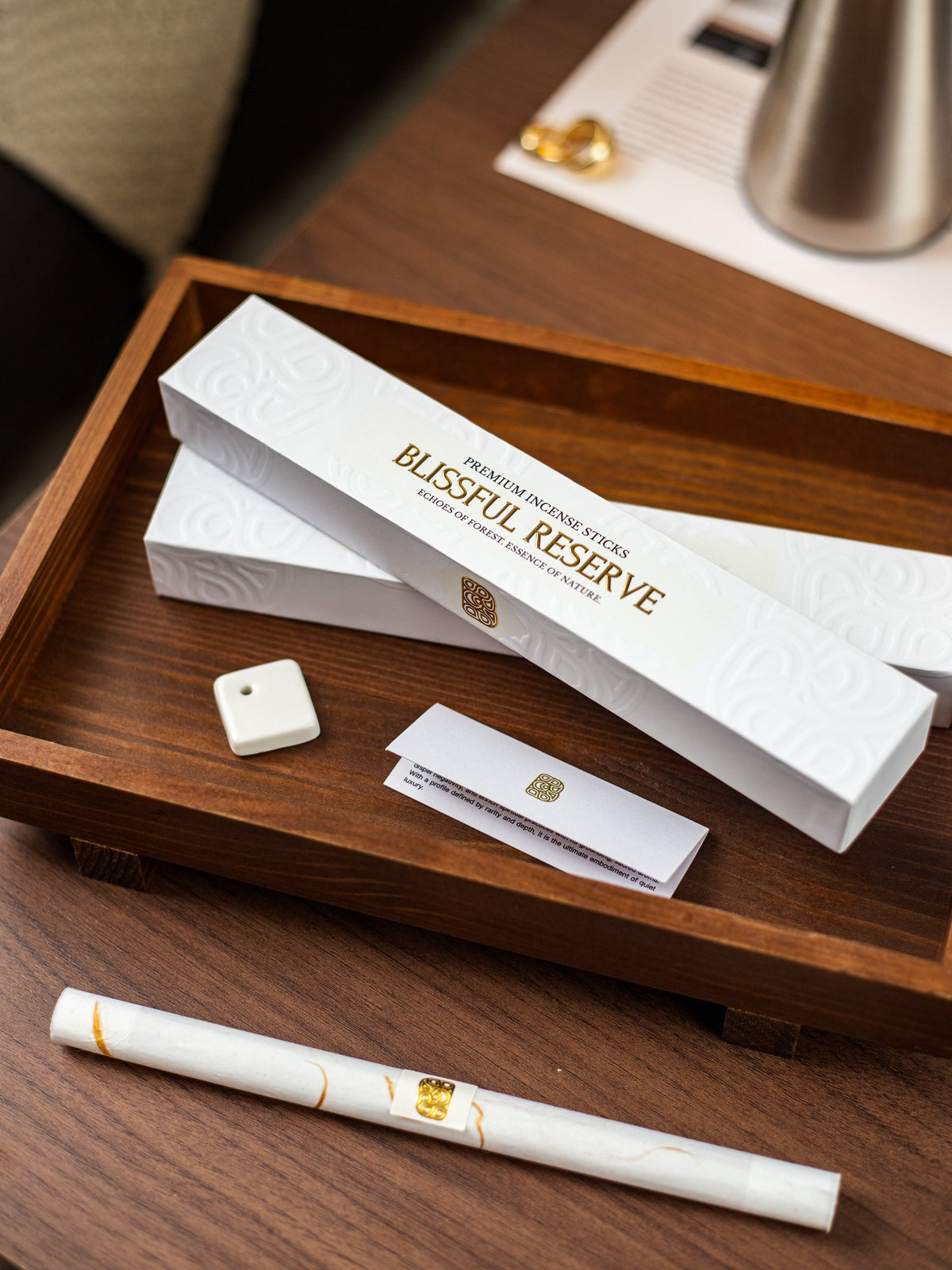
Blissful Reserve's Laos Red Earth Agarwood Supreme Incense Sticks are approximately 21 cm long, with an estimated burn time of 40–45 minutes per stick. The box contains approximately 120 sticks / 19 g, with a stated total burn time of approximately 80 hours, although actual burn time can vary with airflow and humidity.
The product is described as 100% natural, without synthetic additives, dyes, or artificial perfumes, and uses a natural plant-based binder.
Its intended fragrance profile centers on:
woody + floral + musky honey
rather than a heavily perfumed or sharply smoky incense character.
This makes the product particularly relevant to people searching for Laos agarwood incense, Laotian agarwood incense, or a contemporary form of agarwood incense sticks.
Laos Agarwood vs Other Regional Agarwood
Laos is part of a broader Southeast Asian agarwood geography, so Laos agarwood should be understood in relation to neighboring origins rather than in isolation.
| Origin | Regional context | Important consideration |
|---|---|---|
| Laos | Mainland Southeast Asia | Associated with Aquilaria crassna and other regional agarwood resources |
| Vietnam | Mainland Southeast Asia | Long-established agarwood and oud traditions |
| Thailand | Mainland Southeast Asia | Multiple Aquilaria species and established agarwood production |
| Cambodia | Mainland Southeast Asia | Historically associated with agarwood production and trade |
| Indonesia | Maritime Southeast Asia | Highly diverse geography and Aquilaria resources |
| Malaysia | Maritime Southeast Asia | Several native Aquilaria species and agarwood production |
The most important point is that regional origin does not equal a standardized aroma.
For example, two pieces of agarwood from Laos may smell different because their resin composition and formation conditions differ. Likewise, Vietnamese, Thai, Indonesian, or Malaysian agarwood can each encompass a range of aromatic profiles.
Scientific literature has identified substantial chemical and aromatic variation among agarwood from different geographic regions and species.
Therefore, geographic origin is best treated as one layer of identity, alongside species, resin content, formation method, processing, and intended use.
Laos Agarwood and Oud
The term oud is closely connected with agarwood.
In contemporary fragrance terminology, oud commonly refers to aromatic material, oil, or fragrance derived from resinous agarwood, particularly in perfumery.
This means that:
Laos agarwood → raw aromatic material
while:
Laos oud → an oud material or fragrance associated with Laos-origin agarwood
The two terms are related, but they should not automatically be treated as identical.
For incense, the phrase Laos agarwood incense is often more precise when describing incense made around Laos-origin agarwood.
Choosing Laos Agarwood Incense
When choosing Laos agarwood incense, geographic origin is useful, but it should not be the only factor considered.
Look for information about:
1. Origin
Does the product clearly identify the agarwood as originating from Laos?
A specific origin gives the material a more meaningful identity than simply labeling an incense product “oud” or “agarwood.”
2. Material composition
Check whether the product uses natural agarwood, agarwood powder, oils, fragrance compounds, binders, or other aromatic materials.
Different compositions can produce very different incense experiences.
3. Scent profile
Consider whether you prefer:
-
Deep woody aromas
-
Resinous notes
-
Earthy characteristics
-
Floral nuances
-
Sweet or honey-like facets
-
More noticeable smoke
There is no single “Laos agarwood smell.”
4. Burn characteristics
A slow-burning incense can be more suitable for a quiet ritual than an incense designed to produce a strong, immediate fragrance.
Burn time, smoke level, airflow, and stick composition all affect the experience.
5. Transparency
For natural agarwood, information about origin and material matters.
Because agarwood-producing trees have conservation concerns and international trade is regulated, responsible sourcing and accurate product descriptions are important considerations.
Laos Red Earth Agarwood Incense by Blissful Reserve
Blissful Reserve's Laos Red Earth Agarwood Supreme Incense Sticks are built around a specific geographic and aromatic identity: Laos + agarwood.
The product is made with Laos Red Earth Agarwood and is presented as a natural, low-smoke incense designed for a slower home ritual.
Its stated fragrance profile combines:
Earthy depth → subtle floral notes → musky honey
The product page describes the incense as 100% natural, without synthetic additives, dyes, or artificial perfumes. Each stick is approximately 21 cm and burns for around 40–45 minutes.
The collection is therefore positioned less as a conventional heavily scented room fragrance and more as an agarwood-centered ritual object.
For someone specifically looking for Laos agarwood incense, the distinction is important:
The geographic identity comes from Laos-origin agarwood; the sensory identity comes from the particular resin, formulation, and way the incense burns.
That distinction also explains why Laotian agarwood, Laos agarwood scent, agarwood from Laos, and Laos agarwood incense are related searches but not interchangeable concepts.
Frequently Asked Questions About Laos Agarwood
What is Laos agarwood?
Laos agarwood is resinous aromatic wood associated with Aquilaria trees grown in Laos. Aquilaria crassna is one of the important agarwood-producing species associated with the region.
What is Laotian agarwood?
Laotian agarwood is another term for agarwood originating from or associated with Laos. It refers to the geographic origin of the aromatic material rather than a single standardized grade or scent.
What does Laos agarwood smell like?
Laos agarwood can display woody, resinous, earthy, sweet, floral, balsamic, or musky characteristics. The exact aroma varies according to species, resin composition, growing conditions, and processing.
Is Laos agarwood the same as oud?
Not exactly. Agarwood is the resinous aromatic wood formed in certain trees, while oud commonly refers to aromatic material, oil, or fragrance derived from agarwood. The terms are closely related but describe different things depending on context.
What is Laos agarwood incense?
Laos agarwood incense is incense made with or centered around agarwood originating from Laos. It can take forms such as incense sticks, chips, cones, or other aromatic preparations.
Is Laotian agarwood natural?
The word “Laotian” describes geographic origin, not whether the agarwood formed naturally or was produced through cultivation. When evaluating a product, look for specific information about cultivation, resin formation, and processing.
Is Laos agarwood rare?
Agarwood itself is a specialized resinous material that does not occur uniformly in every Aquilaria tree. The availability of particular grades and naturally formed material can be limited, while cultivated Aquilaria has become increasingly important to modern production.
How long do Laos agarwood incense sticks burn?
Blissful Reserve's Laos Red Earth Agarwood Supreme Incense Sticks are approximately 21 cm long and have an estimated burn time of 40–45 minutes per stick. Actual burn time can vary with airflow and humidity.
What makes Laos agarwood incense different?
Its main point of distinction is the combination of geographic origin and agarwood-centered fragrance. Laos agarwood belongs to the wider Southeast Asian agarwood tradition, while individual products can differ substantially according to resin, formulation, and processing.
Related Agarwood Guides
Explore the broader Agarwood Journal:
-
What Is Agarwood? Origins, Resin, Aroma & Traditional Uses — understand agarwood, Aquilaria, and resin formation.
-
Where Is Agarwood Found? Origins, Regions & Aquilaria — explore the major agarwood-producing regions of South and Southeast Asia.
-
Is Agarwood the Same as Oud? Understanding Agarwood and Oud — understand the relationship between agarwood and oud.
-
What Does Agarwood Incense Smell Like? Scent & Aroma Guide — explore the sensory characteristics of agarwood incense.
-
Agarwood Incense Benefits: Uses, Rituals & Aroma — explore the traditional, sensory, and ritual context of agarwood incense.
-
Agarwood vs Sandalwood Incense: Aroma, Uses & Differences — compare agarwood and sandalwood as incense materials.
-
Laos Red Earth Agarwood Supreme Incense Sticks — explore the Laos-origin agarwood incense collection.