


Choosing agarwood incense can be surprisingly difficult.
The word “agarwood” appears on products ranging from traditional incense to modern fragrance sticks, but the actual material, origin, formulation, aroma, and burn characteristics can vary significantly.
If you are looking for high-quality agarwood incense, it is therefore more useful to understand what to compare than to rely on a simple “best agarwood incense” ranking.
The most useful factors are:
-
Agarwood origin
-
Material and formulation
-
Aroma profile
-
Natural vs fragrance-based ingredients
-
Burn characteristics
-
Ingredient and sourcing transparency
-
How the incense fits your intended ritual
For a buyer interested in Laos agarwood incense, geographic origin can be an especially useful starting point, but origin alone does not determine the quality or aroma of a finished incense stick.
What Should You Look for When Choosing Agarwood Incense?
A good starting point is to separate material identity from marketing language.
When comparing agarwood incense, ask:
| Factor | What to Look For |
|---|---|
| Origin | Is the agarwood's geographic origin identified? |
| Material | Does the product explain what form of agarwood is used? |
| Ingredients | Are binders, woods, oils, or fragrance materials disclosed? |
| Aroma | Is there a specific scent description rather than simply “luxury oud”? |
| Burn | Is the approximate burn time stated? |
| Smoke | Does the manufacturer describe the smoke level? |
| Formulation | Is the incense natural, blended, or fragrance-based? |
| Transparency | Does the brand provide meaningful information about the product? |
This approach is more useful than assuming that the most expensive incense is automatically the highest quality.
Agarwood is naturally variable, and finished incense is a formulated product.
1. Consider the Origin of the Agarwood
Origin is one of the first things to examine when choosing agarwood incense.
Agarwood is associated with Aquilaria trees across South and Southeast Asia. Important regions include Laos, Vietnam, Thailand, Indonesia, Malaysia, Cambodia, Myanmar, India, and Bangladesh.
Different regions can be associated with different Aquilaria species and resin characteristics.
For example:
-
Laos agarwood is associated with mainland Southeast Asian Aquilaria populations.
-
Vietnamese agarwood has a long history in traditional agarwood and fragrance culture.
-
Thai agarwood is associated with several Aquilaria species.
-
Indonesian and Malaysian agarwood represent highly diverse geographic and botanical sources.
However, origin should not be interpreted as a simple quality ranking.
Agarwood from one country is not automatically superior to agarwood from another.
Instead, origin tells you where the raw material comes from, which is useful when evaluating provenance and aromatic character.
Why Does Agarwood Origin Matter?
Geographic origin can be connected to:
-
Aquilaria species
-
Climate
-
Growing conditions
-
Resin formation
-
Cultivation practices
-
Harvesting and processing traditions
These factors can contribute to differences in aroma.
But two pieces of agarwood from the same country can also smell different.
Therefore:
Origin is a useful quality indicator of provenance, but it is not a standalone measure of quality.
2. Look at the Agarwood Material
The word agarwood does not tell you how much actual agarwood material is present in an incense product.
Agarwood can appear in different forms:
-
Agarwood chips
-
Agarwood powder
-
Ground resinous wood
-
Agarwood-derived material
-
Agarwood oil
-
Blended incense formulations
The form matters because the final scent and burning behavior depend on the complete formulation.
For incense sticks, the aromatic material generally needs to be combined into a structure that can burn consistently.
This may involve natural binders, combustible plant materials, other woods, or additional aromatic ingredients.
Therefore, when evaluating agarwood incense quality, ask not only:
“Does it contain agarwood?”
but also:
“What role does the agarwood play in the overall formulation?”
3. Evaluate the Aroma Rather Than the Price
Agarwood is valued for its complex aroma, but there is no single scent profile that defines all agarwood.
Depending on the material and formulation, agarwood incense can have:
-
Woody notes
-
Resinous depth
-
Earthy nuances
-
Balsamic qualities
-
Subtle sweetness
-
Floral facets
-
Musky characteristics
-
Soft smoky notes
A high-quality description should tell you something meaningful about the fragrance.
Compare:
“Luxury oud fragrance”
with:
“Woody agarwood with subtle floral and musky-honey nuances.”
The second description gives the buyer more information about the sensory experience.
What Does High-Quality Agarwood Incense Smell Like?
There is no single smell that automatically proves that agarwood incense is high quality.
Instead, look for an aroma that is:
-
Consistent with the stated material
-
Complex rather than one-dimensional
-
Clearly described
-
Appropriate to the intended formulation
-
Not dominated by an unexplained artificial perfume
Agarwood can be deep and resinous, but it does not need to smell overwhelmingly strong to be considered good incense.
For many users, a controlled and evolving fragrance is more suitable for a home ritual than maximum intensity.
4. Natural Agarwood vs Fragrance-Based Incense
This is one of the most important distinctions for buyers searching for natural agarwood incense.
Some products rely substantially on natural agarwood material.
Others may use agarwood-related fragrance accords, oud fragrances, essential oils, synthetic aroma compounds, or combinations of materials.
Neither category should be assumed to have one universal scent or performance.
But they are different purchasing propositions.
| Consideration | Natural Agarwood-Based | Fragrance-Based |
|---|---|---|
| Aromatic source | Natural agarwood material | Added fragrance materials |
| Aroma | Often variable and layered | Can be highly standardized |
| Origin | May be significant | May be less relevant |
| Batch variation | More likely | Often lower |
| Transparency | Ingredient disclosure is important | Fragrance composition may be less detailed |
| Sensory experience | Material-driven | Fragrance-formulation driven |
If natural material is important to you, look for explicit statements about:
-
Agarwood material
-
Geographic origin
-
Synthetic fragrance
-
Artificial perfume
-
Dyes
-
Binders
Do not assume that the word “natural” by itself tells you everything about the formulation.
5. Examine the Burn Characteristics
Agarwood incense is ultimately experienced through burning, so burn behavior matters.
Useful information includes:
Burn Time
A longer stick does not automatically mean a better incense.
Burn time depends on:
-
Length
-
Diameter
-
Density
-
Moisture
-
Binder
-
Formulation
-
Airflow
A manufacturer that provides an approximate burn time gives the buyer a more useful basis for comparison.
Smoke Level
Incense necessarily involves combustion, but smoke levels can vary.
If you prefer a restrained indoor experience, look for products specifically described as low-smoke or designed for reduced smoke.
Ventilation remains appropriate even when an incense is described as low-smoke.
Fragrance Development
Agarwood incense can change character during burning.
You may notice:
Opening → developing aroma → lingering fragrance
rather than one identical scent from beginning to end.
This can be particularly appealing when incense is used as part of a longer ritual.
6. Consider the Intended Use
The right agarwood incense depends partly on how you intend to use it.
For a Short Daily Ritual
A shorter incense stick may be appropriate for:
-
Morning tea
-
Reading
-
A short meditation
-
A quiet transition between activities
For a Longer Evening Ritual
A 40–60 minute incense can fit naturally into:
-
Tea preparation
-
Dinner preparation
-
Reading
-
Journaling
-
An evening wind-down
For Home Fragrance
If the primary goal is fragrance rather than ritual, consider:
-
Smoke level
-
Room size
-
Aroma intensity
-
Ventilation
-
Burn duration
There is no single universally appropriate incense format.
The useful question is:
What kind of sensory experience do you want the incense to create?
7. Look for Product Transparency
One of the clearest indicators of a thoughtfully made incense product is how much meaningful information the manufacturer provides.
Look for:
-
Country or region of origin
-
Material information
-
Ingredient information
-
Fragrance description
-
Burn time
-
Stick dimensions
-
Approximate quantity
-
Smoke characteristics
-
Storage instructions
-
Burning instructions
A brand does not need to reveal a proprietary formula to be transparent.
But it should provide enough information for the buyer to understand what they are purchasing.
This is particularly important for agarwood because the word itself can encompass very different raw materials and finished products.
How to Tell If Agarwood Incense Is High Quality
There is no single laboratory-free visual test that can definitively determine the quality of a finished agarwood incense stick.
Instead, evaluate several signals together.
A useful quality checklist:
✓ Clear origin
The geographic origin of the agarwood is identified rather than hidden behind generic “oud” terminology.
✓ Clear material information
The product explains what agarwood material is being used.
✓ Specific aroma description
The fragrance is described through recognizable sensory characteristics.
✓ Transparent formulation
The manufacturer provides meaningful information about additives, fragrance materials, binders, or other ingredients.
✓ Defined burn characteristics
The product gives a realistic approximate burn time.
✓ Appropriate packaging
The incense is packaged in a way that protects its aromatic material from moisture and competing odors.
✓ Responsible use information
The brand provides sensible burning and ventilation guidance.
The more of these factors a product communicates clearly, the easier it is for a buyer to make an informed comparison.
Laos Agarwood Incense: What Should You Look For?
If you specifically want Laos agarwood incense, start with the same criteria, but pay particular attention to geographic provenance.
Ask:
-
Is the agarwood identified as originating from Laos?
-
Is the product description specific about its material?
-
Is the fragrance profile clearly described?
-
Does the product distinguish agarwood from oud fragrance?
-
Are synthetic additives or artificial perfumes disclosed?
-
Is the burn time stated?
-
Is the incense designed for the type of ritual you have in mind?
The phrase Laos agarwood should communicate more than simply a marketing aesthetic.
It should connect:
Laos → Aquilaria → agarwood → aromatic material → incense
That is the semantic and material chain behind the product.
A Practical Comparison Framework
When comparing several agarwood incense products, you can use this simple framework:
| Question | Why It Matters |
|---|---|
| Where is the agarwood from? | Establishes provenance |
| What Aquilaria or agarwood material is used? | Clarifies the raw material |
| Is it natural or fragrance-based? | Distinguishes formulation |
| What does it actually smell like? | Sets sensory expectations |
| How long does one stick burn? | Helps match the product to your routine |
| How much smoke does it produce? | Important for indoor use |
| Are ingredients disclosed? | Improves transparency |
| Is the product designed for a ritual or mainly fragrance? | Helps determine suitability |
This gives you a much more meaningful comparison than simply sorting products by price.
Choosing Blissful Reserve's Laos Red Earth Agarwood Incense
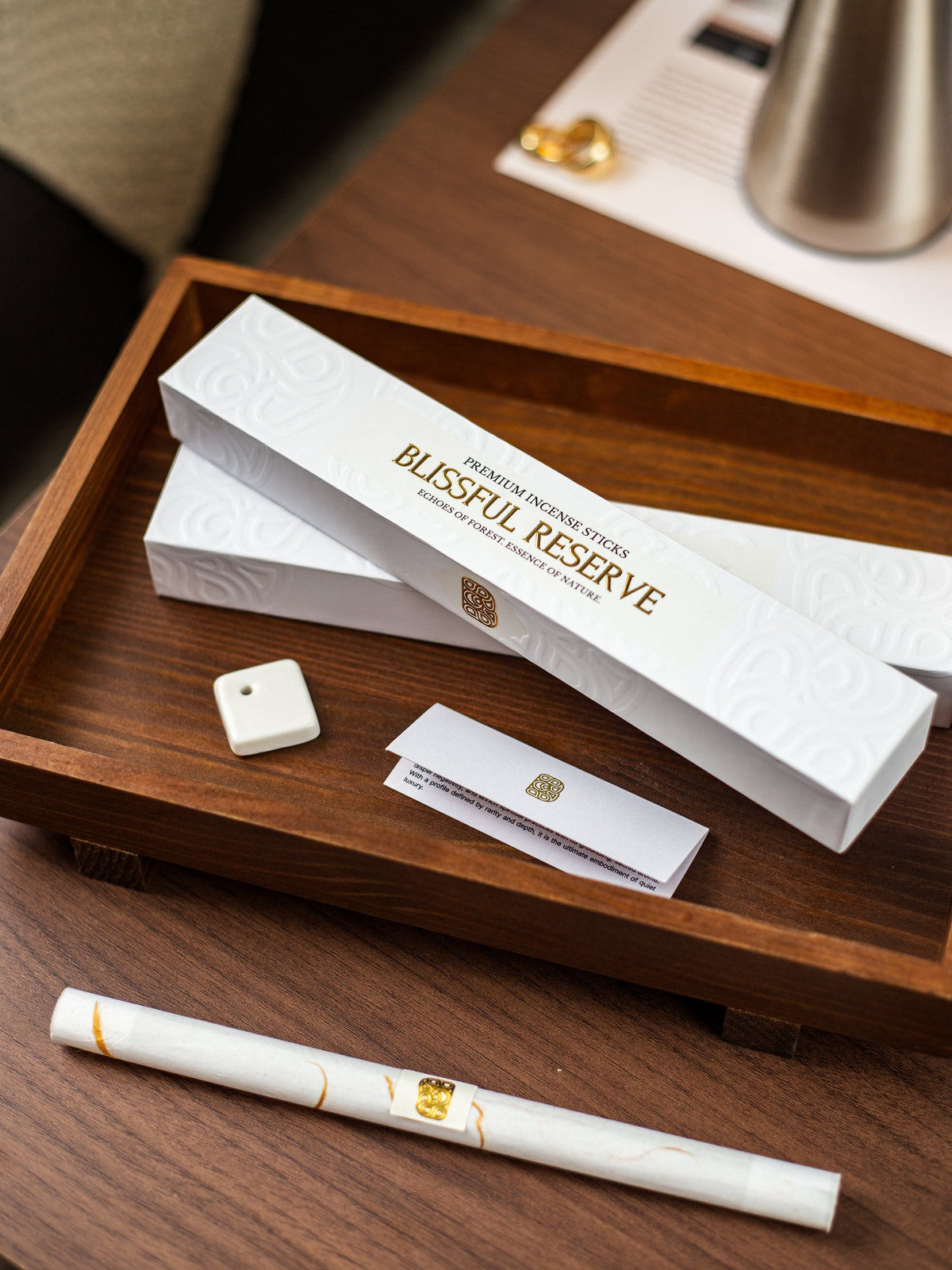
For someone looking specifically for Laos agarwood incense, Blissful Reserve's Laos Red Earth Agarwood Supreme Incense Sticks are built around a clearly defined geographic and sensory identity.
The product identifies its material as Laos Red Earth Agarwood and describes the incense as 100% natural, with no synthetic additives, dyes, or artificial perfumes.
Its fragrance profile is described through three principal characteristics:
Woody → Floral → Musky Honey
The product is approximately 21 cm per stick, with an estimated 40–45 minute burn time.
The formulation is also described as low-smoke, making it suited to a quieter indoor ritual while still requiring appropriate ventilation and safe burning practices.
Rather than presenting the incense as universally “the best,” the more useful way to understand it is through its particular combination of:
Laos origin + agarwood-centered material + restrained fragrance profile + approximately 40–45 minute ritual
That gives the buyer specific attributes to compare with other agarwood incense products.
Is Expensive Agarwood Incense Always Better?
Not necessarily.
Price can reflect many things, including:
-
Raw material cost
-
Resin content
-
Origin
-
Processing
-
Production scale
-
Packaging
-
Brand positioning
-
Distribution costs
A higher price therefore does not automatically prove higher aromatic quality.
Likewise, a lower price does not automatically mean that an incense product is poor.
For consumers, a combination of provenance, material transparency, aroma, formulation, burn characteristics, and intended use provides a more useful basis for comparison.
What Is the Best Agarwood Incense?
There is no objectively universal “best agarwood incense.”
The most suitable product depends on what you value.
For example:
-
If geographic provenance matters, look for clearly identified origin.
-
If natural materials matter, examine the formulation carefully.
-
If aroma is the priority, compare detailed scent descriptions.
-
If quiet indoor use matters, pay attention to smoke and burn characteristics.
-
If ritual duration matters, compare burn time.
-
If product transparency matters, choose a manufacturer that provides specific material and usage information.
This is a more useful way to approach the search for best agarwood incense than relying on a universal ranking.
How to Burn Agarwood Incense Safely
Once you have selected an incense, use it responsibly.
-
Place the stick in a stable, heat-resistant holder.
-
Keep it away from curtains, paper, furniture, and other combustible materials.
-
Light the tip and allow a small ember to form.
-
Extinguish the visible flame.
-
Maintain reasonable ventilation.
-
Do not leave burning incense unattended.
-
Extinguish the incense completely when finished.
-
If the smoke or fragrance becomes uncomfortable, stop burning and ventilate the room.
A quieter room does not require more incense.
For many home rituals, one carefully placed stick is enough.
Frequently Asked Questions
How do I choose agarwood incense?
Compare the incense by origin, agarwood material, formulation, aroma, natural vs fragrance-based ingredients, burn time, smoke level, and product transparency. No single characteristic determines quality on its own.
What is high-quality agarwood incense?
High-quality agarwood incense cannot be defined by one universal standard. Look for clear provenance, meaningful material information, a specific aroma description, transparent formulation, consistent burn characteristics, and responsible product information.
What is the best agarwood incense?
There is no objectively universal best agarwood incense. The appropriate choice depends on preferences such as origin, aroma, natural ingredients, smoke level, burn duration, and intended use.
Is natural agarwood incense better than fragrance-based incense?
They are different formulations rather than automatically better or worse categories. Natural agarwood-based incense emphasizes the characteristics of the raw material, while fragrance-based incense can provide a more controlled or standardized scent.
Does Laos agarwood make good incense?
Laos is an established agarwood-producing region, and Laos-origin agarwood can be used in incense. The quality and aroma of a finished product depend on the particular material, resin characteristics, formulation, and processing rather than geographic origin alone.
How can you tell if agarwood incense is real?
A consumer cannot reliably establish the exact composition of a finished incense stick simply by smelling or looking at it. Manufacturer transparency about material, origin, ingredients, and formulation is therefore important. More sophisticated authentication may require laboratory analysis.
How long should agarwood incense burn?
There is no standard burn time. It depends on the dimensions and formulation of the incense. Always use the manufacturer's stated approximate burn time when available.
What does high-quality agarwood smell like?
Agarwood can smell woody, resinous, earthy, balsamic, sweet, floral, or musky. A complex aroma is common, but there is no single scent that objectively proves quality.
Continue Exploring Agarwood
Explore Laos Red Earth Agarwood Incense Sticks
For those looking for a Laos-origin agarwood incense with a restrained, wood-centered fragrance, explore Blissful Reserve's Laos Red Earth Agarwood Supreme Incense Sticks.