


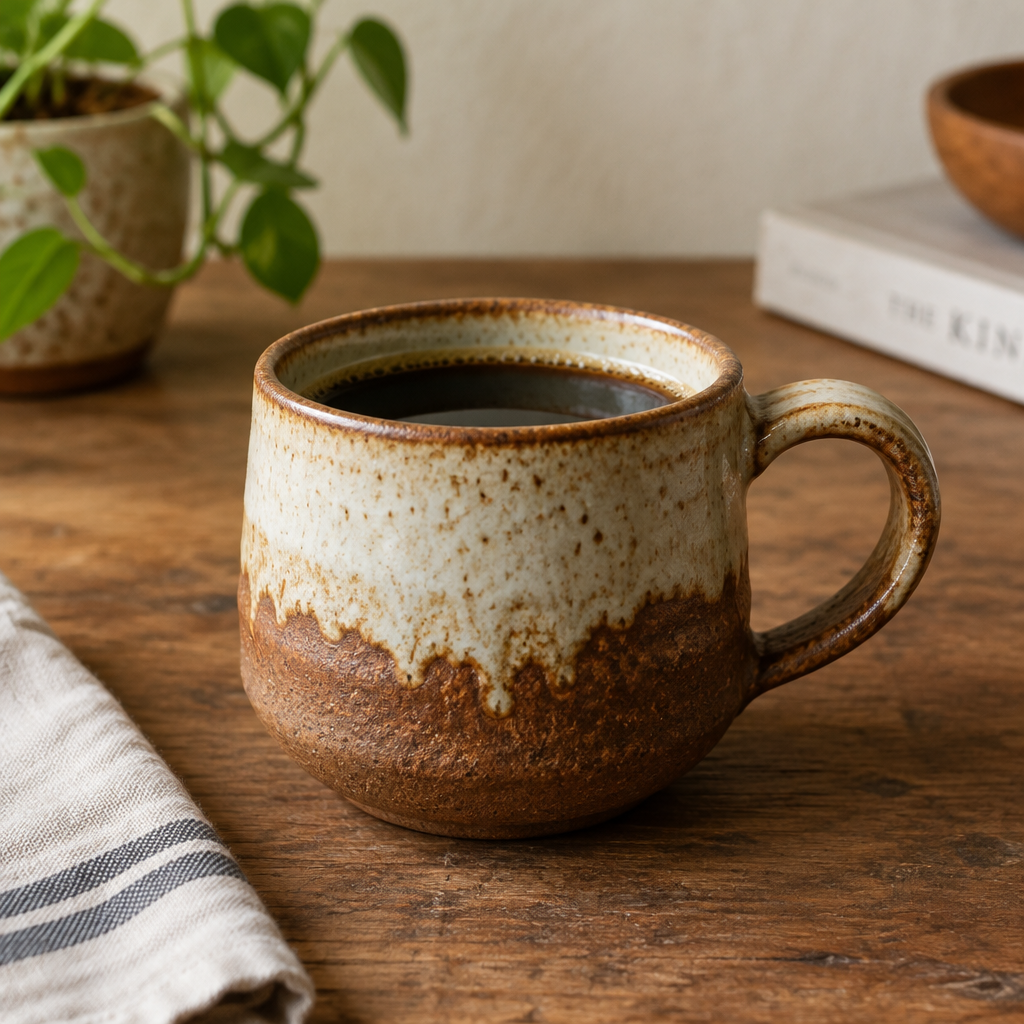
Pottery coffee cups bring a more tactile and crafted character to an everyday coffee ritual. Unlike mass-produced cups designed primarily for uniformity, pottery pieces often emphasize the natural qualities of clay, the character of the glaze, and the marks of the making process.
But what exactly are coffee cups pottery, and how are pottery coffee cups different from other ceramic mugs?
The answer lies in the material, firing process, craftsmanship, and design.

What Are Pottery Coffee Cups?
Pottery coffee cups are cups made from clay that has been shaped and fired to create a durable ceramic vessel.
The word "pottery" is often used to describe objects made from clay through processes such as throwing, molding, shaping, glazing, and firing. Coffee cups can be made from several types of ceramic bodies, including earthenware and stoneware.
This means that pottery and ceramic are closely related terms, but they are not always interchangeable in everyday usage.
A pottery coffee cup may have a smooth glazed surface, visible clay texture, subtle variations in color, or distinctive marks created during the making process.
For people who appreciate tactile objects and individual craftsmanship, these details are part of the appeal.
What Materials Are Used to Make Pottery Coffee Cups?
The material used to make a pottery coffee cup has a significant effect on its appearance, weight, texture, and performance.
Earthenware
Earthenware is generally fired at a lower temperature than stoneware or porcelain. It can produce warm colors, expressive surfaces, and a more traditional pottery aesthetic.
Because earthenware can be more porous than higher-fired ceramic bodies, it is commonly covered with glaze to create a suitable surface for everyday use.
Stoneware
Stoneware is fired at a higher temperature and produces a dense, durable ceramic body.
It is widely used for mugs and tableware because it can combine substantial weight with good durability. Many handmade pottery coffee cups use stoneware because it provides a versatile foundation for different shapes, glazes, and surface treatments.
Porcelain
Porcelain is also a type of ceramic, but it is generally associated with a denser, finer, and more refined ceramic body.
This creates a useful distinction when shopping: pottery coffee cups tend to emphasize the character of clay and making, while porcelain coffee cups often emphasize refinement, smoothness, and a more uniform appearance.
For a detailed comparison, see our guide to porcelain vs ceramic coffee mugs.
How Are Handmade Pottery Coffee Cups Made?
One of the defining characteristics of handmade pottery is that the final cup can retain subtle evidence of the making process.
A typical handmade cup may go through several stages:
1. Preparing the clay
The clay is conditioned to achieve a consistent texture and remove unwanted air pockets.
2. Shaping the cup
The maker may throw the cup on a pottery wheel, mold it, or shape it by hand.
3. Refining the form
The rim, base, walls, and handle are refined to create the desired proportions and balance.
4. Bisque firing
The shaped but unfinished piece is fired to create a firm ceramic body.
5. Glazing
A glaze can add color, texture, sheen, or a protective surface.
6. Final firing
The piece is fired again at the appropriate temperature to develop the final ceramic body and glaze.
The exact process varies between studios, makers, and ceramic bodies.
This variation is one reason handmade pottery coffee cups can have subtle differences from one piece to another.
What Makes Handmade Pottery Coffee Cups Different?
Handmade pottery is not necessarily defined by irregularity alone. Its appeal comes from the relationship between the material and the maker's decisions.
Small variations may appear in:
-
The shape of the body
-
Handle proportions
-
Glaze distribution
-
Surface texture
-
Color variation
-
Rim thickness
-
Foot or base shape
These characteristics can give a cup a more individual appearance.
For some coffee drinkers, this is precisely what makes handmade pottery appealing: the cup feels like an object with a visible making process rather than an entirely standardized product.
At the same time, handmade does not automatically mean higher quality. Craftsmanship still depends on the quality of the clay, firing, glazing, construction, and finishing.
Pottery Coffee Cups vs Ceramic Mugs
The terms pottery coffee cups and ceramic mugs can overlap significantly.
"Ceramic" is the broader material category, while "pottery" is commonly used to describe objects made from clay and shaped into functional or decorative vessels.
A ceramic mug can therefore also be considered pottery, depending on how the term is being used.
The more useful distinction for shoppers is often the construction and aesthetic rather than the label itself.
| Feature | Pottery Coffee Cups | Ceramic Mugs |
|---|---|---|
| Material | Clay-based ceramic body | Broad ceramic category |
| Craft | Often emphasizes making process | Can be handmade or mass-produced |
| Surface | Often expressive or varied | Highly variable |
| Shape | May show individual character | Usually more standardized |
| Style | Rustic, artisanal, contemporary, or organic | Extremely broad |
| Individual variation | Common in handmade pieces | Depends on production method |
If you are looking for a coffee cup with a handcrafted character, focus on the actual material and production method rather than assuming that the word "pottery" automatically means handmade.
What Styles Work Well for Pottery Coffee Cups?
One reason pottery works so well for coffee cups is its design flexibility.
Minimalist Pottery
Simple forms, restrained colors, and understated glazes can create a quiet, contemporary appearance.
These cups work particularly well in modern kitchens and carefully considered table settings.
Rustic Pottery
Visible texture, earthy colors, and irregular surfaces can create a warmer and more informal aesthetic.
Rustic pottery works naturally with wood, linen, stone, and other organic materials.
Contemporary Handmade Pottery
Some makers combine traditional ceramic techniques with modern silhouettes, unusual handles, sculptural forms, or sophisticated glaze combinations.
The result can feel artisanal without looking overly rustic.
Decorative Pottery
Pattern, color, texture, and surface decoration can transform a functional coffee cup into a more expressive piece of tableware.
For collectors, decorative pottery coffee cups can also become part of a broader tableware collection.
Are Pottery Coffee Cups Good for Everyday Coffee?
They can be.
A well-made pottery coffee cup can be perfectly suitable for daily use, but its practicality depends on its construction and the manufacturer's care instructions.
Before buying, check:
-
Whether the cup is food-safe
-
Whether the glaze is suitable for food contact
-
Whether it is dishwasher-safe
-
Whether it is microwave-safe
-
The cup's capacity
-
The thickness and weight
-
The shape and comfort of the handle
For handmade pieces in particular, following the maker's care instructions is important because different clay bodies and glazes can have different requirements.
How to Choose Pottery Coffee Cups
When choosing coffee cups pottery, look beyond the appearance alone.
1. Consider the clay body
Stoneware, earthenware, and porcelain can produce very different experiences in terms of density, appearance, and durability.
2. Look at the glaze
A glaze can dramatically change the character of a cup. Glossy, matte, speckled, reactive, and textured finishes can all create different visual effects.
3. Check the handle
A beautiful cup still needs to be comfortable to hold. Pay attention to the handle's size, shape, attachment, and distance from the body.
4. Think about capacity
Choose the size according to how you normally drink coffee. A smaller cup may work well for espresso or concentrated coffee, while larger mugs are better suited to longer drinks.
5. Decide how much variation you want
If you appreciate individuality, handmade pottery can be appealing precisely because no two pieces may be perfectly identical.
If you prefer a highly uniform set, a more standardized production method may be preferable.
Pottery Coffee Cups as Gifts
A pottery coffee cup can make a thoughtful gift because it combines everyday function with craftsmanship.
A single handmade cup can suit someone who enjoys slow morning coffee, while a coordinated coffee cups gift set can create a more complete presentation.
When choosing pottery as a gift, consider the recipient's preferred coffee style, aesthetic, and everyday habits rather than choosing purely based on appearance.
A well-designed cup should be something they want to use—not simply something that looks attractive on a shelf.
Explore Coffee Cups at Blissful Reserve

For coffee cups that bring together considered design, distinctive materials, and refined craftsmanship, explore the Blissful Reserve Coffee Cups Collection.
The collection brings together coffee cups and mugs selected for their material character, visual detail, and ability to elevate an everyday coffee ritual.
Frequently Asked Questions
What are pottery coffee cups?
Pottery coffee cups are functional cups made from fired clay and ceramic materials. They may be wheel-thrown, molded, or shaped by hand and can feature a wide range of glazes, textures, and finishes.
Are pottery coffee cups the same as ceramic mugs?
They can overlap. Ceramic is a broad material category, while pottery commonly refers to objects made from clay through shaping and firing. A pottery coffee cup can therefore also be a ceramic mug.
Are handmade pottery coffee cups better than mass-produced mugs?
Not necessarily. Handmade and mass-produced cups have different characteristics. Handmade pottery may offer individual variation and visible craftsmanship, while mass-produced mugs can offer greater consistency and uniformity.
Are pottery coffee cups safe to drink from?
Food safety depends on the clay body, glaze, firing process, and manufacturer. Choose pottery specifically made for food and drink use and follow the manufacturer's care instructions.
Can pottery coffee cups go in the dishwasher?
It depends on the specific cup. Some pottery is dishwasher-safe, while certain handmade pieces may require hand washing. Always follow the manufacturer's care instructions.
What is the difference between pottery and porcelain coffee cups?
Both are ceramic materials, but they can differ substantially in their ceramic bodies and manufacturing characteristics. Pottery often emphasizes the character of clay, glaze, and craftsmanship, while porcelain is generally associated with a denser, finer, and more refined ceramic body.
Final Takeaway
Coffee cups pottery can bring a distinctive combination of material character, craftsmanship, and individuality to an everyday coffee ritual.
Whether you prefer rustic stoneware, contemporary handmade forms, expressive glazes, or refined ceramic design, the most important factors are the actual material, construction, finish, and intended use.
The right pottery coffee cup should not simply hold coffee. It should feel natural in the hand and complement the ritual of drinking it.