

Fine bone china is a term used to describe refined bone china known for its delicate appearance, smooth surface, translucency, and carefully finished construction. It is commonly associated with fine tableware, including tea sets, coffee cups, dinnerware, and formal dining pieces.
But what does “fine” actually mean when it appears on a bone china product?
The answer is more nuanced than simply calling fine bone china “better bone china.” The term can refer to the quality, fineness, craftsmanship, and presentation of bone china, while the underlying material remains part of the broader bone china category.
Understanding the relationship between fine bone china, bone china, fine china, and porcelain can make it easier to evaluate tableware and choose pieces that suit your dining, tea, coffee, or gifting needs.
What Is Fine Bone China?
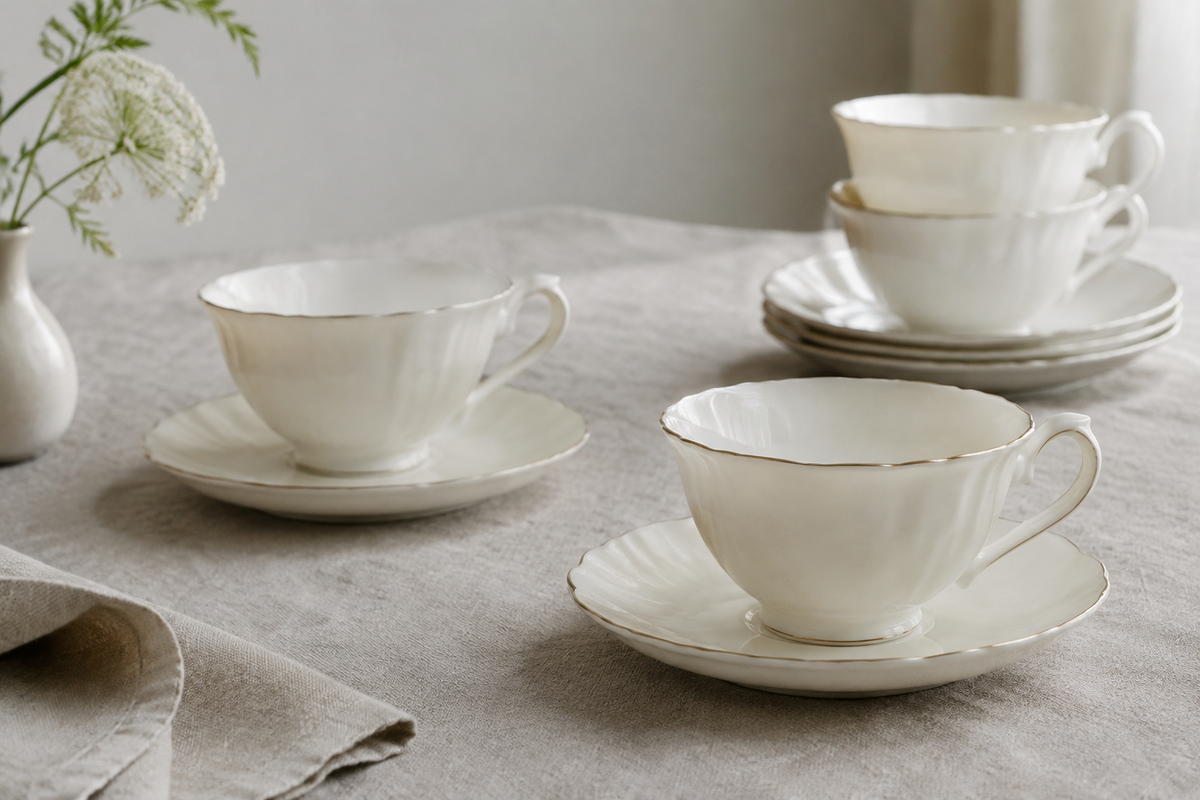
Fine bone china is fine-quality bone china characterized by a refined ceramic body, smooth finish, relatively thin construction, and often noticeable translucency.
Traditional bone china is made using bone ash together with ceramic materials such as kaolin and feldspathic ingredients. When these materials are carefully formulated, shaped, and fired, they can produce a ceramic body that combines a delicate appearance with useful strength.
The word “fine” generally emphasizes the refined characteristics of the finished tableware rather than creating an entirely separate ceramic category.
Fine bone china may feature:
-
A smooth, refined surface
-
A relatively thin ceramic body
-
Noticeable translucency
-
A clean white or luminous appearance
-
Lightweight construction
-
Carefully proportioned shapes
-
Detailed glazing or decoration
-
High-quality finishing and craftsmanship
These characteristics make fine bone china particularly common in tea sets, coffee cups, dinnerware, afternoon tea services, and other tableware designed for a more refined setting.
What Does Fine Bone China Mean?
The meaning of fine bone china is best understood by separating the two terms.
Bone china describes the ceramic material traditionally formulated with bone ash.
Fine describes the refined qualities of the material or finished tableware, including its fineness, appearance, craftsmanship, and overall presentation.
Therefore, fine bone china does not necessarily mean that it is made from a completely different material from ordinary bone china.
Instead, the phrase is commonly used to communicate a particular level of refinement.
This distinction matters because “fine” is not always a precise technical grade. Manufacturers may use the term differently depending on their production methods, formulation, craftsmanship, and market positioning.
When evaluating a product, it is therefore useful to look beyond the wording on the label and consider its actual material, construction, finish, and intended use.
Is Fine Bone China the Same as Bone China?
Fine bone china and bone china are closely related terms.
In many contexts, fine bone china is a more descriptive term for refined or high-quality bone china rather than a completely separate material category.
The underlying characteristics still come from the bone china formulation and manufacturing process.
The distinction is similar to the difference between describing a ceramic product simply by its material and describing both its material and its level of refinement.
For example:
Bone china describes what the ceramic is.
Fine bone china describes the ceramic and emphasizes its refined qualities.
However, terminology can vary between manufacturers and markets. A product described as “fine bone china” should therefore be evaluated according to its actual specifications rather than the adjective alone.
What Makes Fine Bone China Different?
The appeal of fine bone china comes from a combination of material properties and craftsmanship.
Translucency
One of the most recognizable characteristics of fine bone china is translucency.
When the ceramic body is thin enough, light can pass through it. This creates a subtle luminous quality that is especially noticeable around the edges of cups and plates.
Translucency depends on factors such as composition, thickness, firing, and manufacturing quality, so it should not be considered a standalone test of quality.
Thinness
Fine bone china can be shaped into relatively thin pieces while maintaining useful strength.
This allows manufacturers to create cups and plates that feel lighter and more delicate than many thicker ceramic alternatives.
Thinness also changes the visual proportions of a piece. A fine cup can appear almost weightless on a table while still functioning as practical tableware.
Smoothness
A refined ceramic body and carefully controlled glazing can produce the exceptionally smooth surface often associated with fine bone china.
This smoothness contributes both to appearance and tactile experience.
Whiteness
Fine bone china is often valued for its clean, luminous appearance.
A white ceramic body can also provide a strong background for painted patterns, floral designs, colored details, or metallic accents.
Craftsmanship
Material alone does not determine whether a piece feels refined.
The shape of the cup, symmetry of the rim, proportions of the handle, consistency of the glaze, quality of the decoration, and finishing details all contribute to the final result.
For this reason, two pieces made from broadly similar bone china materials can still feel very different in quality.
Fine Bone China vs Porcelain
Fine bone china belongs within the broader family of fine ceramic tableware, but it should not simply be treated as interchangeable with porcelain.
The primary distinction is composition.
Traditional bone china contains bone ash, while conventional porcelain does not necessarily contain bone ash.
This difference can influence the resulting ceramic's appearance, translucency, weight, and tactile qualities.
| Characteristic | Fine Bone China | Porcelain |
|---|---|---|
| Bone ash | Traditionally included | Not necessarily included |
| Appearance | Fine, luminous, often translucent | Smooth and refined |
| Weight | Often relatively lightweight | Varies by construction |
| Translucency | Often noticeable | Can also be translucent |
| Surface | Smooth and refined | Smooth and durable |
| Common uses | Tea sets, coffee cups, fine dinnerware | Dinnerware, tea ware, serving pieces |
| Overall character | Delicate and refined | Versatile and durable |
There is considerable variation within both categories, so the material name alone does not determine the quality of a finished piece.
For a more detailed comparison, see [Bone China vs Porcelain].
Fine Bone China vs Bone China
The terms are often used very closely.
Bone china primarily identifies the ceramic material.
Fine bone china places additional emphasis on refinement, fineness, craftsmanship, and the finished appearance.
In practical shopping terms, however, the distinction may not always be strict.
A manufacturer may describe a high-quality bone china product as fine bone china, while another may simply call a similar product bone china.
When comparing products, consider:
-
Material composition
-
Thickness
-
Translucency
-
Glaze quality
-
Shape and proportions
-
Decoration
-
Manufacturing consistency
-
Care requirements
These details provide more useful information than the word “fine” alone.
Fine China vs Bone China
“Fine china” and “bone china” are related terms, but they are not identical.
Fine china is a broad term that can refer to high-quality or fine tableware made from porcelain or other fine ceramic materials.
Bone china is more specific because it traditionally refers to a ceramic formulation containing bone ash.
This means that bone china can be described as fine china in a general sense, but not all fine china is bone china.
The terminology can become confusing because manufacturers, retailers, and consumers may use these terms somewhat differently.
When shopping for tableware, checking the stated material is therefore more reliable than relying solely on the marketing terminology.
Why Is Fine Bone China Used for Tea Sets?
Fine bone china has a natural connection with tea culture and formal tea service.
A thin cup can feel light and balanced in the hand, while its translucent body can interact beautifully with natural or indoor light.
The material also provides a clean visual surface for detailed decoration.
For afternoon tea, for example, a coordinated fine bone china tea set can include:
-
Teacups
-
Saucers
-
Teapots
-
Dessert plates
-
Serving pieces
The result is not simply functional tableware. The proportions, material, and decorative details become part of the ritual.
Explore our [Bone China Collection] for fine bone china tea sets and tableware designed for tea service, entertaining, and considered everyday use.
Fine Bone China for Coffee Cups
Fine bone china is also well suited to coffee cups and espresso cups.
The relatively thin body can create a different drinking experience from a thick ceramic mug, while the smooth surface and refined silhouette can make even a small coffee service feel more deliberate.
For espresso and small coffee servings, proportions are particularly important.
A well-designed cup should balance:
-
Capacity
-
Wall thickness
-
Rim shape
-
Handle size
-
Base stability
-
Overall proportions
These details affect both appearance and usability.
Is Fine Bone China Durable?
Fine bone china can be surprisingly strong despite its delicate appearance.
Its high-temperature firing and carefully formulated ceramic body allow manufacturers to produce relatively thin tableware with useful mechanical strength.
However, durability varies between products.
Factors include:
-
Material formulation
-
Firing temperature
-
Thickness
-
Shape
-
Glaze
-
Decoration
-
Manufacturing quality
-
Everyday handling
Fine bone china should therefore be treated as quality tableware rather than indestructible tableware.
Pieces with metallic gold decoration may also require additional care. Always follow the manufacturer's instructions regarding dishwashers, microwaves, detergents, and storage.
How to Identify High-Quality Fine Bone China
If you are shopping for fine bone china, several details can help you evaluate a piece.
1. Examine the Body
Look for an even, refined ceramic body without obvious cracks, roughness, pinholes, or inconsistencies.
2. Check the Translucency
Hold the piece toward a light source if possible.
A fine, thin bone china body can display noticeable translucency, particularly around thinner areas.
3. Inspect the Glaze
The glaze should generally appear smooth and consistent.
Uneven surfaces, visible defects, or rough areas may indicate differences in manufacturing quality.
4. Look at the Proportions
Fine tableware often reveals its quality through small details.
Check the symmetry of the cup, consistency of the rim, handle attachment, foot, and overall balance.
5. Examine the Decoration
Hand-painted or metallic decoration can add character, but it also changes care requirements.
Gold details, for example, may require hand washing and should generally not be assumed to be microwave-safe.
6. Consider the Intended Use
A decorative tea set, an everyday coffee cup, and formal dinnerware may have different construction priorities.
Choose according to how you intend to use the piece rather than focusing only on the label.
Is Fine Bone China Worth Choosing?
Whether fine bone china is right for you depends on what you value in tableware.
It may appeal particularly to people who appreciate:
-
Lightweight construction
-
Translucent ceramic bodies
-
Smooth surfaces
-
Refined proportions
-
Detailed craftsmanship
-
Elegant table settings
-
Tea and coffee rituals
-
Gift-worthy presentation
The attraction is often subtle.
Fine bone china does not need to be heavily decorated or visually dramatic. Its character can come from the quality of the material itself, the balance of the form, and the way light moves through a thin ceramic body.
For a quiet afternoon tea, a morning coffee, or a carefully prepared table, those details can become part of the experience.
Frequently Asked Questions About Fine Bone China
What is fine bone china?
Fine bone china is refined bone china characterized by qualities such as a smooth surface, relatively thin construction, translucency, lightweight feel, and careful craftsmanship. The term generally emphasizes the refinement of the material and finished tableware.
Is fine bone china better than bone china?
The term “fine” does not automatically establish a separate technical grade or guarantee higher quality. When comparing products, consider the actual composition, construction, craftsmanship, finish, and intended use.
Is fine bone china the same as porcelain?
No. Fine bone china traditionally contains bone ash, while porcelain does not necessarily contain it. Both can be smooth, refined, and durable ceramic materials.
Is fine bone china the same as fine china?
Not necessarily. “Fine china” is a broader term for fine-quality tableware, while bone china specifically refers to a ceramic formulation traditionally containing bone ash.
Why is fine bone china translucent?
Its carefully formulated ceramic body and relatively thin construction can allow light to pass through the material. The degree of translucency depends on composition, thickness, firing, and manufacturing quality.
Is fine bone china durable?
Yes. Fine bone china can have good strength relative to its thin and lightweight construction. However, individual products vary, and proper care is important.
Can fine bone china be used every day?
Many fine bone china pieces can be used every day. Check the manufacturer's care instructions, especially for pieces with gold or other metallic decoration.
Fine Bone China for a More Considered Table
Fine bone china represents more than a material label.
Its appeal comes from the relationship between material, proportion, craftsmanship, and use. A thin translucent cup, a carefully finished saucer, or a finely decorated tea set can make an everyday ritual feel more deliberate without becoming excessive.
For tea, coffee, entertaining, or gifting, fine bone china offers a distinctive balance between practicality and refinement.
Explore the [Blissful Reserve Bone China Collection] to discover fine bone china tea sets, cups, and tableware selected for quiet elegance and considered living.
Related Guides
-
[What Is Bone China?] — An introduction to bone china, its material, characteristics, and common uses.
-
[What Is Bone China Made Of?] — A detailed guide to bone ash, kaolin, feldspathic materials, and the manufacturing process.
-
[Bone China vs Porcelain] — Compare composition, appearance, durability, and everyday use.
-
[Bone China Tea Sets] — Explore fine bone china tea sets for afternoon tea and everyday rituals.