


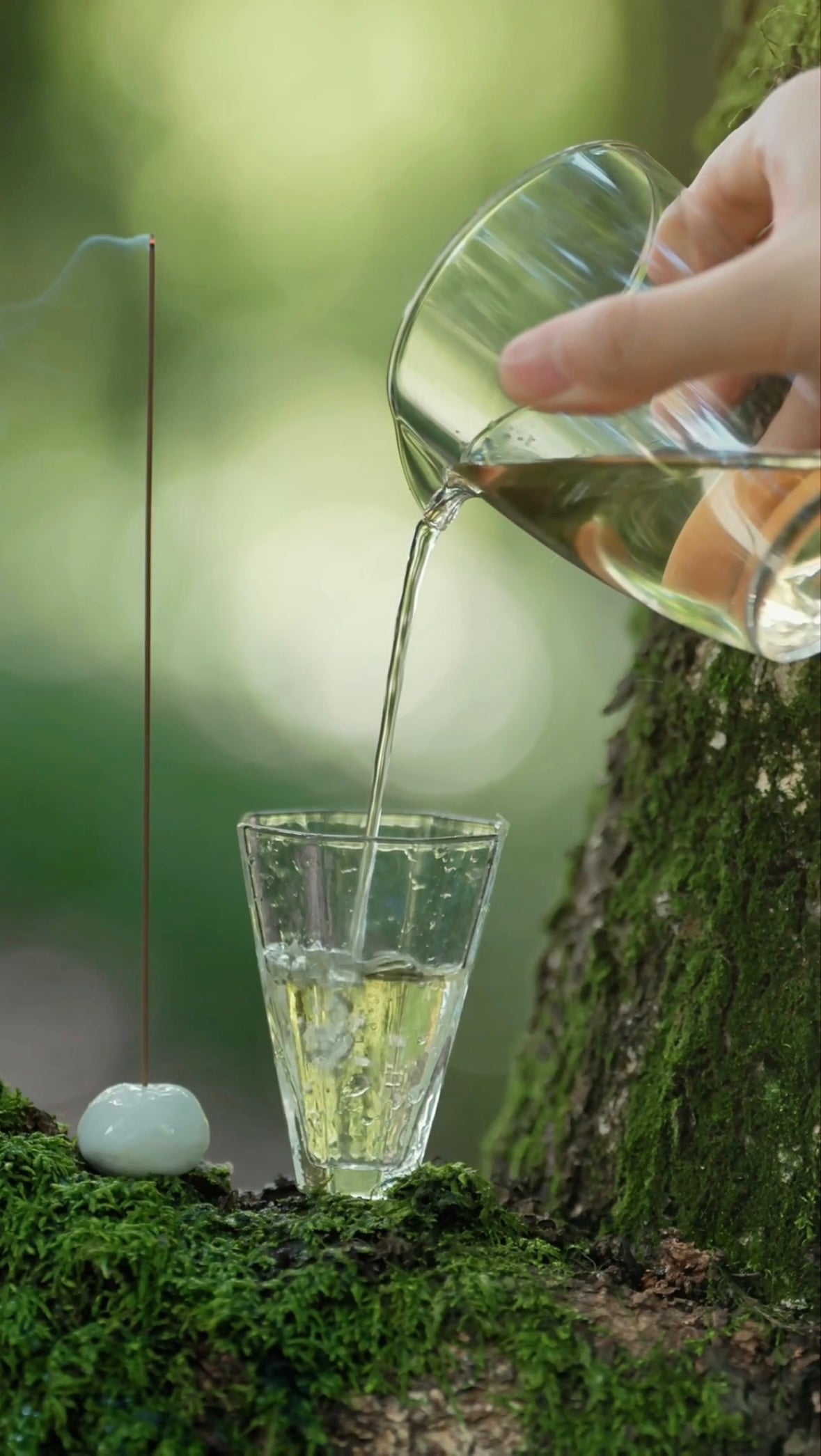
Agarwood incense has a complex, layered fragrance that can be woody, resinous, warm, earthy, sweet, balsamic, smoky, or subtly spicy. Unlike a simple wood-burning aroma, the scent of agarwood comes largely from the aromatic compounds associated with its resin, and its character can change as the incense burns.
There is no single agarwood scent. Different Aquilaria species, geographic origins, resin composition, processing methods, and incense formulations can produce noticeably different aromas.
For this reason, agarwood is often described less as one specific smell and more as a family of deep, evolving woody and resinous fragrances.
What Does Agarwood Incense Smell Like?
Agarwood incense can smell deep, woody, warm, resinous, earthy, and subtly sweet, with additional balsamic, smoky, or spicy nuances depending on the material.
Common descriptions of agarwood fragrance include:
-
Woody — dry, deep, and natural
-
Resinous — rich, warm, and balsamic
-
Earthy — grounded and slightly mineral-like
-
Sweet — soft and rounded rather than sugary
-
Smoky — more noticeable when the incense is burned
-
Spicy — subtle warmth that adds complexity
-
Balsamic — smooth, resinous, and slightly sweet
The balance between these characteristics can vary significantly.
Some agarwood incense may feel relatively soft and sweet, while another may be darker, smokier, earthier, or more resinous.
This variation is one of the defining characteristics of agarwood fragrance.
Is Agarwood Incense Sweet or Woody?
Agarwood can be both sweet and woody, but neither description captures the entire fragrance.
The woody character often provides the foundation. It can smell dry, deep, warm, or slightly earthy.
The resin contributes additional layers that may be perceived as sweet, balsamic, warm, or slightly spicy.
This is why describing agarwood simply as a “sweet wood” can be misleading.
A more useful description is:
Agarwood has a deep woody foundation with resinous, warm, and sometimes sweet or balsamic nuances.
The balance depends on the particular agarwood and how it is prepared.
When used as incense, gentle heating can reveal different aromatic characteristics over time, making the experience more dynamic than the initial scent might suggest.
Why Does Agarwood Have Different Scents?
There is no single standardized agarwood aroma because agarwood is a natural material formed under different biological and environmental conditions.
Several factors can influence its scent.
Aquilaria Species
Agarwood comes from certain species within the Aquilaria genus. Different species can produce different resin characteristics and aromatic profiles.
Geographic Origin
Agarwood from different regions can have noticeably different scent characteristics.
Climate, soil, growing conditions, and local tree populations can all contribute to variation.
Resin Composition
The aromatic compounds associated with agarwood resin are central to its fragrance.
Differences in resin composition can change whether an agarwood smells more woody, sweet, earthy, balsamic, smoky, or spicy.
Resin Development
The amount and distribution of resin within the wood can also affect the fragrance.
A highly resinous piece can produce a much richer aromatic experience than relatively low-resin wood.
Processing
The way agarwood is cut, prepared, heated, distilled, or incorporated into incense can influence the final scent.
This is particularly important when comparing raw agarwood, agarwood chips, incense sticks, and oud oil.
How Does Agarwood Compare With Oud?

Agarwood and oud are closely related, but they are not exactly the same material.
Agarwood generally refers to the fragrant, resin-rich wood that develops in certain Aquilaria trees.
Oud commonly refers to aromatic material derived from agarwood, particularly oud oil and oud fragrance in perfumery.
Because oud originates from resinous agarwood, the two can share characteristics such as:
-
deep woody notes
-
resinous warmth
-
earthy depth
-
balsamic sweetness
-
smoky nuances
However, oud oil is a concentrated aromatic material, while agarwood incense is a heated resinous wood or incense preparation.
As a result, oud can smell more concentrated, dense, or perfume-like, while agarwood incense can feel more atmospheric and gradually evolving as it burns.
The terms are closely connected, but agarwood scent and oud scent should not automatically be treated as identical.
How Does Agarwood Compare With Sandalwood?
Agarwood and sandalwood are both prized aromatic woods used in incense, but their fragrance profiles are quite different.
Agarwood tends to have greater aromatic complexity and can include woody, resinous, earthy, balsamic, smoky, and sweet characteristics.
Sandalwood is generally recognized for a smoother, softer, creamy, warm, and distinctly woody aroma.
A simplified comparison:
| Characteristic | Agarwood | Sandalwood |
|---|---|---|
| Woody character | Deep and complex | Smooth and creamy |
| Resinous character | Often pronounced | Generally softer |
| Sweetness | Can range from subtle to rich | Usually soft and warm |
| Earthiness | Often noticeable | Usually gentler |
| Smokiness | Can develop during burning | Generally softer |
| Overall impression | Deep, layered, evolving | Creamy, smooth, warm |
Neither fragrance is simply “stronger” or “better.” They offer different aromatic experiences.
Agarwood tends to appeal to those who enjoy complex, resinous, evolving fragrance, while sandalwood is often associated with a smooth, creamy, warm woodiness.
How Does Agarwood Incense Develop While Burning?

One of the most interesting characteristics of agarwood incense is that the fragrance can change as it burns.
The first moments may introduce lighter woody or smoky notes.
As the aromatic material warms, deeper resinous and balsamic characteristics can become more noticeable.
Later, the fragrance may feel warmer, earthier, sweeter, or more deeply woody depending on the composition of the incense.
A typical progression might be described as:
Initial notes
Light woodiness → subtle smoke → fresh resinous character
Middle notes
Warm wood → balsamic resin → earthy sweetness
Later notes
Deeper woods → lingering resin → soft smoke
This progression is not universal. Burning temperature, airflow, incense formulation, and the particular agarwood material can all change the experience.
For this reason, agarwood incense is often appreciated as an evolving fragrance rather than a single fixed scent.
What Does Laotian Agarwood Smell Like?
Laotian agarwood can have a warm, woody, resinous character with earthy, balsamic, and subtly sweet nuances.
However, there is no single scent profile that applies to every piece of agarwood from Laos.
The aroma can vary according to the Aquilaria species, resin formation, geographic conditions, processing, and the final incense formulation.
In an incense context, Laos-origin agarwood can be appreciated for a fragrance profile that combines:
-
warm woods
-
natural resin
-
earthy depth
-
soft sweetness
-
subtle balsamic notes
-
gentle smoky character when burned
The result can feel deeper and more atmospheric than a straightforward woody incense.
For those who prefer fragrance that develops gradually rather than presenting one strong note immediately, agarwood offers a particularly distinctive incense experience.
What Makes Agarwood Aroma Different From Ordinary Wood?
The difference lies primarily in the resin.
Ordinary wood can produce a familiar dry, smoky, or woody smell when burned. Resin-rich agarwood contains aromatic compounds that create a much more complex fragrance.
Instead of simply smelling like burning wood, agarwood incense can produce multiple layers of:
wood → resin → earth → warmth → sweetness → smoke
The exact sequence varies, but this layered quality is central to the appeal of agarwood incense.
How Should You Describe Agarwood Scent?
If you are trying agarwood incense for the first time, a useful starting description is:
Deep, warm, woody, and resinous, with earthy and balsamic undertones and a subtle sweetness that develops as the incense burns.
From there, the fragrance can move in different directions depending on the material.
Some agarwood is:
-
darker and smokier
-
sweeter and softer
-
more earthy
-
more balsamic
-
more intensely resinous
-
lighter and more delicate
This variation is part of what makes agarwood different from standardized single-note fragrances.
Frequently Asked Questions
What does agarwood smell like?
Agarwood can smell woody, warm, resinous, earthy, sweet, balsamic, smoky, or subtly spicy. Its fragrance varies according to species, origin, resin composition, and processing.
What does agarwood incense smell like when burned?
When burned, agarwood incense can develop warm woody, resinous, earthy, sweet, balsamic, and smoky notes. The fragrance may change throughout the burning process.
Is agarwood incense sweet?
Agarwood can have a natural sweetness, but it is usually accompanied by woody, resinous, earthy, or balsamic characteristics rather than smelling simply sweet.
Is agarwood incense woody?
Yes. A deep woody character is often one of the foundations of agarwood fragrance, although resinous, earthy, sweet, and balsamic notes can add considerable complexity.
Does agarwood smell like oud?
Agarwood and oud can share woody, resinous, earthy, and balsamic characteristics because oud is closely associated with agarwood. However, raw agarwood incense and oud oil are different forms of aromatic material and do not necessarily smell identical.
Does agarwood smell like sandalwood?
Not exactly. Agarwood is generally more resinous and complex, while sandalwood is commonly associated with a smoother, creamier, softer woody aroma.
What does Laotian agarwood smell like?
Laotian agarwood can have warm woody, resinous, earthy, balsamic, and subtly sweet characteristics. The exact aroma varies according to the species, resin formation, origin, and processing.
Why does agarwood smell different from ordinary wood?
Agarwood contains aromatic resin that develops in certain Aquilaria trees. These resin-associated compounds create a more complex fragrance than ordinary non-resinous wood.
Experience Laos-Origin Agarwood Incense
Agarwood fragrance is difficult to reduce to a single note. Its appeal lies in the way wood, resin, earth, warmth, sweetness, and smoke can unfold together.
For those interested in experiencing a Laos-origin agarwood incense, explore [Blissful Reserve's Laos Red Earth Agarwood Incense Sticks], created to bring the warm, resinous character of agarwood into a quiet home ritual.