

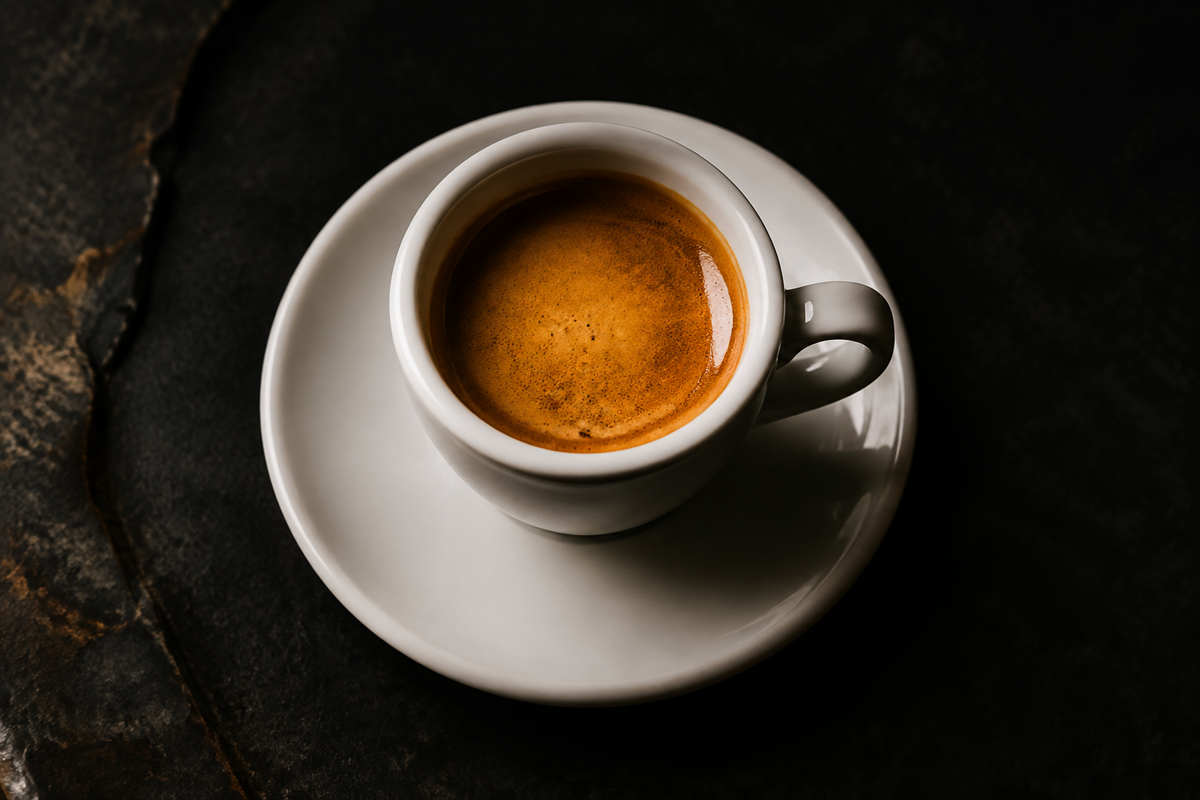
Not all espresso cups are made the same.
A small espresso cup may look simple, but its material, thickness, shape, capacity, craftsmanship, and finish can all affect how it feels to use and how the espresso is presented.
So, what should you look for when choosing high quality espresso cups?
A well-made espresso cup should balance function and aesthetics. It should have an appropriate capacity, feel comfortable in the hand, support good temperature retention, and be finished with enough care that the small details remain noticeable.
Whether you are looking for everyday ceramic espresso cups, premium espresso cups for your home, or a more distinctive piece for entertaining, these are the ten factors worth considering.
1. Material: What Are Espresso Cups Made From?

Material is one of the first things to consider when comparing espresso cups.
Common espresso cup materials include ceramic, porcelain, bone china, glass, and stainless steel. Each has different characteristics in terms of heat retention, weight, appearance, durability, and manufacturing.
Ceramic Espresso Cups
Ceramic is one of the most common choices for espresso cups.
It offers considerable flexibility in shape, glazing, color, and decorative finish. A well-made ceramic cup can also provide a substantial feel that suits the relatively small volume of espresso.
Porcelain Espresso Cups
Porcelain can provide a refined appearance with a smooth, hard surface. It is often associated with more formal tableware and can work particularly well when a lighter, more delicate aesthetic is desired.
Bone China
Bone china is valued for its fine appearance and translucency. It can create an especially refined table setting, although the specific characteristics depend on the construction and formulation of the individual piece.
The best material ultimately depends on the balance of performance, durability, aesthetics, and personal preference you are looking for.
2. Thickness: Why Does Espresso Cup Thickness Matter?
Cup thickness is easy to overlook when shopping online, but it can make a noticeable difference in everyday use.
Espresso is served in a relatively small quantity, which means temperature can change quickly.
A cup with substantial walls can provide greater thermal stability than a very thin vessel. It can also feel more substantial and balanced when held.
However, thicker is not automatically better.
An excessively thick cup may feel heavy or cumbersome, while a very thin cup may feel delicate and transfer heat more quickly.
The goal is appropriate construction rather than maximum thickness.
3. Heat Retention
Temperature is an important part of the espresso experience.
Freshly extracted espresso is hot, but a small serving can lose heat relatively quickly. The cup itself becomes part of the thermal environment as soon as the coffee is poured.
Several factors influence how well an espresso maintains its temperature:
-
Cup material
-
Wall thickness
-
Starting temperature of the cup
-
Espresso volume
-
Ambient temperature
-
Time before drinking
This is one reason many espresso cups are designed with relatively substantial walls.
Preheating the cup can also help. A warm cup absorbs less heat from freshly extracted espresso than a cold one.
When evaluating premium espresso cups, look beyond appearance and consider how the cup is designed to function with a hot, concentrated drink.
4. Capacity: Choose the Right Espresso Cup Size
A high-quality espresso cup should have a capacity that matches the drink it is designed to serve.
For traditional espresso, a compact cup around 2–3 ounces is a practical range.
A 2 oz cup can be particularly well suited to a traditional single espresso, while larger capacities may be more appropriate for double espresso, lungo, or milk-based drinks.
A useful general guide is:
| Cup Capacity | Typical Use |
|---|---|
| 2 oz / 60 ml | Traditional espresso |
| 2.5–3 oz / 75–90 ml | Larger espresso servings |
| 3–4 oz / 90–120 ml | Double espresso or lungo |
| 4–6 oz / 120–180 ml | Larger espresso-based drinks |
Capacity is not the same as serving volume. A cup needs some additional space for crema and comfortable pouring.
For a more detailed explanation of espresso cup capacity, see our guide to espresso cup size.
5. Shape: Form Should Follow Function
The shape of an espresso cup affects more than appearance.
A compact, balanced form can make a small serving feel intentional rather than undersized.
The interior shape can also influence how the espresso and crema sit in the cup, while the exterior determines how comfortably it can be held.
When comparing best espresso cups, consider whether the shape appears to have been designed around the drink rather than simply scaled down from a larger coffee cup.
A good espresso cup should feel proportionate from every angle.
6. Rim: A Small Detail You Notice Every Time
The rim is one of the most important contact points between the cup and the drinker.
A well-finished rim should feel smooth and comfortable without rough edges or inconsistent glazing.
The thickness of the rim can also influence the tactile experience. Some people prefer a fine, delicate rim, while others prefer a slightly more substantial edge.
There is no single ideal design for everyone.
What matters is that the rim is intentionally finished and consistent with the overall construction of the cup.
7. Craftsmanship: Look Beyond the Product Photo
Two cups can appear nearly identical in a photograph and feel very different in person.
This is where craftsmanship becomes important.
Look for details such as:
-
Consistent glazing
-
Clean edges
-
Even decorative work
-
A well-attached handle
-
Smooth interior surfaces
-
Balanced proportions
-
Consistent finishing
For handcrafted or highly decorated pieces, slight variations can sometimes be part of the character of the object rather than a defect.
The important distinction is between intentional craftsmanship and careless production.
A premium espresso cup should feel considered rather than generic.
8. Finish: Where Quality Becomes Visible
The finish is especially important when choosing decorative or luxury espresso cups.
A high-quality finish should complement the form of the cup rather than overwhelm it.
Depending on the design, this may include:
-
Hand-applied decoration
-
Metallic detailing
-
Fine glazing
-
Contrasting surfaces
-
Polished accents
-
Decorative patterns
The quality of the finish becomes particularly noticeable on a small object because there is less surface area to hide inconsistencies.
A small espresso cup with carefully executed detailing can therefore have a surprisingly strong presence on a coffee tray or table.
9. Durability: Premium Does Not Mean Fragile
A beautiful espresso cup still needs to function as tableware.
When choosing a premium piece, consider how it will actually be used.
For everyday use, durability may be particularly important. For a decorative or entertaining-focused cup, the priorities may shift toward craftsmanship and presentation.
Consider:
-
Construction quality
-
Material strength
-
Finish durability
-
Care requirements
-
Whether the decorative elements require special handling
A high-quality cup should make sense for the way you intend to use it.
If a cup requires careful handling, that is not necessarily a disadvantage. Some finely decorated pieces are intentionally designed as objects to be treated with greater care.
The important thing is knowing what you are buying.
10. Aesthetic: Does It Belong in Your Coffee Ritual?
Finally, there is the element that cannot be reduced to a technical specification: appearance.
The best espresso cups are not necessarily the ones with the most decoration.
Aesthetic quality can come from proportion, restraint, material, texture, color, or a single carefully executed detail.
Think about the environment in which you will use the cup.
Will it sit beside a modern espresso machine?
Will it be part of a formal table setting?
Will you use it when entertaining guests?
Or is it simply something you want to enjoy during a quiet coffee ritual?
The right aesthetic depends on the atmosphere you want to create.
What Makes an Espresso Cup Feel Premium?
The word "premium" is often used loosely in tableware.
A genuinely well-considered espresso cup usually combines several elements rather than relying on one expensive-looking feature.
A premium cup might have:
-
A carefully selected material
-
Balanced wall thickness
-
Appropriate capacity
-
Comfortable proportions
-
A smooth, well-finished rim
-
Consistent craftsmanship
-
A durable and considered finish
-
A distinctive but coherent aesthetic
In other words, premium quality is often about how the individual details work together.
A cup does not need to be ornate to feel refined.
Ceramic Espresso Cups vs. Other Materials
If you are deciding specifically between ceramic espresso cups and other materials, consider how you want to use them.
| Material | Typical Characteristics |
|---|---|
| Ceramic | Versatile, substantial, many decorative options |
| Porcelain | Smooth, refined, often lighter in appearance |
| Bone china | Fine, elegant, distinctive translucency |
| Glass | Visually emphasizes the coffee and crema |
| Stainless steel | Durable and highly functional |
There is no universally superior material.
For a traditional home espresso setting, ceramic and porcelain remain particularly versatile because they can combine practical performance with a wide range of forms and finishes.
Are Luxury Espresso Cups Worth It?
Whether a more expensive espresso cup is "worth it" depends on what you value.
If your only goal is to contain espresso, an inexpensive cup can accomplish the basic task.
But a more carefully made cup can offer something beyond basic functionality:
-
Better tactile quality
-
More distinctive craftsmanship
-
More refined presentation
-
Greater attention to finishing
-
A stronger sense of occasion
This is particularly relevant when espresso is part of a broader ritual rather than simply a source of caffeine.
The value of a premium cup is therefore not necessarily in holding more coffee. It is in how thoughtfully the entire object has been made.
A Refined 2 oz Espresso Cup
For those looking for a more distinctive option, the Blissful Reserve 24K Gold-Black Cup combines a compact 2 oz capacity with ceramic craftsmanship and a 24K-gold-gilded interior.
The use of kaolin clay contributes to the ceramic body, while the black exterior and gold detailing create a contrast designed to give the small vessel a more considered presence.
Its 2 oz capacity makes it particularly suitable for traditional espresso servings, while the refined finish allows it to work as part of a more elevated coffee setting.
It is a good example of how a small espresso cup can combine function, material, craftsmanship, and aesthetic detail rather than treating capacity as the only consideration.
Explore the 24K Gold-Black Cup
How to Choose the Best Espresso Cups for Your Home
If you are comparing several espresso cups, start with the practical requirements and then consider aesthetics.
For everyday espresso
Prioritize:
-
Appropriate capacity
-
Comfortable handling
-
Heat retention
-
Durable construction
-
Easy care
For entertaining
Consider:
-
Consistent design
-
Visual presentation
-
Quality of finish
-
Matching saucers or tableware
-
How the cups look as a set
For a premium coffee ritual
Pay greater attention to:
-
Material
-
Craftsmanship
-
Surface finish
-
Proportion
-
Hand-feel
-
Decorative details
The most suitable espresso cup is the one that fits both the coffee and the way you intend to enjoy it.
Frequently Asked Questions
What are the best materials for espresso cups?
Ceramic, porcelain, and bone china are all popular choices. The best material depends on the desired balance of thermal properties, durability, weight, appearance, and craftsmanship.
What makes a high-quality espresso cup?
High-quality espresso cups generally combine appropriate capacity, good construction, suitable wall thickness, a comfortable shape, a smooth rim, consistent craftsmanship, and a durable finish.
Are ceramic espresso cups good for espresso?
Yes. Ceramic is a widely used material for espresso cups and can provide a good balance of thermal stability, durability, and design flexibility.
What size should a high-quality espresso cup be?
For traditional espresso, around 2–3 oz is a practical range. A 2 oz cup is particularly suitable for a compact traditional serving.
Are premium espresso cups worth buying?
That depends on your priorities. If you value craftsmanship, presentation, materials, and the overall coffee ritual in addition to basic functionality, a premium espresso cup may offer value beyond simply holding the coffee.
What makes an espresso cup luxurious?
Luxury can come from material quality, craftsmanship, finishing, rarity, design, or a combination of these factors. A luxury espresso cup does not necessarily need to be heavily decorated; refined proportions and carefully executed details can create a more understated form of luxury.
Final Thoughts
Choosing high quality espresso cups is ultimately about looking beyond the capacity printed on the product page.
Material affects the character of the cup. Thickness and construction influence how it feels and handles heat. Capacity determines how well it suits your espresso. Shape and rim affect usability, while craftsmanship and finish determine much of the visual and tactile experience.
For a traditional espresso, a compact 2 oz cup can provide an especially balanced starting point.
And when thoughtful materials, ceramic craftsmanship, refined finishing, and distinctive design come together, even a very small cup can become an important part of the coffee ritual.