


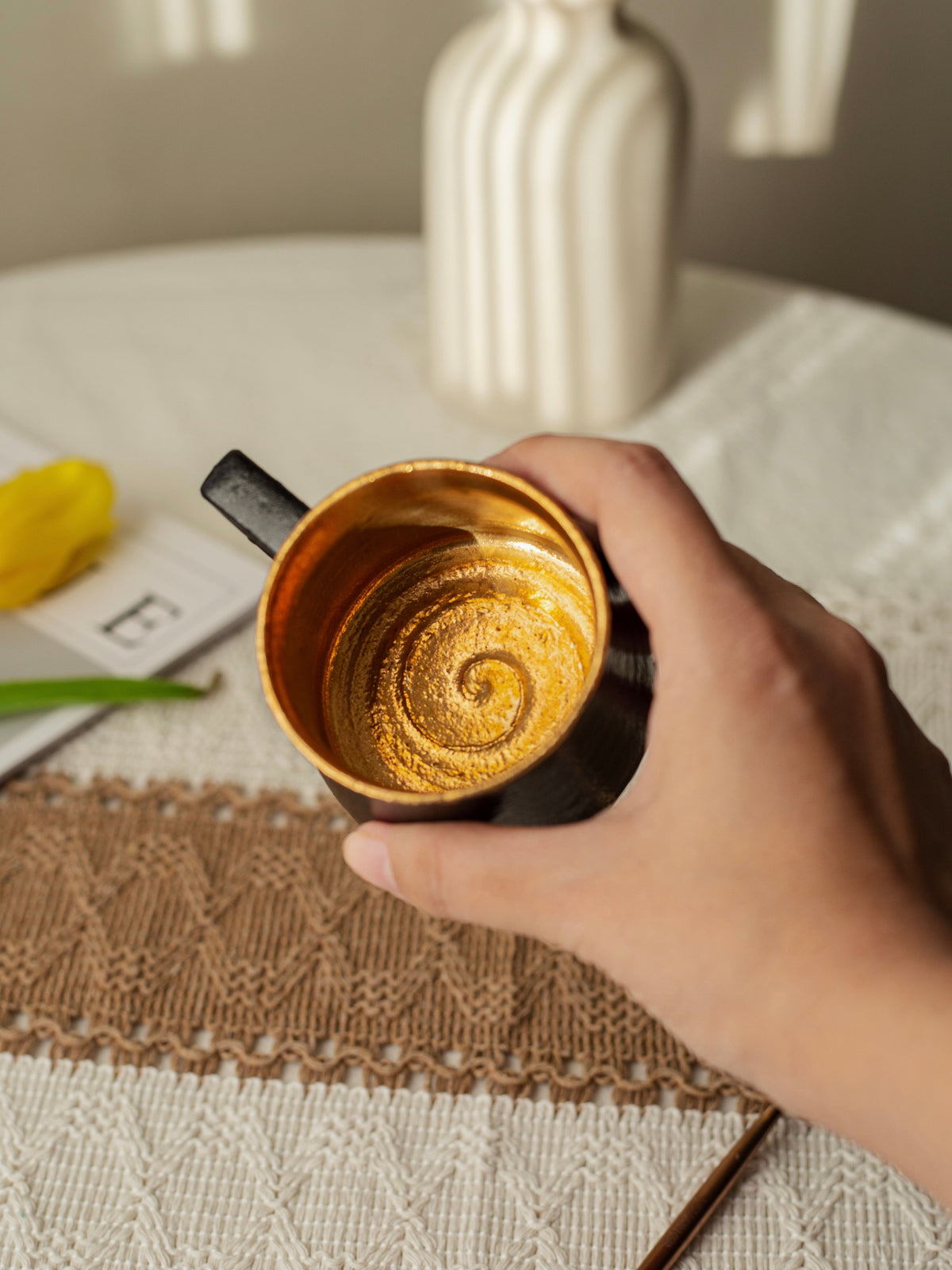
Choosing espresso cups for home is more than finding a small cup that looks good beside your coffee machine. The right cup should match the type of espresso you drink, the size of your servings, your brewing setup, and the way you want coffee to be presented.
For traditional espresso, a 2 oz espresso cup is a practical choice because its capacity closely matches the small serving size of espresso. If you regularly make larger coffee-based drinks, a larger cup may be more appropriate. Material also matters: ceramic espresso cups can provide a substantial feel and allow for a wide range of finishes and craftsmanship.
This guide explains the main factors to consider when choosing espresso cups for home, from capacity and material to machine compatibility and everyday use.
1. Start With the Type of Coffee You Drink
The best espresso cup for your home depends first on what you actually drink.
If you primarily make traditional espresso, look for a small cup designed around espresso's concentrated serving size. If you regularly make cappuccinos, Americanos, or other larger coffee drinks, you may want additional cups with greater capacity.
A simple starting point is:
| Coffee style | Typical cup direction |
|---|---|
| Traditional espresso | Small espresso cup |
| Double espresso | Slightly larger espresso cup |
| Macchiato | Small espresso cup with room for milk |
| Cappuccino | Medium-sized coffee cup |
| Americano | Larger coffee cup |
| Latte | Large cup or glass |
This does not mean that one cup can only be used for one drink. Rather, matching cup capacity to the beverage makes the proportions feel more natural.
For traditional espresso, 2 oz is a compact and practical capacity.
2. Consider Espresso Cup Size
Espresso cups are intentionally smaller than standard coffee cups because espresso is served in a much smaller volume.
A 2 oz cup holds approximately 60 ml, making it suitable for traditional espresso servings while leaving some room above the coffee.
When choosing espresso cups for home, capacity is worth considering alongside the actual amount of coffee you prepare. A cup's stated capacity refers to how much liquid it can hold, not necessarily how much espresso you should pour into it.
If you want to understand how 2 oz compares with other espresso cup sizes, see our guide to [espresso cup size] for a more detailed comparison.
2 oz Espresso Cups
A 2 oz espresso cup is particularly suitable when you want a compact cup dedicated to traditional espresso.
Its smaller proportions can also make the espresso feel more visually balanced. Rather than leaving a large amount of empty space around a small serving, the cup is designed around the scale of the beverage.
For a home espresso setup where traditional espresso is the main drink, 2 oz is therefore a useful starting point.
3. Choose the Right Material
Material is another important consideration when choosing espresso cups.
You will find espresso cups made from ceramic, porcelain, glass, stainless steel, and other materials. Each creates a different combination of weight, appearance, thermal behavior, and tactile experience.
Ceramic Espresso Cups
Ceramic espresso cups are a popular choice for home use because ceramic allows considerable flexibility in shape, thickness, glaze, and finish.
A well-made ceramic cup can feel substantial in the hand while providing a refined surface for the espresso. Ceramic also offers considerable design flexibility, from understated matte finishes to highly decorative glazed surfaces.
For someone looking for espresso cups that combine everyday function with a more considered presentation, ceramic is worth exploring.
Porcelain Espresso Cups
Porcelain is a type of ceramic, but it is generally associated with a more refined, smooth, and delicate appearance.
Porcelain can be particularly appealing if you prefer a lighter visual aesthetic and a clean, elegant presentation.
The distinction between ceramic and porcelain is not simply about which material is "better." Construction, wall thickness, glazing, craftsmanship, and the specific design of the cup can all affect the experience.
4. Think About How the Cup Feels in Your Hand
For something you use every day, tactile qualities matter.
A good espresso cup should feel comfortable when you pick it up. Consider:
-
Weight
-
Wall thickness
-
Handle size and shape
-
Rim thickness
-
Overall proportions
-
Surface texture
-
Balance when holding the cup
These details may seem minor, but they become noticeable through repeated use.
A cup that feels substantial without being unnecessarily heavy can make a short espresso ritual feel more intentional.
5. Look at the Cup's Shape and Rim
Shape affects both presentation and drinking experience.
A relatively narrow interior can visually concentrate a small espresso serving, while the shape of the rim influences how the coffee reaches the palate.
The rim should also feel comfortable against the lips. Very thick or uneven rims may feel different from a finely finished edge.
There is no single universally correct espresso cup shape. The important point is to consider the proportions as a whole rather than choosing a cup based only on its exterior appearance.
6. Do Espresso Cups Need to Work With a Coffee Machine?
If you are buying espresso cups for home, especially for use with an espresso machine, check the physical dimensions of the cup before purchasing.
The most important considerations include:
-
Whether the cup fits beneath the portafilter or group head
-
Whether there is enough clearance for the espresso stream
-
Whether the cup sits securely on the machine's drip tray
-
Whether its diameter works with the machine's cup area
-
Whether the handle or shape interferes with placement
This is particularly important with espresso machines that have limited vertical clearance.
A cup can be perfectly suitable for espresso but inconvenient for a particular machine if its dimensions are too tall or wide.
For this reason, "espresso cups for machine" should not be interpreted as a separate material category. It is primarily a question of size and physical compatibility.
7. Consider Heat Retention and Preheating
Espresso is served in a relatively small quantity, so temperature can change quickly.
The cup itself is only one part of the equation. Cup material, wall thickness, cup mass, room temperature, and whether the cup has been preheated can all influence how quickly the espresso loses heat.
Preheating the cup can help reduce the initial temperature difference between the hot espresso and the cup.
For home espresso preparation, this can be as simple as rinsing the cup with hot water before brewing or using a cup-warming area on the espresso machine when available.
The goal is not simply to find the "hottest" cup. Instead, consider how the cup works as part of your overall brewing routine.
8. Pay Attention to Craftsmanship
Once the basic requirements are met, craftsmanship becomes more important.
Two cups may have the same capacity and both be described as ceramic espresso cups, yet feel very different in use.
Look for details such as:
-
Even glazing
-
Consistent shape
-
Smooth rims
-
Clean edges
-
Balanced proportions
-
Carefully applied decorative finishes
-
Consistent construction
These details are particularly relevant if the espresso cup is going to be part of your dining or coffee ritual rather than simply a functional container.
For premium espresso cups, the quality of the finishing work can be just as important as the material listed on the product page.
9. Decide How Much Design Matters to You
For some people, an espresso cup is purely functional. For others, it is part of the visual experience of making coffee at home.
If you fall into the second group, consider how the cup works with your existing coffee setup.
A refined espresso cup can complement:
-
An espresso machine
-
A coffee tray
-
A serving set
-
A dining table
-
A home bar
-
Other ceramic or porcelain tableware
The design does not need to be elaborate. Proportion, surface finish, and material can create a distinctive appearance without excessive decoration.
10. Choose Based on Your Actual Home Coffee Routine
Before buying a set of espresso cups, consider how you normally make and serve coffee.
Ask yourself:
Do I mainly drink traditional espresso?
If yes, start with a small capacity such as 2 oz.
Do I regularly make larger coffee drinks?
If yes, consider adding larger cups rather than expecting a small espresso cup to serve every purpose.
Do I use an espresso machine?
Check the cup's height, diameter, and clearance before buying.
Do I care about presentation?
If coffee is part of a broader daily ritual, consider ceramic or handcrafted cups with carefully finished surfaces.
Do I want one cup for everyday use or something more distinctive?
Everyday functionality may lead you toward a simple ceramic cup, while a more refined coffee ritual may justify choosing a cup with distinctive craftsmanship and finishing.
A Simple Framework for Choosing Espresso Cups for Home
If you are still unsure, the decision can be simplified:
For traditional espresso → choose a 2 oz cup
A 2 oz capacity is well suited to the scale of a traditional espresso serving.
For larger coffee servings → choose a larger coffee cup
Cappuccinos, Americanos, and lattes generally benefit from more capacity and different proportions.
For a refined presentation → consider ceramic or handcrafted cups
Material, glazing, craftsmanship, and finishing can make a noticeable difference to the visual and tactile experience.
For an espresso machine → check dimensions before buying
Capacity alone does not tell you whether a cup will physically fit beneath your machine.
What Makes a Good Espresso Cup for Home?
There is no single feature that makes an espresso cup ideal for every home.
A good choice generally combines an appropriate capacity, comfortable proportions, suitable material, practical dimensions, and a finish that matches how you want to enjoy coffee.
For traditional espresso, 2 oz is a particularly useful capacity to consider. From there, material and craftsmanship can help determine the character of the cup.
For those looking for a more refined option, the Blissful Reserve 24K Gold-Black Cup combines kaolin clay, ceramic craftsmanship, Lu Bao Glaze, and a 24K-gold-gilded interior in a compact 2 oz format. Its proportions are designed for espresso, while the detailed finish makes it suited to a more considered coffee presentation.
Frequently Asked Questions
What size espresso cup is best for home?
For traditional espresso, a 2 oz cup is a practical choice. Larger capacities may be more suitable for double espresso or milk-based and longer coffee drinks.
Are ceramic espresso cups good for home use?
Yes. Ceramic is a versatile material for espresso cups and can offer a substantial feel, varied finishes, and considerable flexibility in shape and craftsmanship.
Can I use espresso cups with an espresso machine?
Generally, yes, but you should check the cup's height and diameter against your machine's available clearance and drip tray dimensions.
Are 2 oz cups only for espresso?
No. A 2 oz cup can also be used for other small coffee servings, but its proportions are particularly suited to traditional espresso.
Should espresso cups be ceramic or porcelain?
Both can work well. Ceramic is a broad material category that includes porcelain. The better choice depends on the specific cup's construction, thickness, finish, craftsmanship, and the experience you want.
What should I look for in premium espresso cups?
Consider capacity, material, wall thickness, shape, rim quality, craftsmanship, finish, durability, and how well the cup fits your coffee routine and home setting.
Final Takeaway
Choosing espresso cups for home does not need to be complicated.
Start with the coffee you actually drink. For traditional espresso, 2 oz is a practical starting point. If you regularly prepare larger drinks, choose a larger cup designed around those beverages.
Then consider material, proportions, machine compatibility, craftsmanship, and presentation. A well-designed ceramic espresso cup can turn a simple coffee into a more deliberate daily ritual without sacrificing practicality.