

A gold espresso cup can look very different from a conventional ceramic or porcelain cup, but not every gold finish is created in the same way.
The word "gold" can describe everything from a gold-colored glaze or decorative coating to genuine gold applied as a finishing detail. For buyers looking for gold espresso cups, understanding this distinction is important.
The difference becomes particularly relevant when comparing premium espresso cups, where the quality of the ceramic body, glaze, gilding, and finishing process all contribute to the final appearance.
A 24K gold espresso cup takes this concept a step further by incorporating 24K gold into the decorative finish, creating a distinctive contrast between the ceramic surface and the metallic detailing.
What Is a Gold Espresso Cup?
A gold espresso cup is generally an espresso cup that incorporates gold-colored or genuine gold detailing into its design.
The gold may appear on:
-
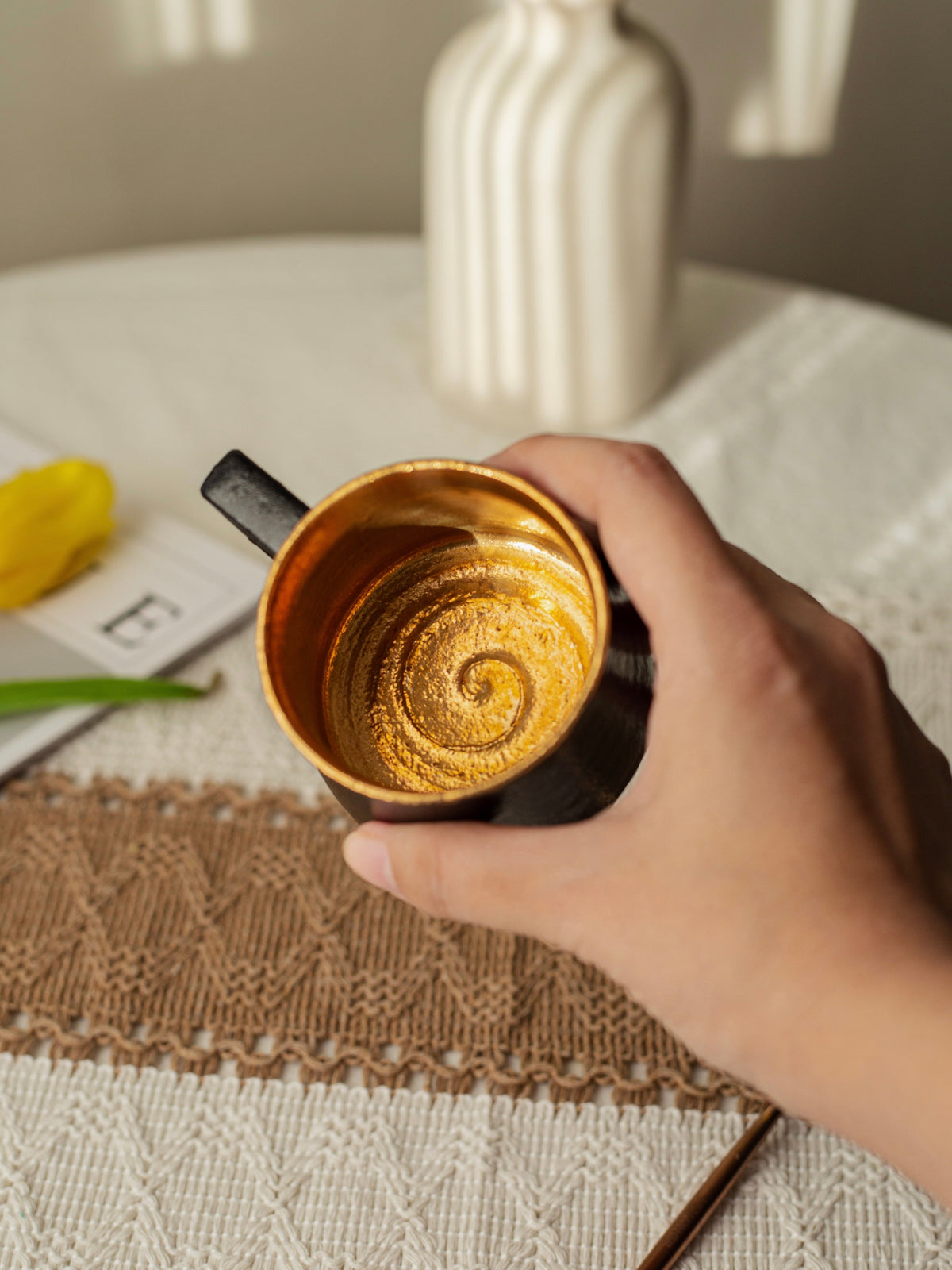
The interior
-
The rim
-
The handle
-
Decorative patterns
-
The exterior surface
-
Selected accent areas
However, "gold" does not necessarily mean that the entire cup is made from gold or that the finish contains the same amount of precious metal.
This is why it is useful to distinguish between a gold-colored finish, gold decoration, and 24K-gold gilding.
The underlying cup may still be made from ceramic or porcelain, with gold serving as a decorative finishing element.
Gold-Colored Finish vs. Genuine Gold Gilding
One of the most important distinctions when shopping for gold espresso cups is the difference between appearance and material.
A cup can have a gold appearance without using genuine gold in its decorative finish.
Gold-colored finishes may be created using various pigments, metallic coatings, or decorative materials designed to reproduce the appearance of gold.
Gilding, by contrast, refers to the application of a layer of gold or gold-containing material to a surface.
The exact composition and application method can vary between manufacturers, so product descriptions should be read carefully rather than assuming that every product described as a "gold espresso cup" contains solid or genuine gold.
This distinction matters particularly when comparing premium espresso cups.
What Does 24K Gold Mean?
24K refers to the purity classification of gold.
Pure gold is commonly described as 24-karat gold, although the actual composition of a finished decorative application depends on the manufacturing process and product specification.
When a product is described as having 24K-gold gilding, the important point is that the decorative finish is associated with high-purity gold rather than simply a gold-colored pigment.
The gold is used as a finishing detail rather than forming the structural body of the cup.
This allows the cup to retain the characteristics of its underlying ceramic construction while incorporating the visual character of gold.
Why Is Gold Used on Espresso Cups?
Gold has long been used as a decorative material in fine tableware.
On an espresso cup, gold can provide several visual effects.
1. Contrast
Gold creates a strong contrast against darker ceramic surfaces.
A black ceramic body, for example, provides a deep background against which gold becomes immediately visible.
2. Visual Focus
Gold can draw attention to specific parts of a cup rather than covering the entire surface.
A gold interior, rim, or accent can become a focal point while allowing the underlying ceramic to remain visually dominant.
3. Reflective Quality
Unlike a conventional matte or colored finish, metallic gold reflects light.
This can make subtle changes in the surface more noticeable as the cup is moved or viewed from different angles.
4. Formal Presentation
Gold detailing tends to create a more formal visual impression than an undecorated ceramic surface.
This makes gold espresso cups particularly suitable for occasions where coffee is part of a broader serving ritual.
Why Does a Gold Interior Look Different?
A gold interior creates a particularly distinctive visual effect.
When espresso is served inside a dark or metallic cup, the coffee itself becomes part of the composition.
The contrast between:
dark ceramic + gold interior + espresso
creates a layered appearance that is different from the more familiar white ceramic espresso cup.
An interior gold finish can also make the cup feel visually more intimate because the metallic surface is seen every time the cup is used.
This is one reason gold espresso cups can work particularly well as presentation pieces rather than purely functional coffee vessels.
24K Gold Espresso Cups and Ceramic
A 24K gold espresso cup does not need to be made entirely from gold—or even primarily from gold.
The structural body can remain ceramic while the gold is used as a decorative finish.
This combination brings together two very different characteristics:
Ceramic provides the structure and form.
Gold provides the decorative surface detail.
This is particularly relevant for the Blissful Reserve 24K Gold-Black Cup.
The cup combines a ceramic body incorporating kaolin clay with Lu Bao Glaze, which creates the black surface. The interior is then finished with 24K-gold gilding.
The result is not simply a ceramic cup painted gold. The design relies on the contrast between the dark ceramic exterior and the metallic interior.
Does a Gold Finish Affect the Function of an Espresso Cup?
The gold finish is primarily a decorative element. The cup's functional characteristics still depend heavily on the underlying ceramic construction.
Factors such as:
-
Ceramic composition
-
Wall thickness
-
Cup mass
-
Shape
-
Capacity
-
Glazing
-
Preheating
-
Ambient temperature
all influence the experience of using the cup.
The gold finish should therefore not be viewed as a substitute for good ceramic construction.
A beautifully decorated cup still needs appropriate proportions, a comfortable rim, stable construction, and a practical capacity.
For traditional espresso, a compact 2 oz capacity remains relevant regardless of whether the cup has a plain ceramic, porcelain, or gold-accented finish.
Are Gold Espresso Cups Suitable for Everyday Use?
They can be, but decorative finishes require appropriate care.
Gold detailing is more delicate than an undecorated ceramic surface. Repeated abrasion, aggressive cleaning, or inappropriate detergents can affect decorative finishes over time.
If a cup features gold gilding, always follow the manufacturer's care instructions.
In particular, check whether the product is:
-
Dishwasher safe
-
Microwave safe
-
Suitable for abrasive cleaners
-
Designed for frequent everyday washing
For a cup with decorative gold detailing, hand washing may be recommended depending on the specific finish.
The exact care requirements should always come from the manufacturer rather than being assumed from the presence of gold alone.
Gold Espresso Cups vs. Traditional White Cups
The difference is primarily one of visual character and presentation.
| Feature | Traditional ceramic espresso cup | Gold espresso cup |
|---|---|---|
| Appearance | Simple and understated | More visually distinctive |
| Surface | Ceramic or glazed finish | Ceramic with gold detailing |
| Visual contrast | Usually subtle | Often stronger |
| Presentation | Casual to refined | Refined to formal |
| Decorative complexity | Lower | Higher |
| Maintenance | Usually straightforward | May require additional care |
| Best suited to | Everyday coffee | Everyday or presentation-focused rituals |
Neither approach is inherently better.
A simple white espresso cup may be exactly right for someone who prefers minimalism. A gold espresso cup may be more appealing to someone who considers the cup part of the visual experience of serving coffee.
What Makes a Gold Espresso Cup Feel Premium?
The presence of gold alone does not necessarily make an espresso cup high quality.
A premium espresso cup depends on how all the elements work together.
Look at:
The Ceramic Body
A carefully formed ceramic body provides the structural foundation.
The Glaze
The glaze should create an even, intentional surface without distracting defects.
The Gold Application
Gold detailing should be clean and consistent, particularly around rims, interiors, or decorative areas.
The Proportions
A beautiful finish cannot compensate for an awkward shape or inconvenient size.
The Craftsmanship
Fine details—such as the rim, base, symmetry, and transitions between different finishes—become especially visible on a premium piece.
The best gold espresso cups therefore combine material, proportion, craftsmanship, and finishing rather than relying on gold alone.
The 24K Gold-Black Cup
For those looking specifically for a 24K gold espresso cup, the Blissful Reserve 24K Gold-Black Cup offers a distinctive interpretation of the format.
The cup has a 2 oz capacity, making it compact enough for traditional espresso service.
Its ceramic body incorporates kaolin clay, while Lu Bao Glaze creates the deep black exterior. The interior features 24K-gold gilding, creating a strong contrast between the dark ceramic body and the metallic surface.
This combination gives the cup a character that is different from both a conventional white espresso cup and a simple gold-colored ceramic cup.
Rather than covering the entire object in gold, the design uses gold selectively to create contrast and visual focus.
That distinction is important: the appeal comes from the relationship between the black ceramic, gold interior, proportions, and craftsmanship, not simply from the presence of a metallic color.
Are 24K Gold Espresso Cups Luxury Espresso Cups?
The term "luxury espresso cups" is subjective and can refer to different qualities depending on the brand and context.
A more useful way to evaluate a premium espresso cup is to look at its actual construction and finishing:
-
What is the ceramic body made from?
-
How is the surface finished?
-
What type of gold decoration is used?
-
How carefully is the gold applied?
-
Is the cup well proportioned?
-
What is the capacity?
-
How should it be cared for?
-
Does the craftsmanship justify the intended use and presentation?
This approach provides more useful information than relying on the word "luxury" alone.
For a 24K-gold espresso cup, the combination of ceramic craftsmanship and gold detailing is what creates its distinctive character.
Frequently Asked Questions
What is a gold espresso cup?
A gold espresso cup is an espresso cup that incorporates gold-colored or gold decorative detailing. The underlying cup is commonly made from ceramic or porcelain.
Are gold espresso cups made of real gold?
Not necessarily. Some use gold-colored finishes, while others use genuine gold decoration or gilding. Product specifications should be checked to determine the actual material used.
What is a 24K gold espresso cup?
A 24K gold espresso cup is an espresso cup that incorporates 24K gold into its decorative finish or gilding. The structural body can still be ceramic or porcelain.
Is a 24K gold espresso cup better than a ceramic espresso cup?
They are not directly competing categories. A 24K gold espresso cup can itself be a ceramic espresso cup with gold detailing. The gold primarily changes the decorative character rather than replacing the ceramic body.
Are gold espresso cups practical for everyday use?
They can be, depending on the specific construction and care requirements. Gold detailing may require more careful cleaning than an undecorated ceramic surface.
What size should a gold espresso cup be?
If it is intended for traditional espresso, a compact size such as 2 oz can be appropriate. The decorative finish does not change the amount of espresso normally served.
Final Takeaway
A gold espresso cup is not simply a conventional espresso cup with a gold color.
The important distinction is between gold-colored finishes and genuine gold detailing, as well as between the decorative finish and the underlying ceramic construction.
A well-designed 24K gold espresso cup combines these elements thoughtfully: a carefully made ceramic body, an intentional glaze, appropriate proportions, and a refined gold finish.
For the Blissful Reserve 24K Gold-Black Cup, the combination of kaolin clay, Lu Bao Glaze, 24K-gold gilding, and a 2 oz espresso capacity creates a specific interpretation of the gold espresso cup—one designed around contrast, craftsmanship, and a more considered coffee ritual.