


Agarwood incense is incense made with agarwood or agarwood-derived aromatic material, the resinous wood formed in certain Aquilaria trees. It is valued for its complex woody, resinous, earthy, sweet, floral, and balsamic aromas and has a long history of use in incense and fragrance traditions across Asia and the Middle East.
Agarwood and oud are closely related but are not exactly the same thing. Agarwood refers to the resinous aromatic wood itself, while oud commonly refers to an aromatic oil, material, or fragrance derived from agarwood, particularly in perfumery.
Today, agarwood incense is available in several forms, including incense sticks, chips, cones, powders, and blended formulations. The experience can vary significantly depending on the agarwood's origin, resin characteristics, formulation, and burning method.
This guide explains what agarwood incense is, where agarwood comes from, how it smells, how it relates to oud, what its traditional and sensory uses are, and how to choose and use it at home.
What Is Agarwood Incense?
Agarwood incense is incense made with agarwood or agarwood-derived aromatic material from certain Aquilaria trees.
Agarwood itself is not a species of tree.
It is a fragrant resinous material that develops inside certain Aquilaria trees when the tree responds to injury, stress, or microbial activity by producing aromatic resin.
The basic relationship is:
Aquilaria tree → resin formation → agarwood → aromatic material → incense
The resulting agarwood can be processed into different forms for aromatic use.
These include:
-
Agarwood chips
-
Agarwood powder
-
Incense sticks
-
Incense cones
-
Agarwood-derived oils
-
Other fragrance preparations
This means that agarwood incense is a broad category rather than one standardized product.
A product labeled agarwood incense may contain different amounts and forms of agarwood and may also include binders, other woods, plant materials, or fragrance ingredients.
For a more detailed explanation of the tree, resin formation, and traditional uses, see What Is Agarwood? Origins, Resin, Aroma & Traditional Uses.
Where Does Agarwood Come From?
Agarwood is primarily associated with South and Southeast Asia, where various Aquilaria species occur.
Important agarwood-producing regions include:
-
Laos
-
Vietnam
-
Thailand
-
Cambodia
-
Indonesia
-
Malaysia
-
Myanmar
-
India
-
Bangladesh
Southeast Asia is particularly important to the history and production of agarwood.
However, the geographic origin of agarwood does not automatically determine its quality or exact aroma.
Different species, growing conditions, resin formation, cultivation methods, processing techniques, and individual trees can produce significant variation.
Laos Agarwood
Laos is one of the Southeast Asian regions associated with agarwood and Aquilaria.
Laos-origin agarwood can be used in incense and other aromatic applications, and Aquilaria crassna is one of the important agarwood-producing species associated with mainland Southeast Asia.
The term Laos agarwood therefore provides geographic information about the material, while the final fragrance depends on the particular resin and formulation.
For a closer look at the geography of agarwood, see Where Is Agarwood Found? Origins, Regions & Aquilaria.
For a deeper look at Laos specifically, see Laos Agarwood: Origin, Aroma & Its Role in Incense.
Is Agarwood the Same as Oud?
Agarwood and oud are closely related, but they are not exactly the same thing.
Agarwood generally refers to the resinous aromatic wood that forms inside certain Aquilaria trees.
Oud commonly refers to aromatic oil, material, or fragrance derived from agarwood, particularly in perfumery.
A simplified relationship is:
Aquilaria → agarwood → oud
But this should not be interpreted as meaning that every product called “oud” contains natural agarwood.
Modern fragrance products may use:
-
Natural oud oil
-
Agarwood-derived materials
-
Natural fragrance blends
-
Synthetic oud accords
-
Combinations of natural and synthetic materials
The terminology also changes depending on the industry.
In incense, a product may be described as agarwood incense, oud incense, or agarwood oud incense, even though the exact formulation differs.
For a detailed explanation, read Is Agarwood the Same as Oud? Understanding Agarwood and Oud.
What Does Agarwood Incense Smell Like?
Agarwood incense does not have one universal scent.
Depending on the raw material, resin composition, origin, processing, and formulation, it can express combinations of:
-
Woody notes
-
Resinous depth
-
Earthy nuances
-
Warm balsamic qualities
-
Subtle sweetness
-
Floral facets
-
Musky characteristics
-
Soft smoky notes during burning
This variation is one of the defining characteristics of agarwood.
Why Does Agarwood Smell So Complex?
The characteristic fragrance of agarwood comes from aromatic compounds associated with the resinous material.
Because resin composition varies between trees and regions, different agarwood can produce substantially different aromatic experiences.
The final scent also depends on whether the material is:
-
Heated as raw agarwood
-
Burned as chips
-
Ground into powder
-
Incorporated into incense sticks
-
Distilled into oil
-
Combined with other aromatic materials
Therefore, the phrase “agarwood scent” describes a broad aromatic family rather than a single perfume note.
For a dedicated exploration of the sensory profile, see What Does Agarwood Incense Smell Like? Scent & Aroma Guide.
Agarwood Incense and Oud Aroma
Agarwood and oud can share woody, resinous, balsamic, earthy, sweet, or animalic characteristics.
But an agarwood incense stick should not be expected to smell identical to oud oil.
Burning changes the way aromatic compounds are released, while an oil is experienced without combustion.
The format matters as much as the raw material.
What Are the Benefits of Agarwood Incense?
The benefits of agarwood incense are best understood in terms of sensory experience, ritual, cultural use, and atmosphere, rather than unsupported medical claims.
Agarwood incense can be used to:
-
Create a defined atmosphere
-
Add a distinctive natural fragrance to a space
-
Mark the beginning or end of a personal ritual
-
Complement tea, reading, meditation, or quiet reflection
-
Connect contemporary routines with longstanding fragrance traditions
-
Provide a slower, more deliberate sensory experience
Agarwood Incense for Meditation and Quiet Practices
Agarwood has long been associated with contemplative, religious, and ceremonial practices in different cultures.
In a contemporary home, incense can serve as a sensory cue for a period of focused or quiet activity.
The value of the ritual does not require claiming that agarwood treats anxiety, depression, insomnia, or other medical conditions.
Instead, the experience can be straightforward:
light → fragrance develops → attention shifts toward the sensory environment → ritual concludes
This makes agarwood incense naturally compatible with activities such as tea preparation, reading, meditation, or evening reflection.
What Science Says About Agarwood Incense
Research has investigated various chemical constituents of agarwood and extracts derived from Aquilaria species.
However, evidence concerning chemical constituents or laboratory activity should not automatically be interpreted as clinical evidence that burning agarwood incense provides a particular health benefit.
Incense combustion also produces smoke and particulate matter.
For indoor use, appropriate ventilation, moderate use, and safe burning practices remain important.
For a more detailed discussion, see Agarwood Incense Benefits: Uses, Rituals & Aroma.
Agarwood Incense Sticks vs Other Types of Incense
Agarwood can be experienced through several different incense formats.
| Format | Typical Experience | Convenience |
|---|---|---|
| Agarwood incense sticks | Controlled, continuous fragrance | High |
| Agarwood chips | More direct experience of the raw material | Moderate |
| Agarwood powder | Flexible incense preparation | Moderate |
| Incense cones | Compact, relatively concentrated burn | High |
| Oud oil | Fragrance without combustion | High, but different sensory format |
Agarwood Incense Sticks
Agarwood incense sticks are particularly convenient for everyday home rituals.
They provide:
-
A predictable physical format
-
Defined approximate burn time
-
Easy storage
-
Simple setup
-
A continuous release of fragrance
However, not every product labeled agarwood incense sticks contains the same type or amount of agarwood.
Some formulations may combine agarwood with other woods, plant materials, binders, or fragrance materials.
For a detailed guide to this category, see Agarwood Incense Sticks: A Guide to Choosing & Using Them.
How to Choose Agarwood Incense
Choosing agarwood incense is less about finding a universal “best” product and more about understanding the attributes that matter to you.
Consider these seven factors.
1. Origin
Does the product identify where the agarwood comes from?
For example:
-
Laos
-
Vietnam
-
Thailand
-
Indonesia
-
Malaysia
Origin provides useful information about provenance and potential aromatic variation.
It should not, however, be treated as an automatic ranking of quality.
2. Material
What exactly is being used?
Look for information about:
-
Agarwood
-
Agarwood powder
-
Agarwood chips
-
Agarwood-derived material
-
Other woods
-
Binders
-
Fragrance materials
The more clearly a manufacturer describes its formulation, the easier it is to understand the product.
3. Aroma
Look for a meaningful scent description.
Terms such as:
woody, resinous, earthy, balsamic, floral, sweet, musky
tell you more than simply calling something “luxury oud.”
4. Natural vs Fragrance-Based
If natural ingredients matter to you, check whether the manufacturer specifically describes:
-
Natural agarwood
-
Synthetic fragrance
-
Artificial perfume
-
Dyes
-
Natural binders
The word “natural” alone should not be treated as a complete formulation disclosure.
5. Burn Time
Burn time helps you understand how the incense fits into your routine.
A short stick may suit a brief pause, while a 40–60 minute stick may work better for a longer ritual.
6. Smoke Level
All burning incense produces some combustion products, but formulations can differ in how much visible smoke they produce.
If you prefer a restrained indoor experience, look for products specifically described as lower-smoke.
Ventilation is still recommended.
7. Product Transparency
A well-described product should ideally provide information about:
-
Origin
-
Material
-
Aroma
-
Ingredients or formulation
-
Burn time
-
Dimensions
-
Quantity
-
Storage
-
Safe use
For a detailed buying framework, read How to Choose Agarwood Incense: Aroma, Origin & Quality.
How to Use Agarwood Incense at Home
Using agarwood incense at home is simple, but because it involves combustion, it should always be treated as a burning material.
Step 1: Use a Suitable Holder
Place the incense in a stable, heat-resistant holder designed to catch ash.
Keep it away from curtains, paper, furniture, and other combustible materials.
Step 2: Light the Incense
Light the tip until a small flame appears.
Allow an ember to form.
Step 3: Extinguish the Flame
Gently extinguish the visible flame while leaving the ember glowing.
The incense should then begin to smolder.
Step 4: Allow Reasonable Ventilation
Even lower-smoke incense should be used with reasonable airflow.
Avoid excessive drafts that could scatter ash.
Step 5: Let the Fragrance Develop
Agarwood incense can change character during burning.
Rather than trying to maximize fragrance intensity, allow the scent to develop naturally.
One stick is often enough for a small room.
Step 6: Extinguish When Finished
Never leave burning incense unattended.
If you need to leave the room, extinguish the incense completely.
How Long Does Agarwood Incense Burn?
There is no universal burn time for agarwood incense.
It depends on:
-
Stick length
-
Diameter
-
Density
-
Moisture
-
Binder
-
Formulation
-
Airflow
-
Humidity
Many incense sticks burn for approximately 20–60 minutes, although individual products can fall outside this range.
For this reason, the manufacturer's stated burn time is more useful than assuming all agarwood incense sticks burn at the same rate.
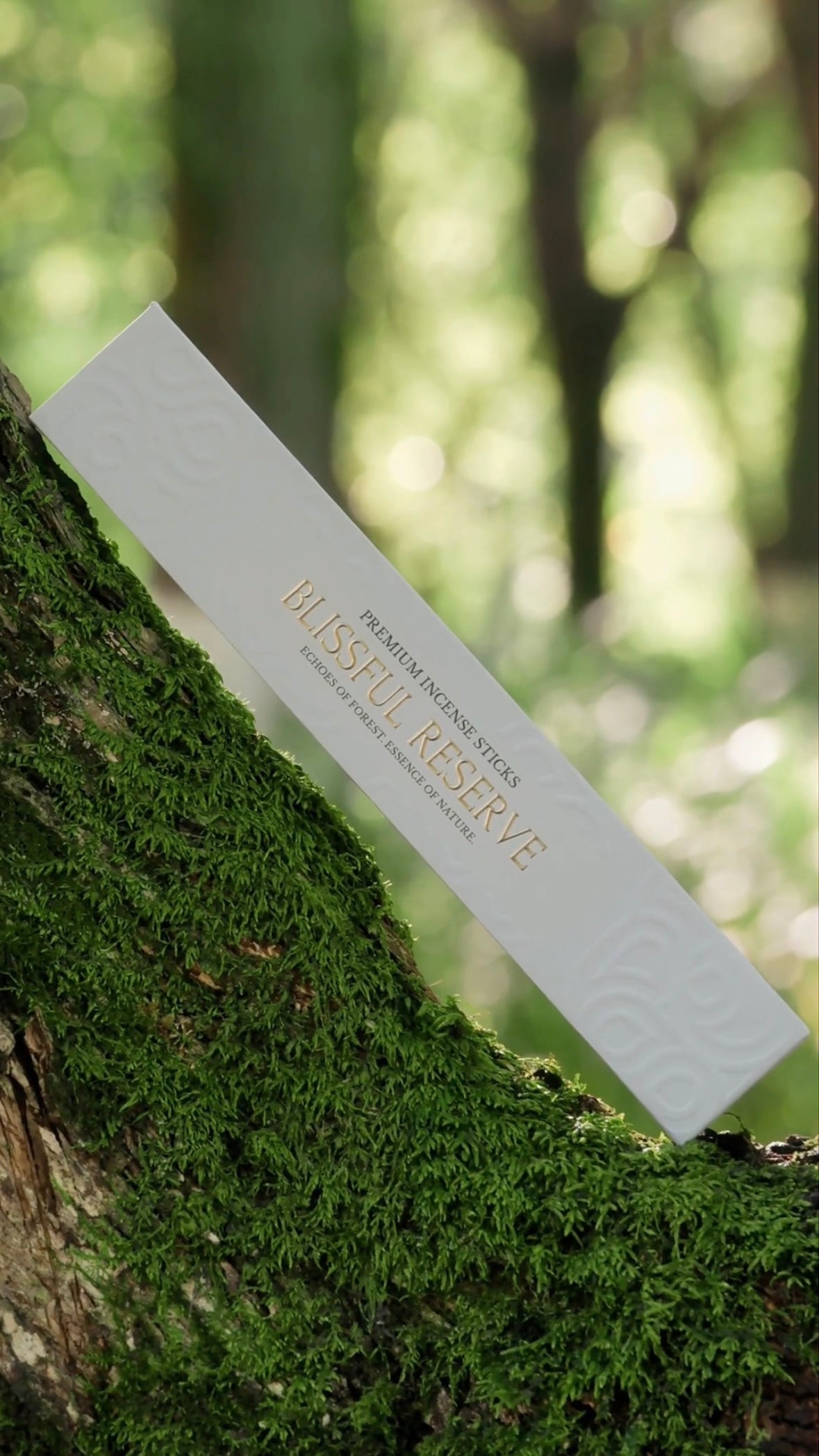
Blissful Reserve Laos Agarwood Incense
Blissful Reserve's Laos Red Earth Agarwood Supreme Incense Sticks are approximately 21 cm long and are designed to burn for approximately 40–45 minutes per stick.
The package contains approximately 120 sticks / 19 g, with an estimated total burn time of approximately 80 hours.
Actual burn time can vary according to airflow and environmental conditions.
Natural Agarwood Incense: What Should You Look For?
If your priority is natural agarwood incense, look beyond the front label.
Useful information includes:
Origin
Where did the agarwood come from?
Material
Is natural agarwood actually used?
Formulation
Are other woods, binders, oils, or fragrance materials included?
Synthetic ingredients
Does the manufacturer disclose synthetic fragrance or artificial perfume?
Processing
Is there enough information to understand how the raw material becomes the finished incense?
No single label can establish every characteristic of a product, but greater transparency gives the buyer a stronger basis for comparison.
Agarwood Oud Incense and Agarwood Oud Incense Sticks
The terms agarwood oud incense and agarwood oud incense stick combine two closely related fragrance concepts.
Agarwood refers to the resinous aromatic wood.
Oud commonly refers to aromatic material, oil, or fragrance derived from agarwood.
Incense describes the burning format.
Therefore, an agarwood oud incense stick can be understood as an incense stick positioned around the relationship between agarwood and oud fragrance.
However, consumers should still check the actual formulation.
The word “oud” does not necessarily establish that an incense contains a particular quantity of natural agarwood.
Why Agarwood Incense Remains Distinctive
Agarwood occupies an unusual position in the world of fragrance because the aromatic material is created through a biological process inside a living tree.
The result is not simply “wood that smells good.”
It is:
Aquilaria → resin → agarwood → fragrance → incense
That connection between botanical origin, resin formation, geographic provenance, and sensory experience gives agarwood incense a depth that has supported its use across different fragrance and ritual traditions for centuries.
For a contemporary home, the appeal can be much simpler.
A single incense stick can mark a transition:
from work to evening,
from activity to quiet,
from a room to a ritual.
The fragrance becomes part of the atmosphere rather than the entire point of the room.
Frequently Asked Questions About Agarwood Incense
What is agarwood incense?
Agarwood incense is incense made with agarwood or agarwood-derived aromatic material from certain Aquilaria trees. It can be produced as sticks, cones, chips, powder, or other aromatic preparations.
What is agarwood incense used for?
Agarwood incense is used for fragrance, atmosphere, traditional rituals, meditation, contemplation, and other sensory practices. It can also simply be used as a home fragrance.
Is agarwood the same as oud?
No. Agarwood refers to resinous aromatic wood formed in certain Aquilaria trees. Oud commonly refers to aromatic oil, material, or fragrance derived from agarwood. The terms are closely related but not identical.
What does agarwood incense smell like?
Agarwood incense can smell woody, resinous, earthy, balsamic, sweet, floral, musky, or subtly smoky. The exact profile varies according to origin, resin composition, processing, and formulation.
Where does agarwood come from?
Agarwood is primarily associated with South and Southeast Asia. Important regions include Laos, Vietnam, Thailand, Cambodia, Indonesia, Malaysia, Myanmar, India, and Bangladesh.
Is natural agarwood incense better?
“Natural” and “fragrance-based” describe different formulations. If natural agarwood is important to you, compare the material and ingredient disclosures rather than assuming one category is universally superior.
What are agarwood incense sticks?
Agarwood incense sticks are a stick-format incense made with agarwood or agarwood-derived material. Burn time and formulation vary considerably between products.
How long do agarwood incense sticks burn?
Burn time depends on the stick's length, diameter, density, formulation, moisture, and airflow. Many burn for approximately 20–60 minutes. Blissful Reserve's Laos Red Earth Agarwood Supreme Incense Sticks are designed to burn for approximately 40–45 minutes per stick.
How do you choose agarwood incense?
Compare origin, material, aroma, formulation, natural vs fragrance-based ingredients, smoke level, burn time, and manufacturer transparency. Your intended use should also influence the choice.
Is agarwood incense safe to burn indoors?
Incense produces smoke and combustion byproducts, so it should be burned responsibly. Use a suitable holder, maintain reasonable ventilation, keep it away from combustible materials, and never leave burning incense unattended.
Explore the Agarwood Journal
For a deeper understanding of individual topics, continue with:
What Is Agarwood? Origins, Resin, Aroma & Traditional Uses
Is Agarwood the Same as Oud? Understanding Agarwood and Oud
What Does Agarwood Incense Smell Like? Scent & Aroma Guide
Agarwood Incense Benefits: Uses, Rituals & Aroma
Where Is Agarwood Found? Origins, Regions & Aquilaria
Agarwood Incense Sticks: A Guide to Choosing & Using Them
How to Choose Agarwood Incense: Aroma, Origin & Quality
Laos Agarwood: Origin, Aroma & Its Role in Incense
Explore Laos Agarwood Incense

If you are looking specifically for Laos agarwood incense sticks, explore Blissful Reserve's Laos Red Earth Agarwood Supreme Incense Sticks.
Made around Laos-origin agarwood with a woody, floral, and musky-honey fragrance profile, the incense is designed for a slower, more considered home ritual.
For readers specifically seeking natural agarwood incense, the product page provides further information about its composition, fragrance, burn time, and format.